High-Speed Metal Stamping Problems: Hidden Causes of Tool Wear, Scrap, and Instability at 300+ SPM
Introduction: Why High-Speed Metal Stamping Is Not as Simple as It Looks
Metal stamping appears simple: sheet metal, a die, and a press.
However, in high-speed stamping operations exceeding 300 strokes per minute (SPM), the process becomes a complex dynamic system. Material behavior, die design, lubrication, press rigidity, strip feeding accuracy, and setup discipline interact continuously.
In modern progressive die stamping production, most failures are not caused by a single factor. Instead, they result from small instabilities accumulating across the system.
This article explores the hidden losses in high-speed metal stamping and explains how manufacturers can reduce scrap, extend tool life, and improve production stability.
1. High-Speed Stamping Is a Dynamic Mechanical System

At elevated speeds, stamping is no longer a static cutting process. It becomes a dynamic interaction of:
- Material yield strength variation
- Strip flatness and edge condition
- Die clearance precision
- Load distribution symmetry
- Lubrication film stability
- Press slide parallelism
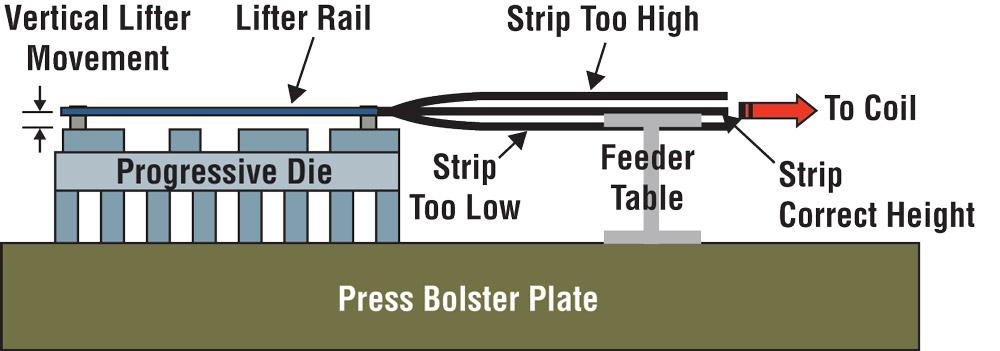
- Feeding and strip guidance accuracy
Even minor deviations can escalate rapidly at 300+ SPM.
For example:
- Slight strip misalignment → uneven load distribution
- Uneven load → localized punch wear
- Punch wear → burr height increase
- Burr increase → higher forming resistance
- Increased resistance → higher peak tonnage
- Higher tonnage → press vibration and instability
The original cause may be a 0.02 mm guidance deviation — but the consequence becomes a production issue.
2. Is It Really a Material Problem?
In many stamping operations, surface cracking, galling, burr variation, or premature tool wear are blamed on material inconsistency.
However, shop-floor analysis often shows:
| Observed Issue | Frequent Root Cause |
|---|---|
| Cracking in bends | Inconsistent lubrication or blank holder force |
| Excessive burr height | Die clearance change due to press deflection |
| Galling | Poor lubrication film, not coating failure |
| Punch chipping | Load imbalance, not insufficient hardness |
Material variation exists — but process instability amplifies it.
Before changing suppliers or specifications, evaluating process control stability is often more effective.
3. Tool Life in Metal Stamping: It’s About Force Balance
Increasing tool steel hardness or upgrading coatings (TiN, TiCN, DLC, etc.) is common practice.
But hardness alone does not prevent failure.
In high-speed stamping, tool life depends heavily on:
- Symmetrical force distribution
- Accurate punch-to-die alignment
- Controlled stripping force
- Proper shear angle design
- Stable lubrication delivery
- Press rigidity under load
Uneven loading causes micro-chipping on one edge of the punch. Over time, this leads to edge rounding, dimensional drift, and breakage.
Balanced force can extend tool life more effectively than simply increasing hardness.
4. Hidden Loss #1: Setup Variability
One of the largest hidden losses in metal stamping production is inconsistent setup.
Common variations include:
- Different strip guide pressure between shifts
- Slightly different shut height adjustments
- Manual lubrication flow changes
- Coil tension inconsistency
Each variation seems small. But at 300 SPM, the effect compounds thousands of times per hour.
Over time, this results in:
- Reduced die life
- Increased scrap rate
- Higher press vibration
- Progressive dimensional instability
Standardized setup procedures and documented parameters are critical for stable high-speed production.
5. Hidden Loss #2: Lubrication Instability
Lubrication in stamping is often underestimated.
In reality, lubrication consistency directly affects:
- Friction coefficient
- Heat generation
- Surface finish
- Galling resistance
- Tool wear rate
Key variables include:
- Spray pattern accuracy
- Film thickness control
- Application timing
- Contamination level
- Oil temperature
A slight reduction in film thickness increases friction. Increased friction generates heat. Heat accelerates wear. Wear changes geometry. Geometry alters load balance.
The cycle continues.
6. Hidden Loss #3: Press Dynamic Stability
At moderate speeds, minor press deflection may be manageable.
At 300+ SPM, dynamic behavior becomes critical:
- Slide parallelism under load
- Frame rigidity
- Vibration frequency
- Bearing wear
- Thermal expansion
Press instability changes effective die clearance during operation, which directly affects burr height and tool life.
Monitoring load trends — not just peak tonnage — helps detect instability early.
7. The Biggest Hidden Losses in High-Speed Metal Stamping
Based on practical manufacturing experience, the most significant hidden losses are:
- Force imbalance in progressive dies
- Setup inconsistency between production runs
- Lubrication variability
- Dynamic press deflection
- Strip guidance deviation
Tool wear and scrap are visible outcomes.
System instability is the invisible cause.
8. How to Reduce Hidden Losses in Metal Stamping
To improve stamping stability and extend tool life:
- Design dies for balanced load distribution
- Verify punch-to-die alignment regularly
- Standardize and document setup procedures
- Control lubrication volume and distribution precisely
- Monitor press load symmetry trends
- Improve strip guidance precision
Stamping performance improvement rarely comes from one upgrade. It results from tightening control across multiple small variables.
Conclusion: Precision at Speed Is a Discipline
Metal stamping is simple in theory.
In high-speed production, it becomes a precision discipline.
At 300+ SPM, small deviations accumulate rapidly. Managing force balance, lubrication stability, press rigidity, and setup repeatability determines whether production remains stable — or gradually degrades.
For manufacturers seeking longer tool life, lower scrap rates, and stable high-speed output, system control is more important than isolated improvements.