How Precision CNC Turning Enhances Mold Component Manufacturing Efficiency
In the high-stakes world of industrial manufacturing, the synergy between mold design and component fabrication is the foundation of product quality. As global industries demand tighter tolerances and faster turnaround times, the integration of cnc precision turning into the production of mold components has shifted from a luxury to a necessity.
At GUNRI, we have recognized that precision mold making and advanced turning services are two sides of the same coin. By leveraging state-of-the-art precision cnc turning services, manufacturers can achieve a level of efficiency and repeatability that was previously unattainable through traditional machining methods.
The Evolution: From Conventional Machining to Integrated CNC Turning
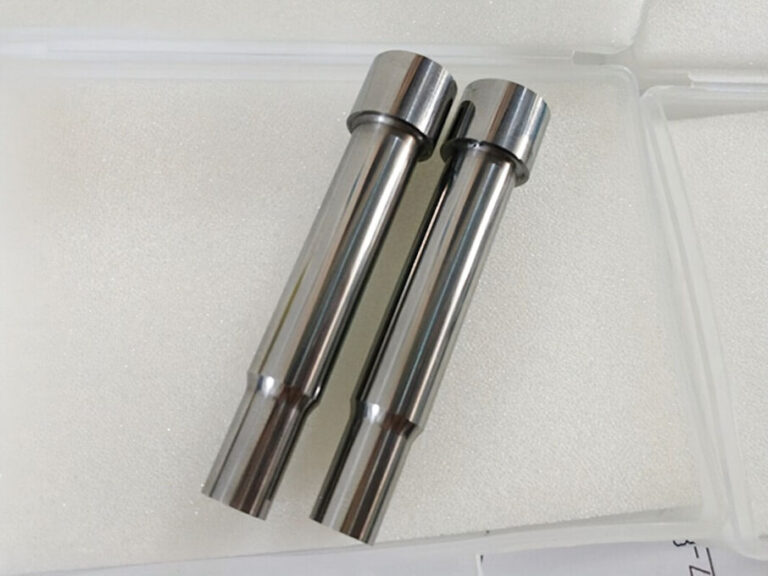
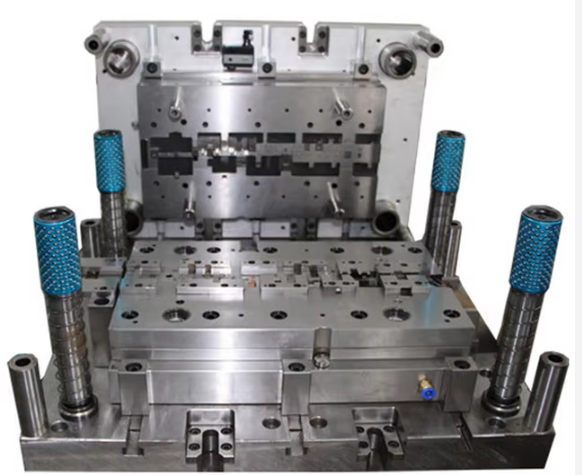
Traditionally, many mold components—such as guide pillars, ejector pins, and core inserts—required multiple setups across different machines. A part might be rough-turned on a manual lathe, heat-treated, and then sent to a cylindrical grinder for final sizing. While accurate, this process is time-consuming and introduces multiple opportunities for human error and cumulative tolerance stack-up.
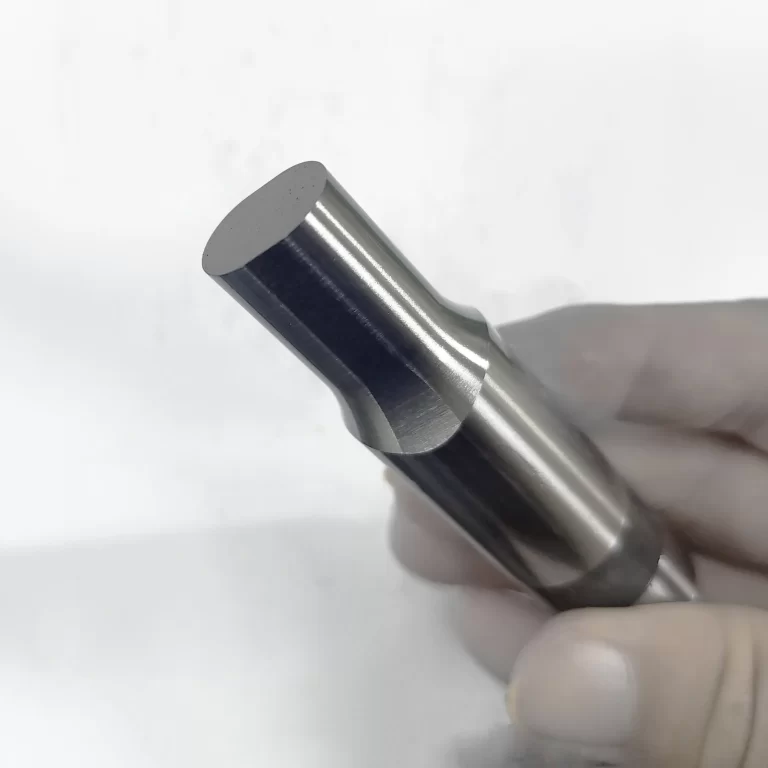
Modern cnc precision turning changes the equation. By utilizing multi-axis CNC centers, we can now complete complex geometries in a single setup. This “Done-in-One” philosophy not only slashes lead times but ensures that every feature of the component is perfectly concentric and aligned with the primary axis.
Deep Dive: The Swiss-type Lathe Advantage for Mold Pins and Cores
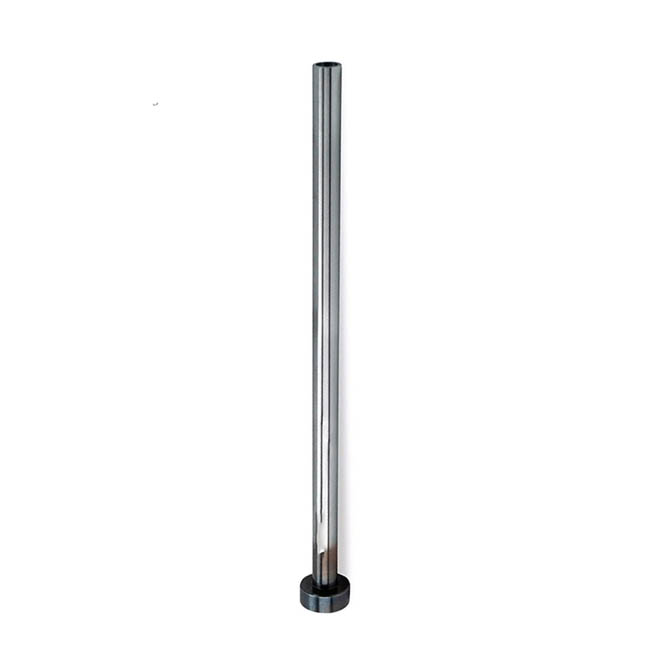
One of the most significant breakthroughs in our facility is the implementation of Swiss-type lathes (sliding headstock technology). For mold manufacturers, this technology is a game-changer, particularly when producing long, slender mold components like guide pillars or slender core pins.
The “One-Pass” Precision Mechanism
In a standard CNC lathe, the workpiece is held in a chuck and rotates while the tool moves along it. If the part is long and thin, the pressure of the cutting tool causes the material to deflect (bend), leading to inaccuracies and poor surface finish.
The Swiss-type lathe solves this by using a guide bushing. The material is supported right at the point of cutting. This allows us to:
- Machine Slender Ratios: Successfully turn parts with a length-to-diameter ratio that would be impossible on conventional lathes.
- One-Pass Success: Complete the entire length of a guide pillar or core pin in a single pass without vibration or deflection.
- Extreme Tolerances: Maintain tolerances as tight as $\pm0.002\text{mm}$, which is critical for the high-pressure environments of injection molding.
By eliminating the need for secondary grinding in many cases, we significantly enhance the manufacturing efficiency of these critical parts.
Material Versatility and Surface Integrity
Precision in turning isn’t just about dimensions; it’s about surface integrity. Mold components often operate under extreme friction and thermal stress. Whether we are working with Stainless Steel (304/316), High-Speed Steel, or Brass, our precision cnc turning services focus on achieving superior surface finishes (down to $Ra\ 0.4$ or better).
A smoother surface finish on a core pin or guide bush means:
- Reduced Friction: Lower wear and tear on the mold assembly.
- Easier Part Ejection: Minimal “sticking” during the molding cycle.
- Longer Tool Life: Decreased downtime for mold maintenance.
Quality Assurance: The GUNRI Standard
Efficiency without accuracy is a waste. Every turned component at GUNRI undergoes a rigorous inspection protocol. Utilizing high-precision CMM (Coordinate Measuring Machines) and optical projectors, we verify that the cnc precision turning results match the 3D CAD models exactly.
Our background in precision mold components gives us a unique perspective. We don’t just see a “turned part”; we see a functional element of a complex tool. We understand that if a guide pillar is off by even a few microns, it can lead to catastrophic mold flash or tool damage.
Conclusion: A Unified Approach to Precision
The integration of advanced turning technology into the mold component workflow represents the future of the industry. By choosing a partner who masters both the art of mold making and the science of CNC turning, you ensure that your production line stays efficient, your costs stay controlled, and your quality remains world-class.
Whether you require a one-off custom core pin or high-volume production of precision bushings, our specialized equipment and engineering expertise are at your service.
Looking for high-quality precision turning components? Check out our [Turning Services] page. For inquiries and technical consultations, contact Grey Hu at milla@gunri.com.cn.