High-Load Cast Bronze Bearing Solutions for Extreme Industrial Applications
Introduction — Why High-Load Bearings Fail in Extreme Environments
Industrial machinery operating under extreme loads faces one persistent challenge: bearing failure caused by friction, heat accumulation, and inadequate lubrication. As operating pressures continue to rise across industries—such as steel production, construction, mining, hydraulic systems, and heavy-duty conveyors—traditional bearing materials struggle to maintain stability and longevity.
High-load cast bronze bearings have emerged as a preferred solution for these demanding environments. Engineered with robust copper-based alloys, optimized wall thickness, and optional self-lubricating inserts, they offer exceptional durability, stability, and resistance to wear.
This article explores the full engineering value of cast bronze bearings, real-world application cases, material data, and how to select the right configuration for extreme-duty performance.
What Makes Cast Bronze Bearings Ideal for High-Load Applications?
1. Superior Mechanical Strength
Cast bronze contains a controlled alloy composition—often including tin, zinc, or other elements—that significantly increases load-carrying capacity.
Typical performance metrics include:
- Load Capacity: Up to 75–120 MPa depending on alloy
- Hardness: HB 80–120
- Working Temperature: -100°C to +250°C
- Friction Coefficient: 0.08–0.18 (depending on lubrication)
These values outperform many sintered bronze or polymer-based bearings, especially under continuous heavy loads.
2. Excellent Wear Resistance Under High Pressure
The microstructure of cast bronze provides:
- High resistance to deformation
- Stable performance under impact or vibration
- Longer operational lifespan compared with softer bearing metals
Even under borderline lubrication, cast bronze maintains structural integrity.
3. Customizable for Extreme Environments
Cast bronze bearings can be engineered with:
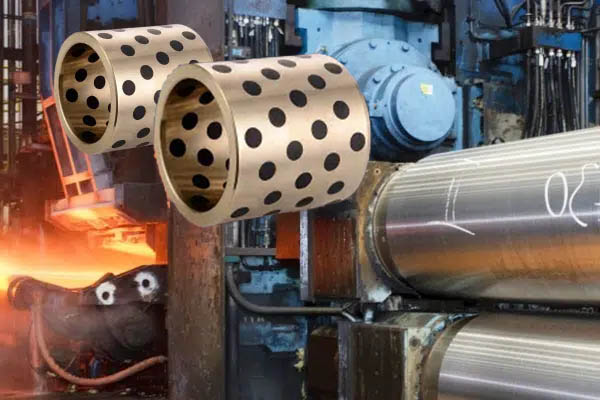
- Graphite-plugged self-lubrication for maintenance-free operation
- Lead-free alloys for environmentally regulated industries
- Corrosion protection for marine environments
- Thick-wall designs for exceptional impact absorption
This adaptability makes them suitable for industries where standardized bushings fail easily.
Engineering Data: Alloy Options for Heavy-Duty Bronze Bearings
| Alloy Type | Typical Composition | Advantages | Ideal Use |
|---|---|---|---|
| C93200 (SAE 660) | Cu-Sn-Pb | Versatile, good load capacity | General machinery |
| C95400 Aluminum Bronze | Cu-Al-Fe | Extremely high strength | Heavy-duty & impact loads |
| C86300 Manganese Bronze | Cu-Zn-Mn | Wear-resistant & high hardness | High-load, slow speed |
| Lead-Free Bronze | Cu-Sn-Zn | Eco-compliant | Food machinery, marine |
For extreme-load applications, C95400 and C86300 are industry favorites.
Problems High-Load Cast Bronze Bearings Solve
Problem 1: Rapid Wear Under Heavy Pressure
When machinery operates under 80–120 MPa loads, standard bearings deform quickly.
Solution:
Cast bronze’s high hardness and fatigue strength ensure dimensional stability, preventing deformation and extending service life.
Problem 2: Lubrication Failure in Harsh Environments
High temperatures, dust, or hard-to-access locations often lead to lubrication breakdown.
Solution:
Graphite-plugged bronze bearings deliver self-lubrication, reducing maintenance to zero and ensuring reliability in:
- Construction machines
- Steel mill rollers
- Mining equipment
- Wind turbine components
Problem 3: Corrosion in Marine or Chemical Environments
Metal bearings frequently corrode or seize in aggressive environments.
Solution:
Special corrosion-resistant bronze alloys maintain performance where humidity, salt, or chemicals are present.
Where High-Load Cast Bronze Bearings Are Used (Industry Applications)
1. Steel and Metal Rolling Mills
High-load points in mill stands rely on durable bronze bearings to survive continuous pressure and vibration.
2. Construction & Earthmoving Equipment
Applications:
- Excavator booms
- Loader hinge points
- Crane pulleys
- Backhoe articulation joints
These machines require bearings with extreme shock resistance.
3. Hydraulic Systems
Hydraulic cylinders and pumps depend on bronze bearings for:
- Low friction
- High stability
- Thermal resistance
4. Heavy-Duty Conveyor Systems
Cast bronze bushings reduce downtime and combat abrasive dust in mining and cement plants.
5. Marine Equipment
Corrosion-resistant bronze alloys excel in saltwater conditions.
Cast Bronze Bearings vs. Other Bearing Materials
Cast Bronze vs. Sintered Bronze
| Feature | Cast Bronze | Sintered Bronze |
|---|---|---|
| Strength | Higher | Moderate |
| Load Capacity | Excellent | Limited |
| Customization | High | Low |
| Best For | Heavy-duty loads | Light/medium duty |
Cast Bronze vs. Polymer Bearings
| Feature | Cast Bronze | Polymer |
|---|---|---|
| Temperature Resistance | Higher | Lower |
| Reliability Under Heavy Load | Superior | Weak |
| Impact Resistance | Excellent | Poor |
| Cost | Higher | Lower |
Conclusion of Comparison
For extreme loads, high temperatures, and continuous operation, cast bronze is the dominant solution.
How to Select the Right High-Load Cast Bronze Bearing
1. Determine load type
- Static load
- Dynamic load
- Impact load
2. Confirm lubrication environment
- Grease lubricated
- Oil lubricated
- Self-lubricating (graphite)
3. Measure operating temperature
Choose alloy accordingly.
4. Specify dimensions and tolerance
Custom machining ensures:
- Precision fit
- Reduced vibration
- Better lifespan
5. Evaluate environmental factors
Such as dust, chemicals, water, or extreme weather conditions.
Maintenance & Operation Tips for Maximum Service Life
- Keep shafts properly aligned
- Avoid excessive load spikes
- Re-lubricate on schedule (unless graphite type)
- Monitor surface temperature
- Replace shafts if scoring occurs
Proper maintenance can double the service life of cast bronze components.
FAQ — Technical Questions Engineers Ask
1. What is the max load cast bronze bearings can handle?
Depending on alloy: up to 120 MPa for continuous operation.
2. Can they work without lubrication?
Yes, graphite-plugged versions are specifically designed for dry, high-load environments.
3. Are they suitable for high temperature?
Yes. Standard limit: +250°C.
Some alloys perform even higher with proper lubrication.
4. How long do cast bronze bearings last under heavy load?
With proper design: 3–10 times longer than standard bronze or polymer bearings.
Conclusion — Engineered for Extreme Reliability
High-load cast bronze bearings deliver unmatched durability, stability, and performance in the world’s harshest industrial environments. Their customizable alloy options, self-lubricating configurations, and proven mechanical strength make them indispensable for heavy machinery, hydraulic systems, and high-pressure applications.
For engineering teams seeking long service life, minimal maintenance, and extreme load capacity, cast bronze bearings remain the industry’s most reliable choice.