How to Verify DIN 6325 Dowel Pin Quality When Buying from China?
When sourcing industrial components globally, the DIN 6325 Dowel Pin China market offers a massive range of options, from budget-friendly distributors to high-precision manufacturers. However, because these pins are critical for alignment and load-bearing in molds and machinery, “cheap” can quickly become “expensive” if the quality is compromised. This guide focuses on the technical benchmarks you must verify to ensure your Chinese supplier delivers world-class precision.
Technical Benchmark: Identifying a Genuine DIN 6325
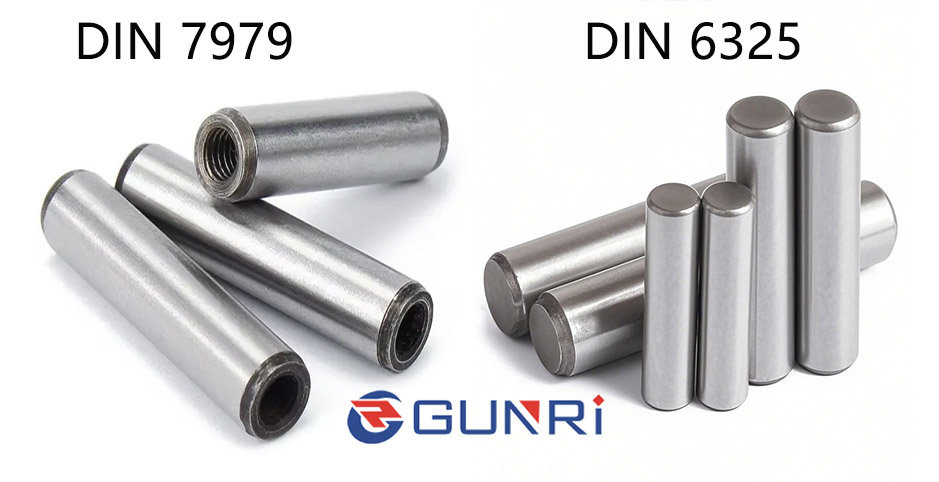
A genuine DIN 6325 dowel pin is defined by its precision. Unlike standard bolts or fasteners, these are high-performance alignment tools that must meet three strict criteria:
The m6 Fit Standard
The industry standard for DIN 6325 is the m6 tolerance, which is an “interference fit” or “press-fit.” This means the pin is slightly larger than the nominal hole size to ensure it stays securely in place.
- Precision matters: A variation of even 5 micrometers ($\mu m$) can be the difference between a secure fit and a loose pin that ruins a mold’s alignment.
- Verification: Always use a calibrated high-precision micrometer rather than standard calipers to verify the diameter.
Hardness Specification: HRC 58-62
For a DIN 6325 dowel pin to withstand high shear forces without deforming, it must be hardened throughout.
- The Standard: The non-negotiable hardness range is HRC 58–62.
- Why it’s critical: If the pin is too soft, it will bend under load; if it is too brittle (over-hardened), it may snap. Quality pins from China use vacuum heat treatment to achieve a uniform core-to-surface hardness.
Geometric Precision
The surface quality is as important as the size. According to DIN standards:
- Surface Roughness: The finish should be $Ra \le 0.4 \mu m$. A mirror-like, ground finish reduces friction during installation and prevents “galling” (material pickup).
- Chamfer Radius: High-quality pins feature a radius (rounded end) or a specific chamfer angle that allows for smooth entry into the guide hole without damaging the workpiece.
3. The “Two-Step” Material Verification
One of the biggest risks when sourcing DIN 6325 Dowel Pins from China is “Material Substitution”—where a supplier uses a lower-grade carbon steel instead of professional tool steel.
Through-Hardened vs. Case-Hardened
In the market, you may encounter cheaper “Case-Hardened” pins.
- The Trap: These pins are only hard on the surface (like an eggshell) while the core remains soft.
- The Reality: True DIN 6325 pins are through-hardened. This means the entire cross-section of the pin shares the same HRC 58-62 hardness. When buying, explicitly ask: “Are these through-hardened or case-hardened?” Through-hardened tool steel (such as 100Cr6 or equivalent) is mandatory for high-stress mold applications.
Material Certification (MTR)
Don’t take a supplier’s word for it; request a Material Test Report (MTR). A professional Chinese manufacturer will provide documentation showing the chemical composition of the steel.
- What to look for: Ensure the Chromium (Cr) content is sufficient to provide the required wear resistance and response to heat treatment.
- Red Flags: If a supplier cannot provide a batch-specific MTR, it is a sign that they are likely trading “stock lot” materials of inconsistent quality.
4. On-Site Inspection Checklist
When your shipment of DIN 6325 Dowel Pins from China arrives, or if you have a third-party inspector on-site, use the following checklist to ensure the batch meets industrial export standards.
Visual Audit: Spotting Defects
A professional DIN 6325 Dowel Pin China supplier uses centerless grinding machines to achieve a mirror finish. Look for:
- Grinding Marks: Visible spiral patterns indicate poor feed rates or worn grinding wheels.
- Oxidation: Any black or reddish spots suggest the material was not degreased properly before oiling.
- Micro-cracks: Often found at the chamfered ends; these are signs of improper heat treatment (cooling too fast).
5. Expert Sourcing Tip: How to Ask the Right Questions
To filter out middle-men and low-quality workshops, you need to change how you communicate with potential suppliers.
The “Sample Test” Strategy
Never commit to a full production run based on a single “golden sample.”
- Request 10 Random Pieces: Ask for 10 pieces pulled from an existing stock batch for testing.
- Test the Consistency: Verify the diameter and hardness of all 10. If 2 out of 10 are off-spec, the supplier’s process control is likely weak, and a bulk order will contain thousands of rejects.
Requesting Technical Data
A professional manufacturer in China should provide a “Quality Data Pack” without hesitation. This includes:
- Material Test Report (MTR): Proving the chemical composition (e.g., SUJ2/100Cr6).
- Hardness Testing Report: Showing the HRC values of the current batch.
- Dimensional Inspection Report: A map of measured diameters against the m6 tolerance.
6. Conclusion: Secure Your Precision
Sourcing DIN 6325 Dowel Pins from China is a strategic move to reduce costs, but it requires a “technical-first” mindset. By focusing on m6 tolerance benchmarks, through-hardened steel standards, and rigorous sample testing, you can secure high-precision components that rival European or Japanese quality at a fraction of the price.
Are you struggling with inconsistent pin tolerances or material failures?