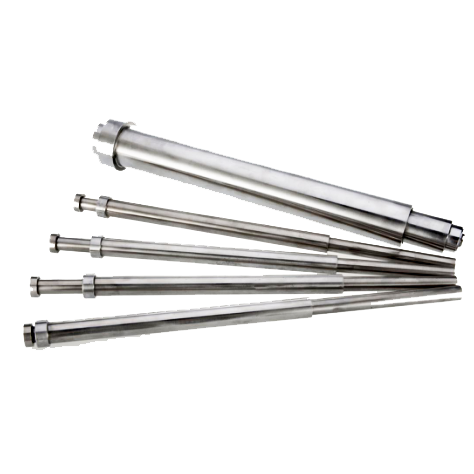
Are Ejector Pins Available in Different Sizes? Complete Size Guide
Last month I got a call from a mold shop owner. His new technician had forced a Ø2.5mm ejector pin into a hole that was clearly designed for Ø3.0mm. During production, the pin jammed, the ejector plate bent, and the core insert came out with a deep scratch across the surface. One mold set scrapped. Nearly $1,500 down the drain.
The technician’s explanation? “I grabbed whatever was on the bench. What’s half a millimeter going to do?”
A lot, apparently. And this brings up a question that every newcomer in this industry asks sooner or later — are ejector pins available in different sizes, or is it more of a one-size-fits-all situation?
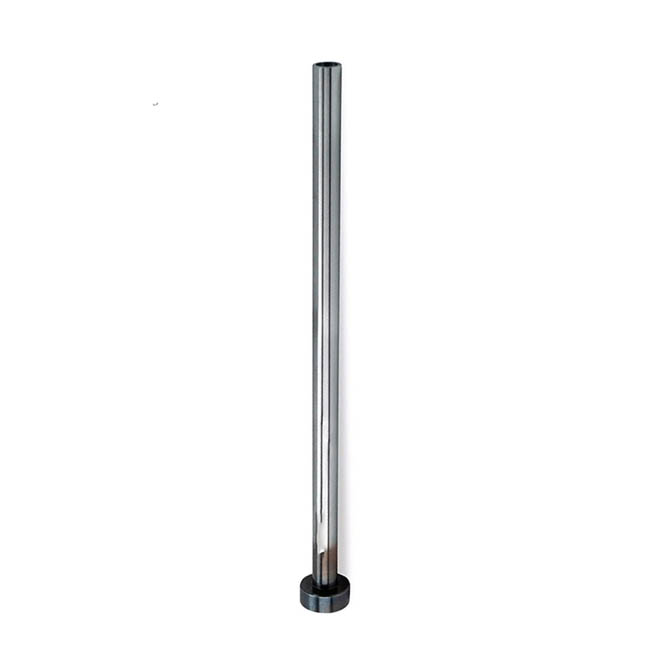
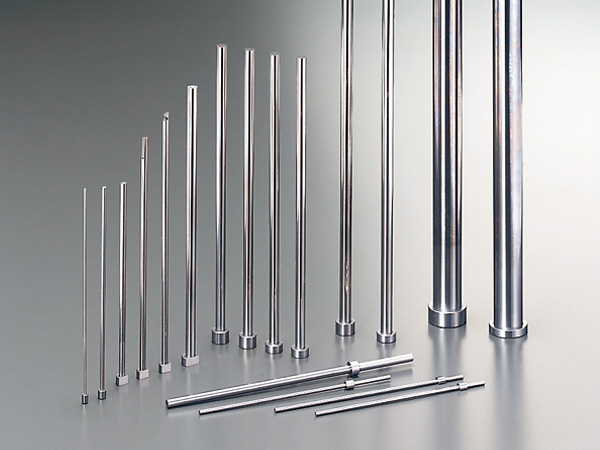
Yes, ejector pins come in a well-defined range of standardized sizes
Ejector pin dimensions are not arbitrary. They are governed by three major international standards: ISO 6751, JIS B 5108, and DIN 1530. These standards specify diameter, overall length, head geometry, and fit tolerance with clear numerical ranges and step increments.
The practical implication is simple: an ejector pin purchased in Shenzhen is dimensionally interchangeable with one bought in Stuttgart — as long as the standard and size class match. When selecting a pin, you only need to nail down three parameters: diameter, overall length, and fit tolerance. Get these right and you are 90% done.
Diameter: from 1mm to 20mm — standard sizes cover virtually all mold types
The metric diameter series defined by ISO 6751 looks like this (in mm):
1.0 — 1.5 — 2.0 — 2.5 — 3.0 — 4.0 — 5.0 — 6.0 — 8.0 — 10 — 12 — 16 — 20
Here is how they map to real-world applications:
- Precision electronics (connectors, phone components): Ø1.0 to Ø2.5
- Consumer goods (caps, cutlery, housings): Ø3.0 to Ø5.0
- Automotive interior parts: Ø6.0 to Ø8.0
- Large structural parts (bumpers, dashboards): Ø10.0 and above
What if you need something in between, like Ø3.2 or Ø7.5? Non-standard diameters are widely available from specialty manufacturers. Modern CNC grinding allows step increments as fine as 0.1mm. Just expect longer lead times and slightly higher unit costs.
For the North American market, inch-series pins also exist: 1/32″, 1/16″, 3/32″, 1/8″, 5/32″, 3/16″, 1/4″, and up to 1/2″. Keep them separated from metric stock in your toolroom — mixing them up is an expensive mistake.
Length: don’t guess it — calculate it
Standard ejector pin lengths run from 100mm to 300mm in 50mm steps (100, 150, 200, 250, 300). Extended lengths of 350, 400, 500, and even 600mm are available for deep-cavity molds or large mold bases.
But experienced mold designers don’t memorize lengths — they calculate them:
Pin length = mold base thickness + ejection stroke + 5–10mm safety margin
That 5–10mm margin is not random. Too little, and the part won’t clear the cavity. Too much, and the pin hits the opposite side during clamp, bending the pin or — worse — cracking the core insert. I have seen both happen.
Standard ejector pin sizes at a glance
| Diameter (mm) | Head Ø (mm) | Head Thickness (mm) | Common Lengths (mm) | Typical Application |
|---|---|---|---|---|
| 1.0 | 2.0 | 2.5 | 100–150 | Precision electronics |
| 1.5 | 2.5 | 3.0 | 100–150 | Small gears & inserts |
| 2.0 | 3.5 | 3.5 | 100–200 | Connector housings |
| 3.0 | 5.0 | 4.0 | 150–250 | Caps & daily-use parts |
| 4.0 | 6.0 | 4.5 | 150–300 | Appliance housings |
| 6.0 | 8.5 | 5.0 | 200–400 | Automotive interior |
| 8.0 | 10.5 | 5.5 | 200–500 | Bumpers & dashboards |
| 10.0 | 13.0 | 6.0 | 250–600 | Large structural parts |
Get the size wrong and it will cost you
Going back to the technician who jammed a Ø2.5 pin into a Ø3.0 hole — when we checked the drawing, it clearly specified Ø3.0. He simply didn’t bother to verify. The result was a scraped core cavity and a $1,200 repair bill for replacement inserts and downtime.
Another shop once used an ejector pin that was 8mm too long. On the first clamp, the pin struck the opposing core half and shattered the insert. Total damage: over $3,000.
So the real question isn’t just “are ejector pins available in different sizes?” — the standards have been there for decades. The real question is whether you pick the right one and verify it before assembly.
Frequently asked questions
Q: Do ejector pins only come with round heads?
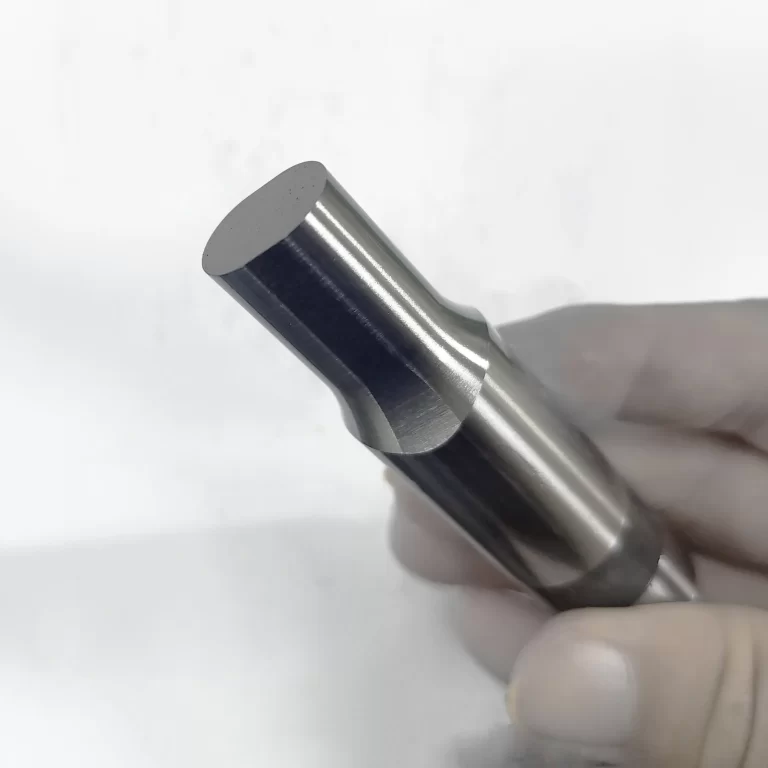
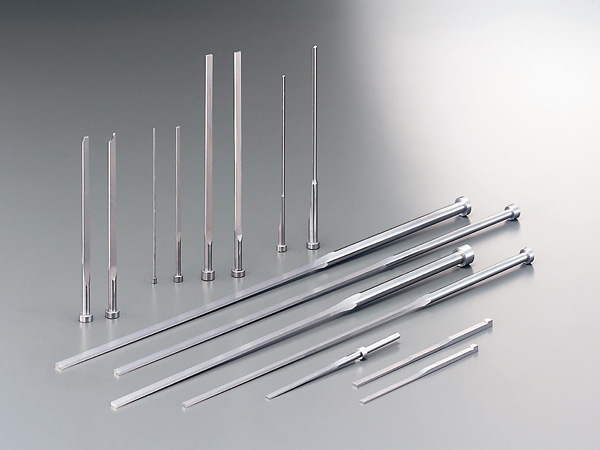
No. Flat ejector pins, D-shaped pins, and square-head pins are all standardized. Choose based on your part geometry and ejection requirements.
Q: Are SKD61 and SKH51 ejector pins the same size?
The dimensional standards are identical. The difference is in material performance: SKH51 runs 58–60 HRC (harder, more wear-resistant), while SKD61 is 48–52 HRC (tougher, better for high-temperature operation).
Q: Can I buy standard pins and cut them shorter?
Technically yes, but not recommended. After cutting you need to machine a relief groove, re-grind the tip, and add a chamfer. Without these steps, stress concentration will cause the pin to fracture at the cut point — usually during ejection, which means mold damage.
Q: Is an ejector pin the same as an ejector rod?
In casual conversation, the terms are used interchangeably. Technically, a pin is a smaller-diameter rod that contacts the molded part directly, while a rod is larger and drives the ejector plate assembly. But in daily shop talk, don’t be surprised if people use them both ways.
Need help selecting the right ejector pin size for your mold? Contact our engineering team for sizing recommendations and a quote.