Graphite Bronze Wear Plate Alloys: C95400 vs C93200 vs C86300 – Which One Is Right for You
If you have ever spec a graphite bronze wear plate, you have likely run into a wall of alloy numbers: C95400, C93200, C86300, RG7, RG10, CuAl10Ni5Fe4, and on and on.
It is easy to default to whatever you used last time. But picking the wrong alloy means the plate wears too fast, crumbles under impact, or costs twice what it should.
This guide covers the three most common bronze alloys for graphite-plugged wear plates — what they are, where they shine, and when to pick one over the other.
The Big Three: Quick Overview
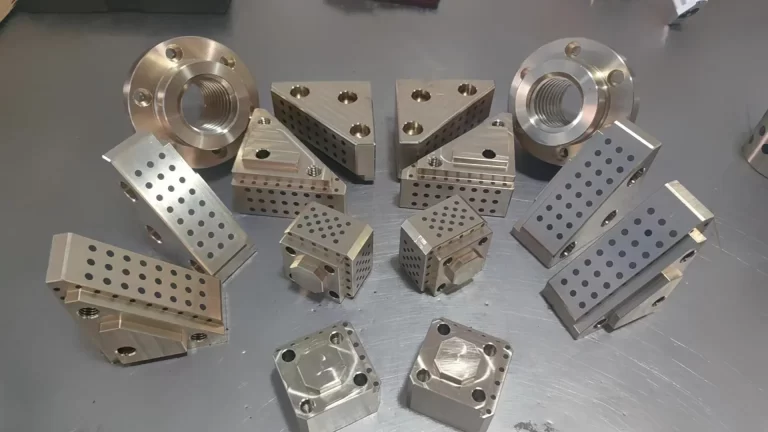
Every graphite bronze wear plate is a combination of a base bronze alloy plus embedded graphite plugs. The alloy determines the plate structural strength, hardness, corrosion resistance, and maximum operating temperature. The graphite handles the lubrication.
Here is how the three major alloys stack up:
| Property | C95400 Aluminum Bronze | C93200 SAE 660 Bearing Bronze | C86300 Manganese Bronze |
|---|---|---|---|
| Tensile Strength | 75–85 ksi (517–586 MPa) | 30–40 ksi (207–276 MPa) | 90–110 ksi (620–758 MPa) |
| Hardness (Brinell) | 170–210 HB | 60–80 HB | 200–260 HB |
| Max Operating Temp | 260–400°C (500–750°F) | 230°C (450°F) | 260–300°C (500–570°F) |
| Corrosion Resistance | Excellent (salt water, acids) | Good | Moderate |
| Impact Resistance | Good | Moderate | Excellent |
| Typical Application | High-temp molds, marine, chemical | General stamping dies, injection molds | Heavy stamping, mining equipment, severe impact |
| Relative Cost | High | Low–Moderate | High |
C95400 Aluminum Bronze — The High-Performance Workhorse
C95400 (also known as CuAl10Ni5Fe4 or AMPCO 18 equivalent) is the go-to alloy when you need strength, wear resistance, and corrosion resistance in a single material.
Its aluminum content (10–11.5%) forms a hard, protective oxide layer that resists corrosion in seawater, acidic environments, and high-humidity conditions. The nickel and iron additions improve toughness and reduce grain growth at elevated temperatures.
Best for:
- High-temperature molds and dies (up to 400°C)
- Marine and offshore equipment (bridge bearing plates, propeller hubs)
- Chemical and food processing machinery where oil contamination is unacceptable
- Applications requiring both wear resistance and corrosion resistance
Trade-off: Higher cost than C93200, and slightly lower ductility means it can crack under extreme impact if not properly supported.
C93200 SAE 660 Bearing Bronze — The Cost-Effective Standard
C93200 (SAE 660) is the default alloy for general-purpose wear plates. It contains 6.3–7.5% tin, 6–8% lead, and 1–4% zinc, which gives it good machinability and moderate strength at a lower price point than the aluminum bronzes.
This is the alloy most commonly stocked by suppliers like National Bronze, DME, and MISUMI for standard wear plate sizes. If you do not have extreme temperature or corrosion requirements, C93200 is usually the most economical choice.
Best for:
- Standard stamping die wear plates
- Injection mold guide plates and gibs
- General industrial machinery where operating temperatures stay below 230°C
- Budget-conscious projects where C95400 would be overkill
Trade-off: Lower hardness means faster wear under heavy loads. The lead content makes it unsuitable for food-contact applications.
C86300 Manganese Bronze — The Heavy-Impact Specialist
C86300 (also called manganese bronze or Hi-Lead 863) is the strongest of the three, with tensile strength exceeding 110 ksi. It was developed for applications involving heavy shock loads and slow, intermittent sliding motion.
The high manganese content (2.5–5%) and iron (2–4%) give C86300 exceptional work-hardening characteristics. Under repeated impact, the surface actually gets harder rather than deforming.
Best for:
- Heavy stamping dies with significant impact forces
- Mining and construction equipment wear plates
- Bridge expansion bearings under high static loads
- Applications where the mating surface is rough or misaligned
Trade-off: Difficult to machine. Higher cost than C93200. Poor corrosion resistance compared to C95400.
How to Choose: A Simple Decision Flow
Start here and work down:
- Operating temperature above 250°C? → C95400 aluminum bronze
- Heavy impact or shock loading? → C86300 manganese bronze
- Salt water or chemical exposure? → C95400 aluminum bronze
- Cost-sensitive with mild conditions? → C93200 SAE 660 bearing bronze
- Not sure? → C93200 is the safest default for standard stamping and molding applications
Graphite Plug Considerations by Alloy
All three alloys accept graphite plugs, but there are practical differences:
- C95400 holds graphite plugs securely due to its dense grain structure. Best for high-temperature applications where the plug might otherwise expand or loosen.
- C93200 is the easiest to drill and plug — graphite plugs are commonly installed in standard patterns (e.g., 3-row, staggered, 10mm pitch).
- C86300 requires careful drilling to avoid work-hardening the material during machining. Plug holes should be drilled before final grinding.
Bottom Line
There is no single best alloy for graphite bronze wear plates. The right choice depends on your operating temperature, load conditions, environment, and budget.
C95400 offers the best all-around strength and corrosion resistance. C93200 is the economical standard for most shop-floor applications. C86300 handles impact loads that would destroy the other two.
If you need help matching an alloy to your specific application, browse our graphite bronze wear plates or contact our engineering team with your operating parameters — we can recommend the right material and graphite configuration for your dies and equipment.