How to Verify a Chinese Nitrogen Gas Spring Factory: A Buyer’s Complete Checklist
A few months ago, I got a call from a stamping shop in Ohio. They had been buying Kaller gas springs through a distributor for years, paying top dollar. Someone in their purchasing department suggested they look into Chinese alternatives. Three Alibaba inquiries later, they had 47 unread messages — and zero confidence in which supplier was real.
They asked me: “How do we know which ones are actual factories and not just trading companies with stock photos?”
That question comes up constantly. And for good reason — nitrogen gas springs are pressure vessels. A bad batch can mean die crashes, production downtime, or worse, safety incidents. Unlike buying office furniture, you are not sourcing a commodity. You are choosing a manufacturing partner for a safety-critical component.
Why Factory Verification Matters for Gas Springs
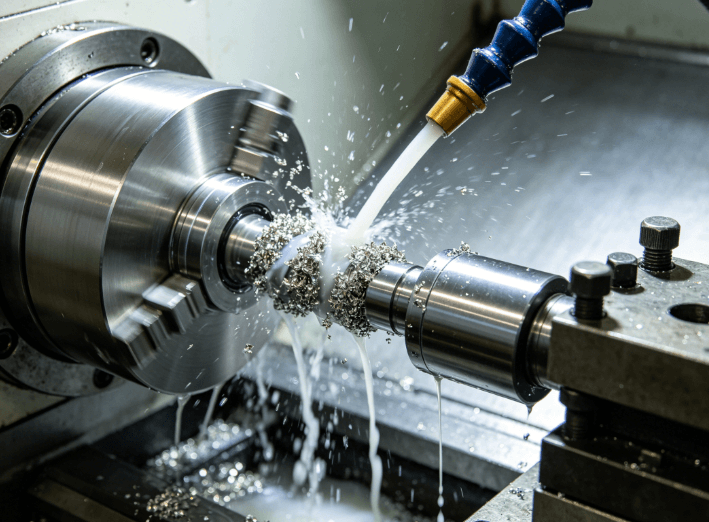
Nitrogen gas springs operate under high pressure — typically 150–600 bar. They must seal reliably for millions of cycles. A factory that lacks proper CNC machining, quality control, or material traceability cannot produce consistent products, regardless of what their Alibaba page says.
According to sourcing professionals who have audited hundreds of Chinese factories, over 37% of fraudulent supplier listings in 2024 had mismatched business scopes — meaning they claimed to manufacture products they were not licensed or equipped to make (Cherry Tech, 2025). For gas springs specifically, the risk is even higher because many “manufacturers” on B2B platforms are actually traders sourcing from the same 2–3 real factories and marking up the price.
Here is a practical checklist to separate genuine nitrogen gas spring manufacturers from intermediaries.
1. Verify Business License Against Manufacturing Scope
Every registered Chinese company has a business license (营业执照) with a clearly stated business scope. You can cross-check registration numbers on China’s National Enterprise Credit Information Public System at gsxt.gov.cn.
What you are looking for:
- The scope should mention “manufacturing” or “production” (生产) of gas springs, die components, or similar industrial products — not just “sales” or “trade” (销售/贸易).
- Registered capital of at least ¥5 million RMB for a gas spring production line (this indicates realistic investment in machinery).
- Check how long the company has been registered. A factory that has been operating for 8–10+ years likely has established quality systems.
Red flag: If the business scope says “import and export of general merchandise” without mentioning manufacturing, you are dealing with a trading company.
2. Authenticate Quality Certifications
Most Chinese gas spring factories display ISO 9001 certification. But not all certificates are genuine. You can verify ISO certificates through the CNAS database, which tracks accredited certification bodies in China.
For nitrogen gas springs specifically, ask for:
- ISO 9001:2015 — Quality management system certification (verify via CNAS).
- PED 2014/68/EU — If exporting to Europe, this certification is mandatory for pressure equipment.
- ISO 11901 compliance — While not a certification per se, ask whether the springs are manufactured to ISO 11901 dimensional and force standards.
Pro tip: Ask for the certification number and verifying body upfront. A legitimate factory will provide it without hesitation. If they dodge the question, that is a red flag.
3. Demand a Live Factory Video Tour
A photo album of shiny CNC machines could be from any factory. Ask for a live video walkthrough via WeChat or WhatsApp covering specific areas:
- CNC turning and grinding area — Piston rod surface finish (Ra ≤ 0.2 µm) requires precision grinding. Look for actual chips on the machines; a clean, unused machine is suspicious.
- Assembly and charging station — Nitrogen charging should be done in a controlled environment, not in an open warehouse.
- Leak testing area — Each spring should be pressure-tested before shipping. Ask to see the test rig.
- Raw material inventory — Look for seamless steel tubes and sealing kits from reputable brands.
If they can only send pre-recorded videos or photos, request a timestamp — a piece of paper with today’s date placed in the frame. Real factories have nothing to hide.
4. Request Material Traceability Documentation
Legitimate gas spring manufacturers maintain traceability for critical components:
- Cylinder tube material certificate — Should specify grade (e.g., 34CrMo4 or equivalent seamless alloy steel).
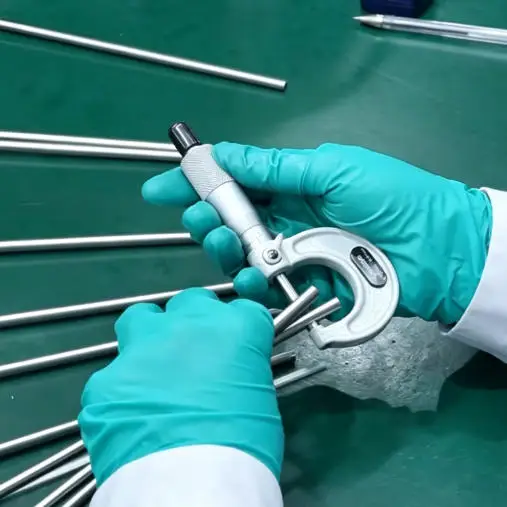
- Piston rod hardness test report — Typically HRC 50–55 for chrome-plated rods.
- Seal material certification — Polyurethane (PU) or PTFE seals from recognized suppliers.
A factory that cannot provide material traceability for their pressure-bearing components is not a factory you should trust with high-pressure gas springs.
5. Evaluate Production Capacity Honestly
Some suppliers claim monthly capacities that their equipment cannot physically support. Use this simple formula:
True monthly output ≈ (Number of CNC machines for gas spring production) × (Operating hours per day) × (Efficiency rate of ~75–80%) ÷ (Cycle time per spring)
For example, a factory with 10 dedicated CNC lathes running 10-hour shifts could reasonably produce 15,000–25,000 gas spring units per month depending on size. If a supplier claims 100,000 units/month but shows only 5 machines, ask questions.
You can also request recent production logs or utility bills — factories running at claimed capacity will have the electricity consumption to prove it.
6. Ask for Current Client References
This is one of the most telling steps. A genuine manufacturer with export experience can connect you with 2–3 existing clients — ideally in your region or industry.
When speaking with references, ask:
- “How long have you been buying from them?”
- “What is their typical defect rate?”
- “How do they handle quality complaints?”
- “Do the springs meet the claimed cycle life?”
Note: Some legitimate factories may hesitate due to confidentiality agreements, but they should at least be able to provide a reference after signing an NDA.
7. Start with a Pilot Order — And Include Tests
Once a supplier passes the above checks, start with a small pilot order — typically 10–50 units rather than your full volume. Include specific testing requirements in your purchase order:
- Dimensional verification — Measure outer diameter, total length, stroke, and mounting thread against your existing springs.
- Initial force testing — Compare the charge pressure (F0) against the specified value.
- Cycle life test — If possible, run a sample to at least 50,000 cycles to verify seal integrity.
- Overstroke safety test — Confirm the safety deformation zone activates correctly.
This pilot phase costs a fraction of what a bad full-container shipment would cost — and it builds trust on both sides.
Bottom Line
Finding a reliable Chinese nitrogen gas spring factory is not about luck. It is about systematic verification — checking the business license, validating certifications, touring the facility (even virtually), and testing samples before committing to scale.
The factories that welcome this scrutiny are the ones worth doing business with. The ones that avoid it are saving you the trouble of finding out the hard way.
If you are evaluating suppliers for nitrogen gas springs and want to compare specifications against OEM brands like Kaller, DADCO, or HYSON, check out our complete gas spring cross-reference guide — it covers dimensional charts, force classes, and mounting details for drop-in replacements.