
Custom Ball Cages for LVDT Gage Heads & Linear Position Sensors
Precision miniature ball cages for guided linear motion in LVDT gage heads, displacement measurement systems and other precision instruments.
GUNRI manufactures the custom ball cage component itself, not the complete LVDT sensor. We supply miniature rolling-element ball cages machined to your dimensions, ball arrangement and tolerance requirements for guided linear-motion assemblies used in LVDT gage heads, linear position sensors and precision displacement measurement equipment.
Send Your Drawing Request a Custom Quote
Custom dimensions · Custom ball arrangement · Prototype & low-volume production · OEM manufacturing
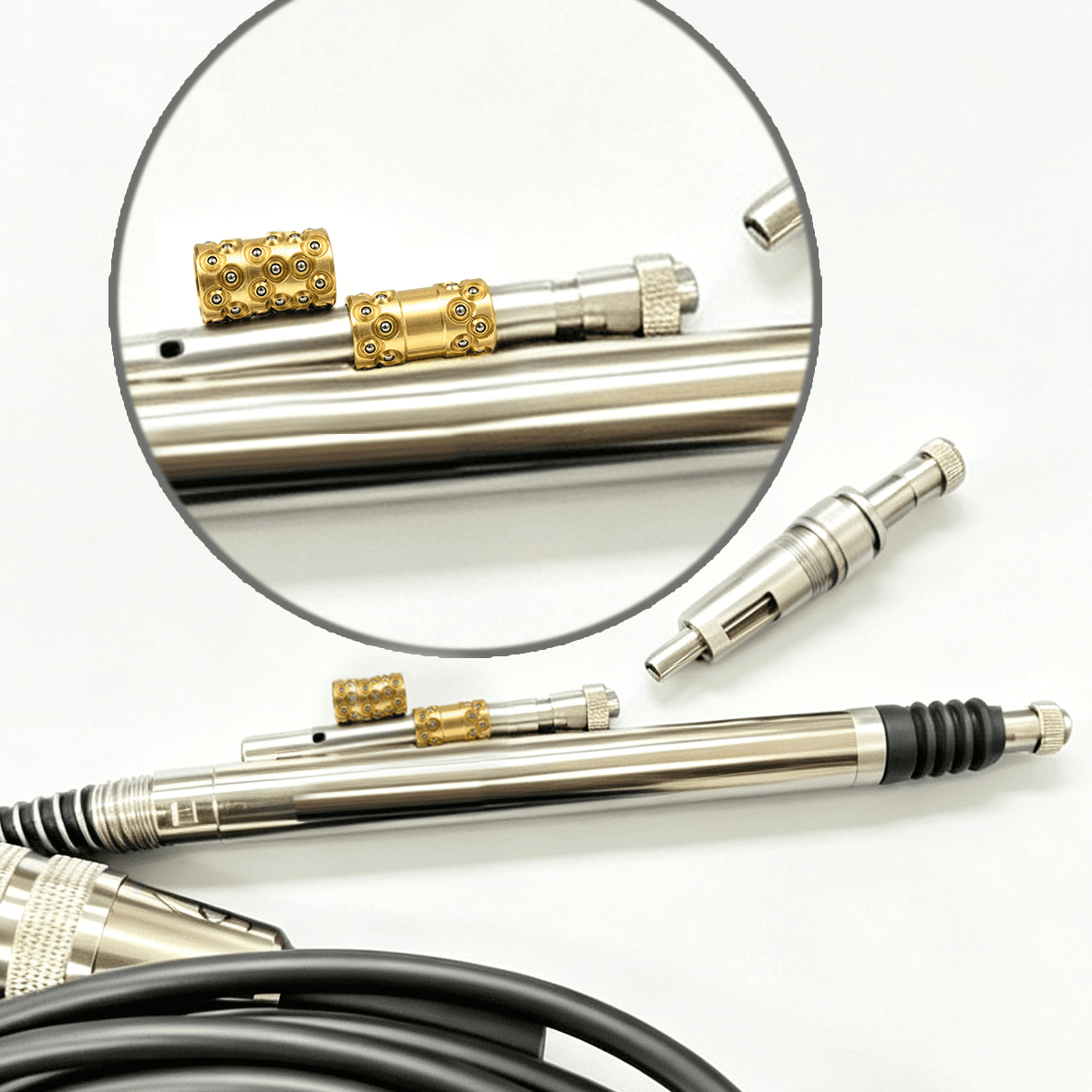
LVDT gage head probe assembly with the miniature brass ball cage used to guide the probe shaft (magnified inset). The ball cage is the mechanical guidance component, not the electrical sensing element.
Custom Ball Cages for Precision Linear Motion
In a guided linear-motion assembly, a ball cage retains and spaces a defined set of precision balls so they roll cleanly between a shaft and a bore instead of clustering or rubbing against each other. The cage sets ball spacing, radial clearance and running fit, and it keeps the rolling elements captive through millions of strokes.
We machine custom ball cages and non-standard guide components to your drawing. Because every build is made-to-drawing rather than pulled from a catalog, the cage can be matched to the shaft OD, bore ID, stroke and assembly geometry of your specific sensor or instrument. Common interchangeable references we work against include Agathon, MISUMI and FIBRO guide component standards.
We manufacture the ball cage component — we do not manufacture complete LVDT sensors.
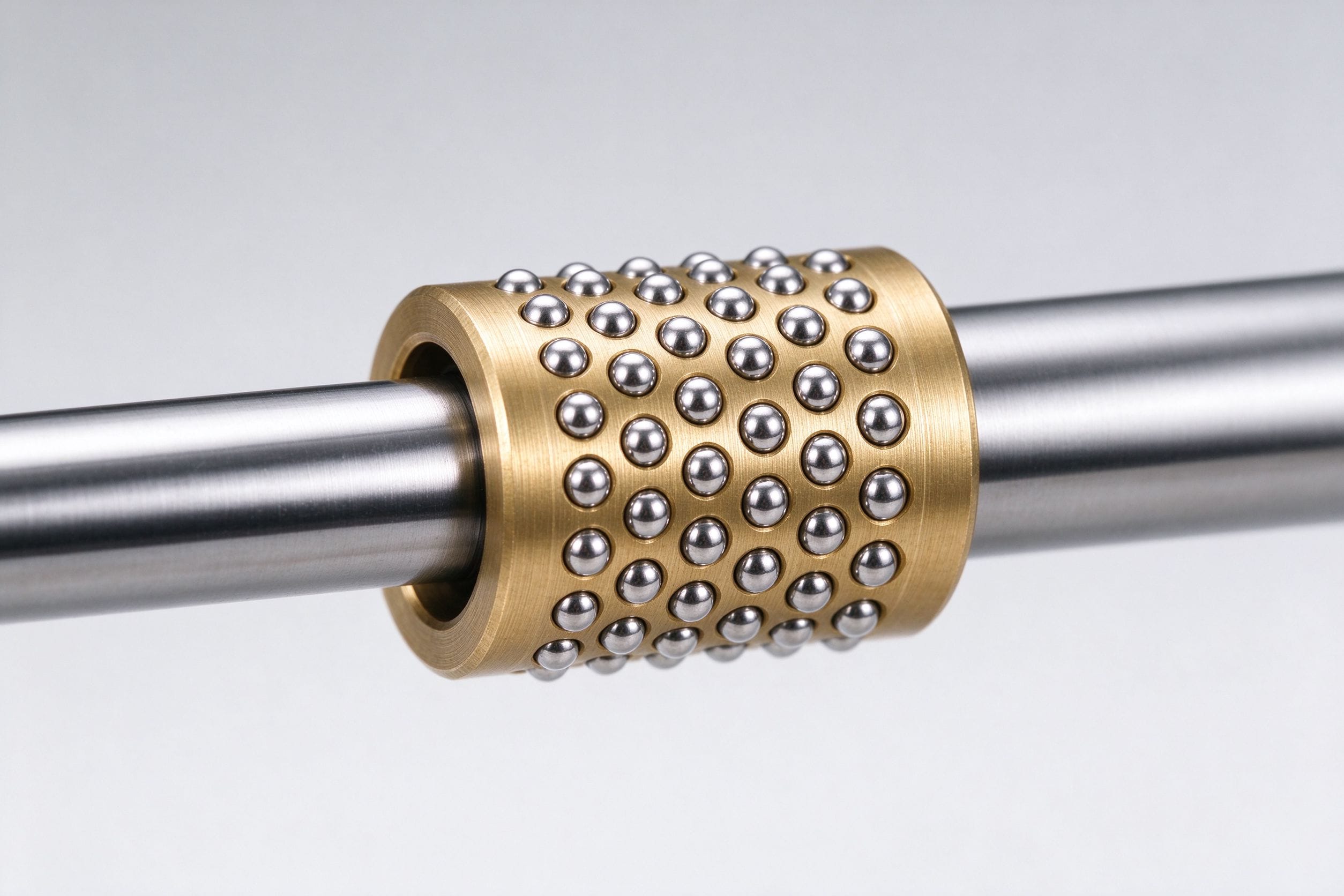
A custom brass ball cage with precision steel balls installed on a hardened guide shaft. The balls roll between the cage OD and the housing bore to provide smooth guided linear travel.
Where Ball Cages Fit into LVDT-Based Measurement Systems
The relationship between a ball cage and an LVDT is mechanical, not electrical. In an LVDT-based measurement system, the electrical sensing is done by the coil and core; mechanical guidance is a separate function handled by the probe or gage-head structure.
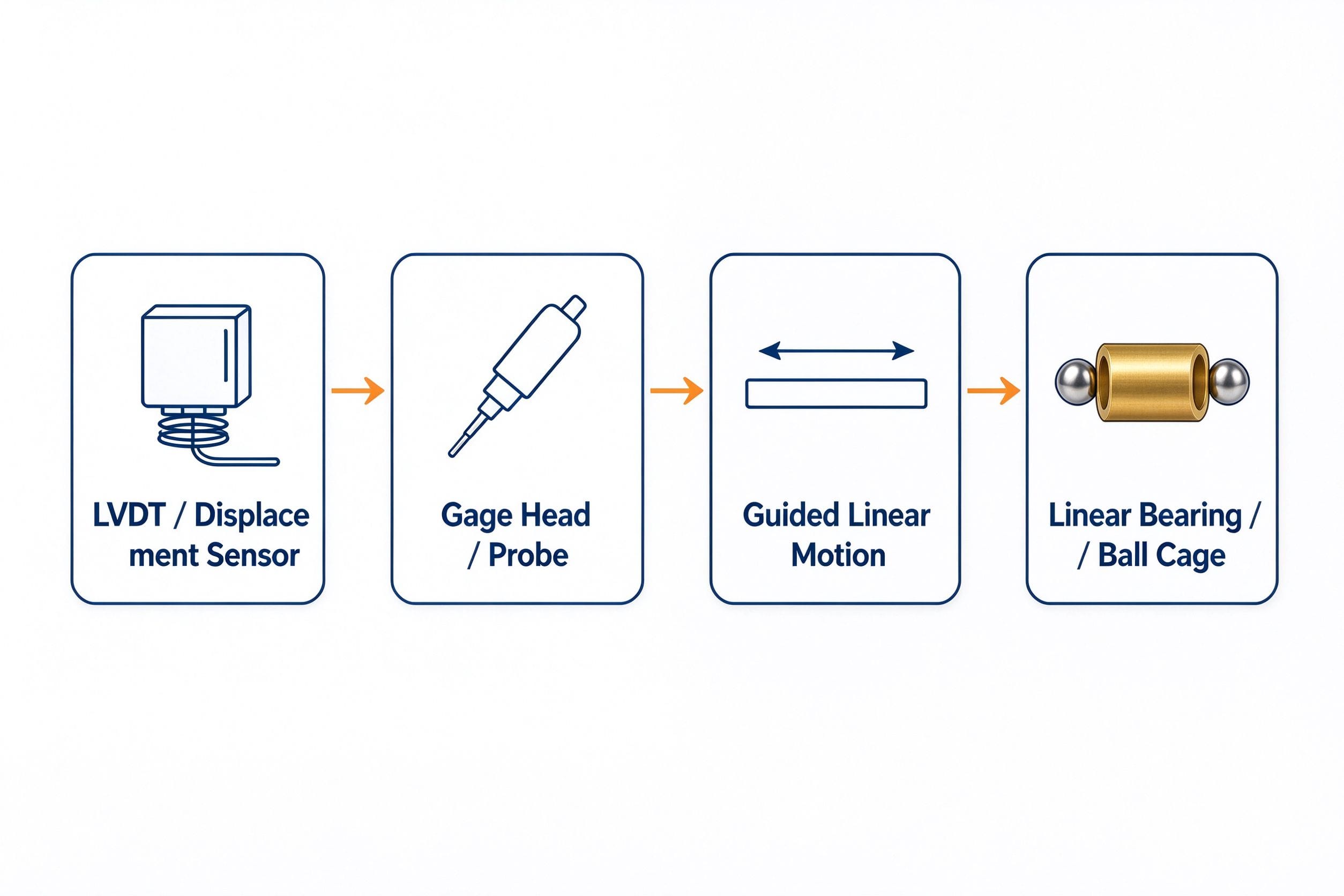
Where the ball cage sits in an LVDT-based measurement system: the electrical LVDT, the gage head probe, the guided linear motion, and the linear bearing / ball cage component.
Ball Cage for LVDT Gage Heads
Some LVDT gauging probes and gage heads use precision linear bearing systems to guide the probe shaft or moving assembly. In these designs, the ball cage is part of the mechanical guidance system rather than the electrical sensing element. It supports guided linear travel of the probe and helps keep the moving assembly aligned within the housing.
Because LVDT electrical sensing and mechanical guidance are separate concepts, our role is specific: we supply the guided-motion component, and you integrate it into your sensor design. If your gage head uses a guided push-rod or precision-bearing architecture, a custom ball cage can be manufactured to your drawing.
Why Use a Custom Ball Cage?
An off-the-shelf linear bearing or die-set cage is often a poor fit for a miniature sensor assembly. Custom manufacture matters when:
- Limited installation space — miniature sensing assemblies may have very limited space for mechanical guidance, where a standard bearing is too bulky.
- Non-standard dimensions — the required cage dimensions may not correspond to any off-the-shelf component.
- Specific ball arrangement — the number, spacing and arrangement of balls may need to match your guide geometry and stroke.
- Integration with existing components — the cage may need to work with a specific shaft, bore, housing or guide system already in your design.
- Prototype and OEM requirements — sensor manufacturers may require samples before committing to production quantities.
Customization Options
Parameters we can discuss and manufacture to drawing or application requirements include:
| Parameter | Customization |
|---|---|
| Cage diameter | According to drawing |
| Cage length | According to drawing |
| Ball arrangement | Custom (staggered rows, multi-segmented or selective placement) |
| Ball size | According to design |
| Ball material | According to application |
| Cage material | Brass / bronze, lightweight aluminum, or low-friction POM resin |
| Clearance / fit | According to assembly requirements |
| Surface treatment | According to material and application |
Not every option is available for every design. Capabilities are confirmed against your drawing and application requirements before quotation; any item outside our confirmed range is flagged rather than assumed.
Miniature and Space-Constrained Designs
Miniature displacement sensors and precision instruments often need compact mechanical guidance where standard linear bearings are unsuitable. We machine small-diameter custom ball cages and micro-cages for such space-constrained assemblies, down to an inner diameter of 2.0 mm with miniature bearing balls and proprietary staking that locks each ball into its pocket to prevent fallout during reciprocating cycles.
Micro-cages can use a minimalist ball arrangement combined with a precision-machined window slot to reduce moving mass and inertia. Compatibility with any specific sensor size is confirmed against your drawing rather than assumed.
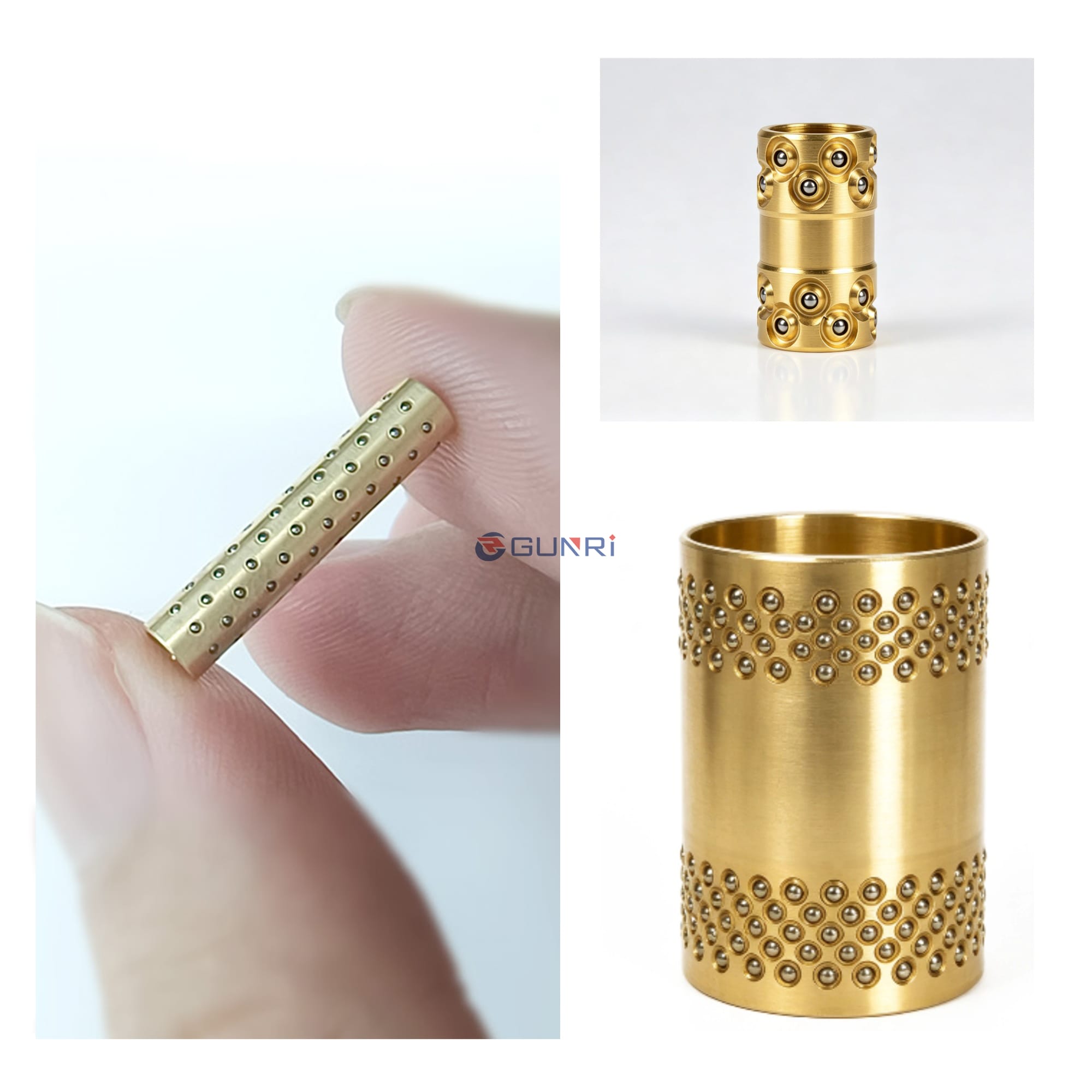
Examples of custom miniature brass ball cages we have manufactured, showing different ball arrangements and pocket patterns matched to specific shaft and bore geometries.
From Drawing to Production
Custom components typically follow this path:
What We Need for a Quote
To evaluate a custom ball cage, please provide any available information:
- 2D drawing
- 3D CAD file
- Existing sample
- Shaft diameter
- Housing / bore diameter
- Cage length
- Ball diameter
- Materials
- Required stroke
- Operating environment
- Estimated quantity
If some information is not yet available, send us the existing sample or drawing and we can discuss the requirements with you.
Frequently Asked Questions
Have a Custom Requirement?
Send us your drawing, sample or required dimensions. We will review your design and discuss a suitable ball cage configuration.
Send Your Drawing Discuss Your Application
Direct factory email: milla@gunri.com.cn · WhatsApp / WeChat +86 13790201541