Ejector Sleeve vs Ejector Pin: Which One Do You Need?
The short answer: an ejector pin pushes on a surface, an ejector sleeve pushes around a pin.
That single sentence resolves most of the question, because the geometry of the feature you are ejecting decides it for you. The rest of this article is the detail behind that rule — where the load goes, what mark is left behind, what wears out, and what each option costs over the life of the mold.
What each part actually is
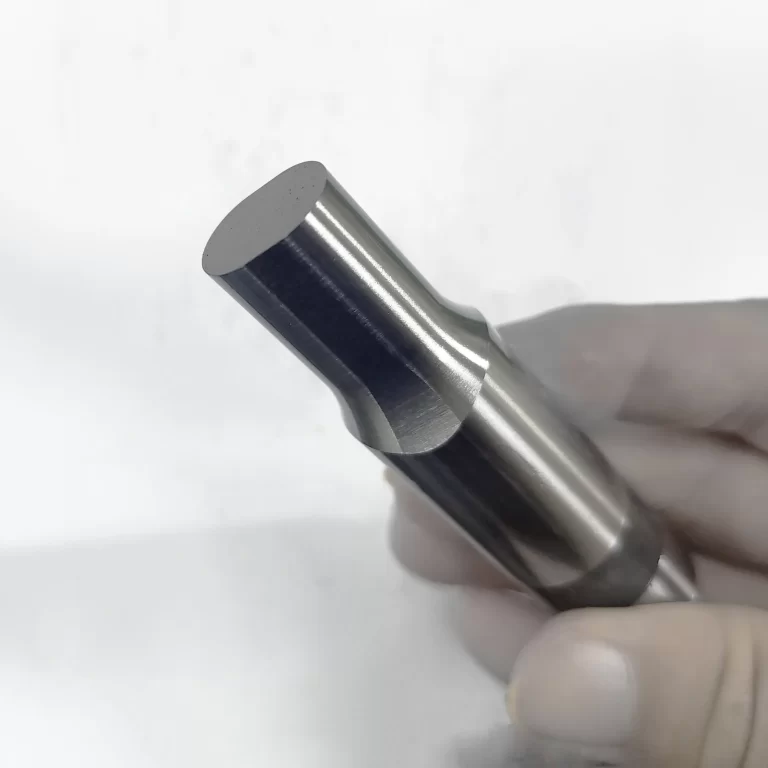
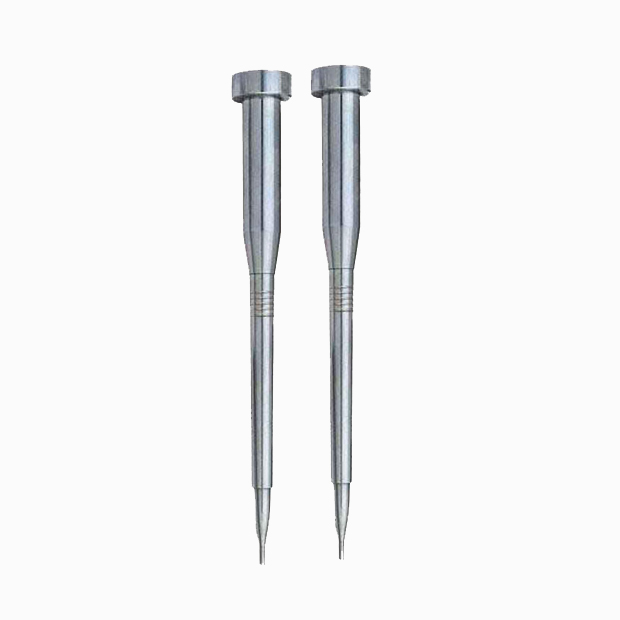
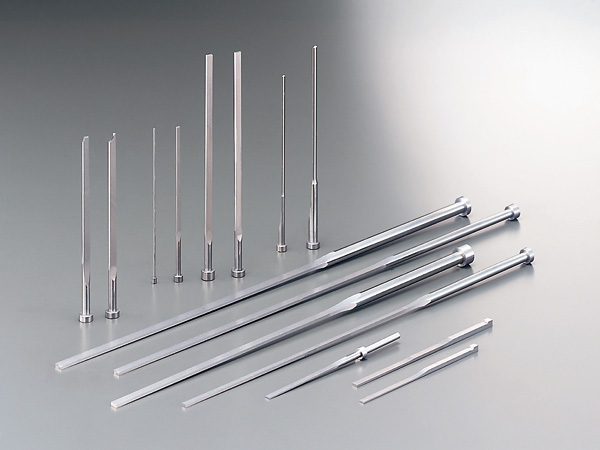
Ejector pin. A solid rod. It contacts the part directly and transfers force through a small circular area at its tip. It is the cheapest and most common ejection element, and it is the default when the part has a flat or gently curved surface to push against.
Ejector sleeve. A hollow tube that slides over a core pin. It contacts the part as a ring, around the boss that the core pin formed. Because the pin runs inside it, the sleeve also guides and supports the pin along the ejection stroke.
The difference in how they look on a drawing is small — a circle versus an annulus. The difference in what happens during ejection is not.
Where the force goes
This is the part that decides part quality.
An ejector pin delivers its force into a small area. On a thin wall, or on a feature that is still hot and soft, that concentrated load is what produces the familiar problems: a white stress mark on the surface, a slight bulge on the opposite face, and occasionally a cracked boss.
An ejector sleeve delivers the same total force as a ring around the wall of the boss. The stress per unit area drops sharply, so the wall can carry the load without deforming. On thin-wall or cosmetic parts, this is the difference between a part that looks molded and a part that looks pushed.
There is a second, less obvious benefit: because the sleeve surrounds the pin, it prevents the pin from buckling. On a long, slender core pin, the sleeve acts as a guide over the full stroke rather than only at the base.
Decision table
| Your situation | Choose | Reasoning |
| Flat surface, mark hidden or acceptable | Ejector pin | Lowest cost, no bore alignment needed |
| Boss or cylindrical feature formed by a core pin | Ejector sleeve | Load goes around the wall, not into it |
| Thin-wall boss on a visible part | Ejector sleeve | Ring mark, no stress whitening |
| Long, slender core pin that bends | Ejector sleeve | The sleeve guides the pin over its full length |
| Deep core with high wear on the pin | Ejector sleeve | The sleeve is the cheaper part to replace |
| Very tight pitch between features | Ejector pin | No room for sleeve wall thickness |
| High-cycle die, maintenance cost dominates | Ejector sleeve | The sleeve is the designed wear part |
| Die casting die with molten metal nearby | Ejector sleeve in SKD61 | Needs hot hardness and a nitrided case |
The mark each one leaves
An ejector pin leaves a small circular witness mark with a slight depression at the center — the “pin mark” that mold makers try to hide on a non-cosmetic face. On textured surfaces it is usually invisible. On a polished or visible surface it is a defect.
An ejector sleeve leaves a thin ring, at the base of the boss, with no depression. On a part where the boss sits on a visible face, a ring mark is normally acceptable where a dimple is not. It is also easier to polish out, because there is no stress concentration under the mark.
If the part is entirely cosmetic and neither mark is acceptable, the answer is usually a different ejection strategy altogether — stripper plate or air ejection — rather than a different pin.
What wears out, and what that costs
Ejector pins wear at the tip and along the shank where they run in the plate. They are cheap, they are stocked in standard sizes, and replacing them is a maintenance task rather than an engineering one.
Ejector sleeves wear in the bore, where the core pin runs. That is deliberate: the sleeve is a wear liner for a pin that is expensive to replace. In a high-cycle mold, replacing a sleeve is the intended maintenance action, and it costs far less than re-cutting a core pin or welding up a worn core.
The trade-off is that a sleeve costs more than a pin of the same diameter, and it needs a counterbore and correct shoulder fit in the ejector plate. That installation cost is paid once; the maintenance saving continues.
Three mistakes that cause most sleeve problems
1. Specifying the sleeve by OD only.
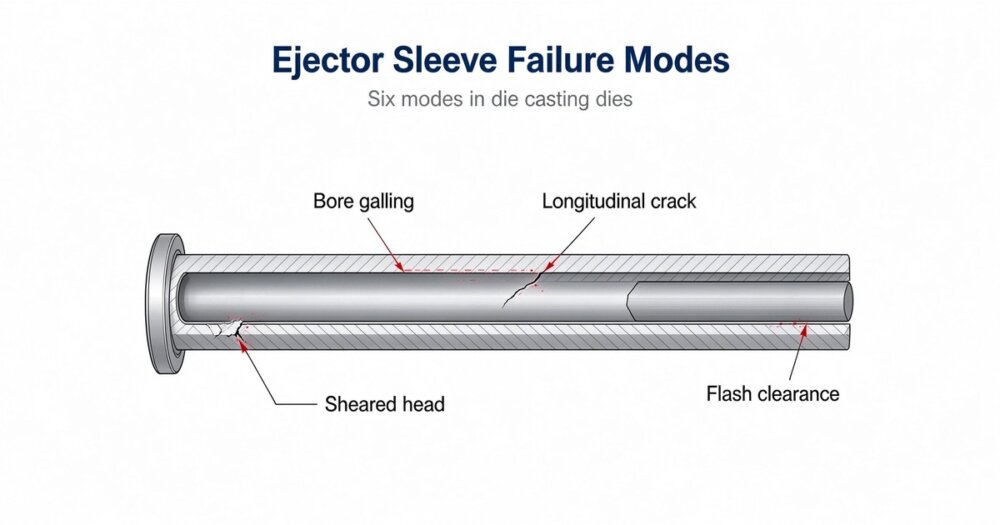
The ID is the working surface. A sleeve that fits the counterbore but has the wrong bore clearance will gall or leak flash. Always specify ID, OD, length and shoulder form.
2. Ignoring thermal expansion.
A clearance that is correct at room temperature changes at operating temperature — dramatically so in die casting. The sleeve runs hotter than the pin, so the bore closes up as the die heats.
3. Using an injection-mold sleeve in a die casting die.
Different surface treatment, different clearance, different failure mode. A sleeve that works for PA66 will not survive aluminum at 680 °C.
Choosing between the two grades we produce
GUNRI makes ejector sleeves in two grades, and the choice follows from the failure mode rather than from hardness:
- SKD61 — inner hardness 38–42 HRC, nitrided surface above HV900, length up to 1,000 mm, coaxiality 0.06 mm. The default for die casting and for high-temperature or thermal-cycling duty.
- SKH51 — 59–61 HRC, length 300 mm, coaxiality 0.01 mm, precision to 0.005 mm. The choice for abrasive-filled resins and thin-wall precision work.
Ejector sleeve specifications and size range
Ejector sleeves for die casting dies
FAQ
Is an ejector sleeve the same as an ejector pin sleeve?
Yes — “ejector pin sleeve” and “sleeve ejector pin” are the same part described from the other direction. The sleeve is the hollow part; the pin runs inside it.
Can I convert an existing pin station to a sleeve?
Usually yes, if there is wall thickness available around the pin and the ejector plate can take a counterbore. The pin diameter stays, the plate is bored for the sleeve OD, and the shoulder form changes.
Does a sleeve need a different ejector plate?
Not a different plate, but a machined counterbore and a shoulder seat. Retaining the sleeve by friction alone is a common cause of the head shearing off.
Which is better for a die casting die?
A sleeve, in SKD61 with a nitrided case — but only with the clearance sized for operating temperature. See our die casting page for the method.
Not sure which your part needs?
Send the part drawing or a photo of the ejection side. We will tell you which element fits the geometry, and quote it.