Choosing the Right Gas Spring Mounting Brackets for Tooling
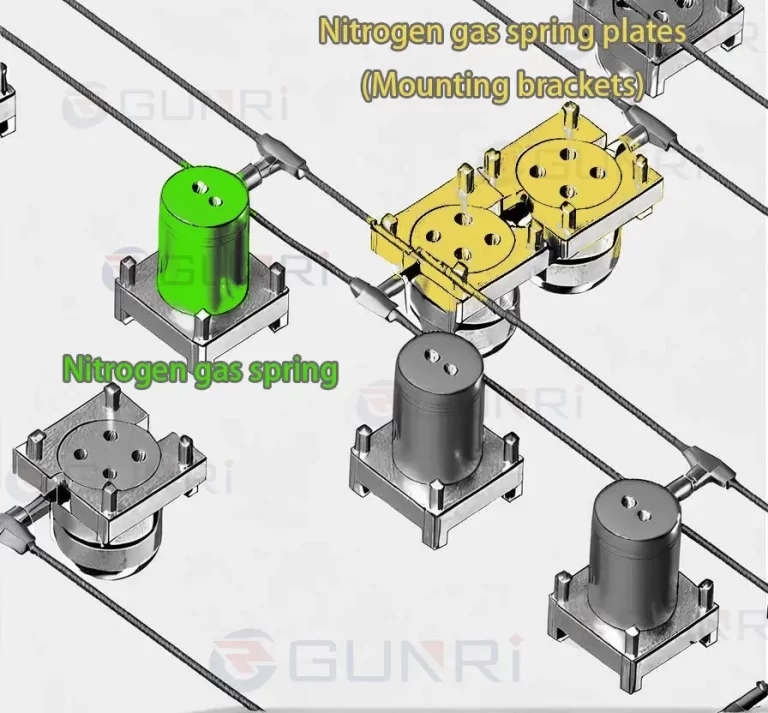
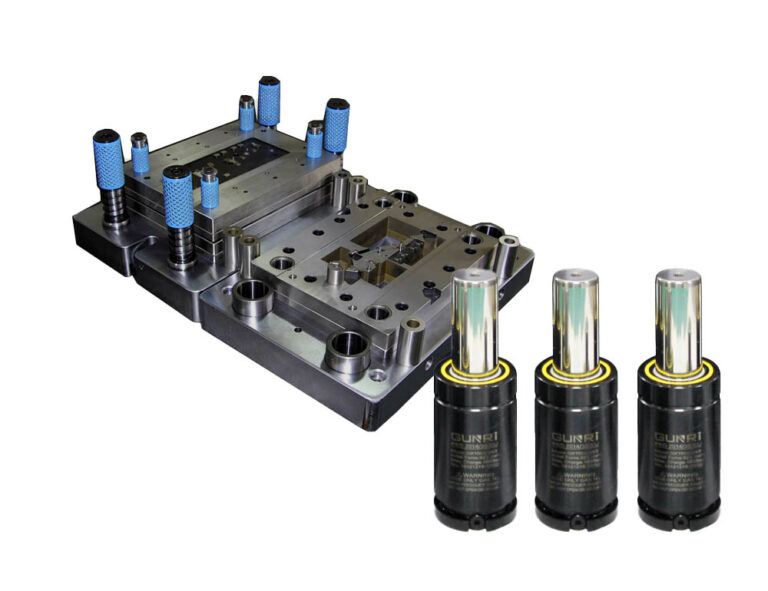
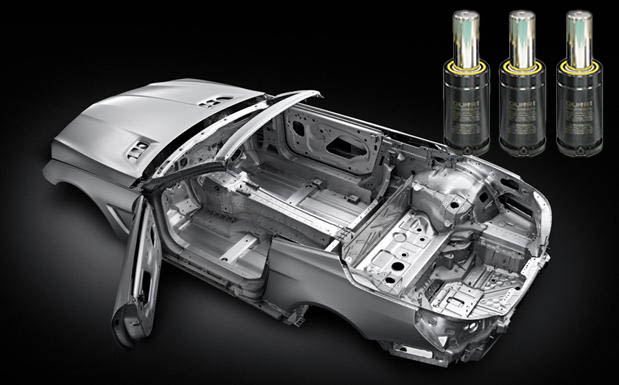
When sourcing Nitrogen Gas Springs for Tooling, the mounting bracket should be checked with the spring and tool drawing. These are mounts for press tools, stamping dies and related industrial tooling. Start with the spring model, groove or base interface, and the way the assembly supports the working load.
A square flange and a round flange may look interchangeable, yet use different groove details or fixing patterns. Buying by appearance alone can leave the toolmaker with parts that do not seat or retain as intended.
Compare five tooling gas spring mounting styles
The following configurations identify what to discuss with the supplier. Final compatibility is established by the actual spring and mount drawings.
| Mounting style | Spring interface | Buyer check |
|---|---|---|
| Lower-groove leaf brackets | Body groove near the base | Confirm groove profile, engagement and the space available for the bracket ears. |
| Upper-groove square flange | Upper body groove | Check groove position, square footprint and clearance around the mounting screws. |
| Bottom mounting plates | Threaded holes in the spring base | Match the base thread pattern, contact face and available mounting depth. |
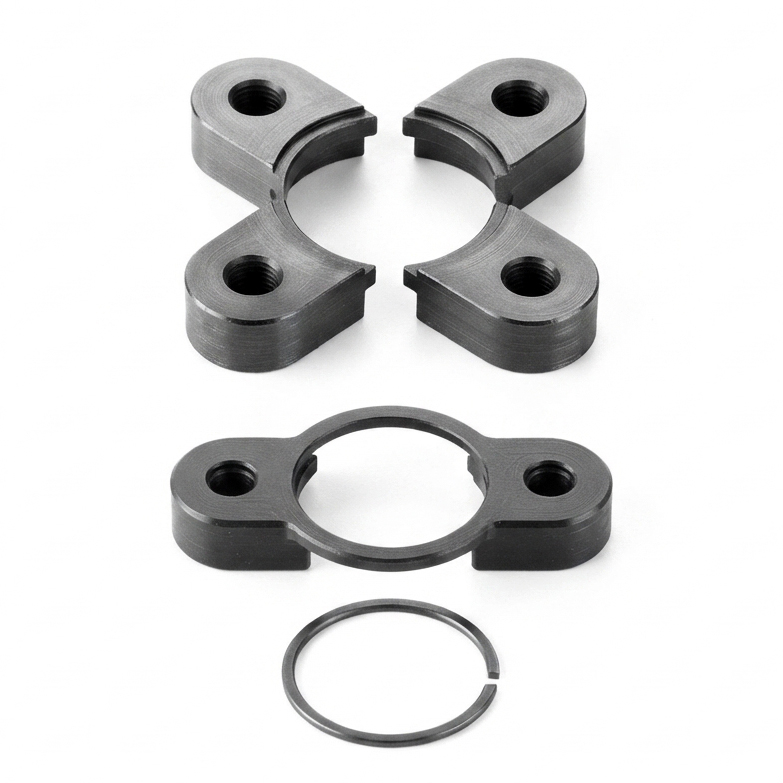
| Lower-groove mounting plates | Lower body groove | Match the split or plate arrangement and the specified retention hardware. |
| Upper-groove round / oval brackets | Upper body groove | Choose the outline to suit the tool layout, then verify groove and bolt-pattern dimensions. |
Check the lower groove profile and clearance around the bracket ears.
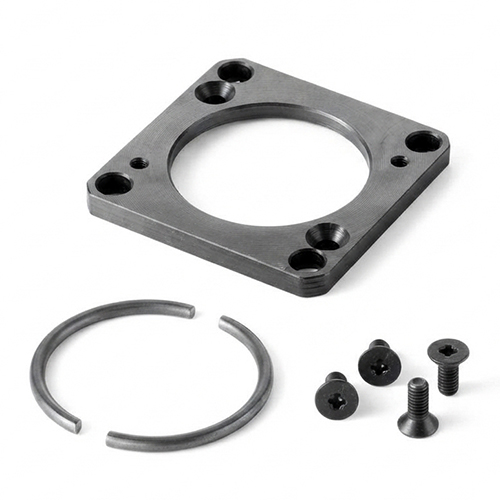
Match the upper groove position and square flange bolt pattern.
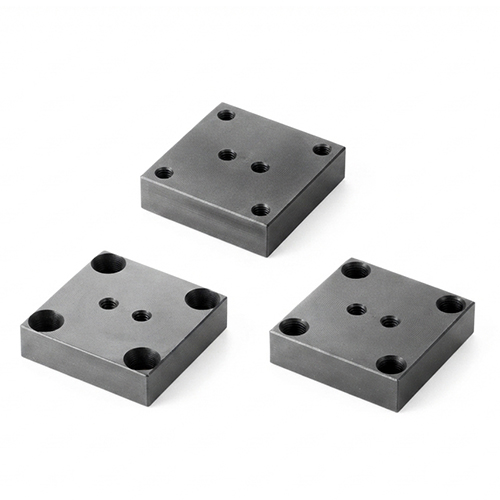
Confirm the spring base threads, contact face and mounting depth.
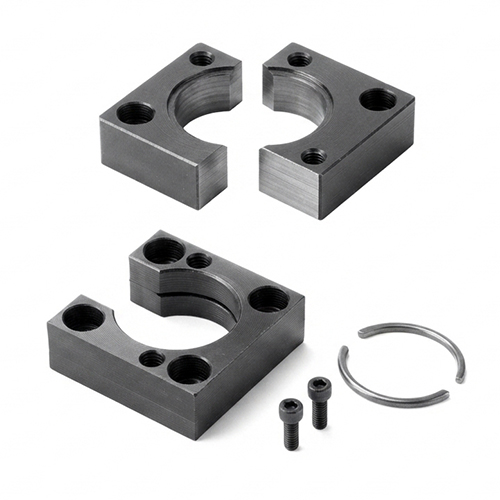
Check the lower groove engagement and retention hardware.
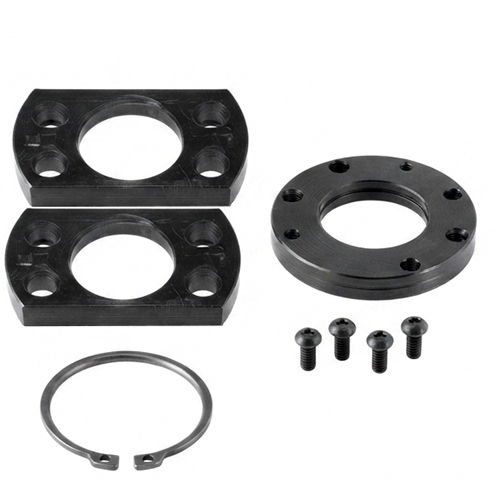
Choose round or oval to suit the layout; verify the upper groove and fixing pattern.
Configuration illustrations only. Confirm dimensions, spring compatibility and included retaining rings or fasteners against the quotation and approval drawing.
Three checks before placing an order
- Match the exact spring interface. Supply the manufacturer, series and model reference. Check body diameter, groove profile and location, or the base-thread pattern; a nominal diameter alone is not enough.
- Confirm the support and load path. Establish whether the selected mount retains the cylinder, provides working-load support, or requires a separate supporting surface. KALLER, for example, specifies additional bottom support for its FAC arrangement; that requirement cannot be inferred from flange shape alone.
- Check the complete installation envelope. Allow access to fixing screws, the charging or connection port, adjacent components and removal for servicing. Confirm whether the quotation includes retaining rings, segments and fasteners.
What about mounting orientation?
Use the permitted mounting method and orientation for the exact tooling gas spring and mount combination. A horizontal arrangement may need a different support design from an upright lug mount. Ask the supplier to review rod alignment and support against the spring maker’s instructions. Generic installation advice for gas struts does not establish suitability for a tooling gas spring.
Send a complete RFQ
Include the spring model or reference drawing, chosen mounting style, critical interface dimensions, bolt pattern, material and finish requirements, assembly layout and quantity. For a replacement, include both the existing mount and the spring reference. Ask for a dimensioned approval drawing when the original specification is incomplete.
Compare the five illustrated options on our nitrogen gas spring mounting brackets and plates product page, then send the drawing and quantity for a quotation.
Technical references
Mounting principles were checked against KALLER mounting descriptions and the DADCO model-based mount catalog. Use the current instructions for the spring being purchased; these references do not establish cross-brand interchangeability.