What Information Do You Need to Quote a Custom Miniature Ball Cage?
A practical RFQ guide for OEM engineers, technical buyers, and precision equipment manufacturers.
You need a miniature ball cage for a precision guide assembly. Perhaps a standard catalog part is too large, the required ball arrangement is unavailable, or an existing component needs a new manufacturing source.
You have found a potential supplier. But what information should you send to receive an accurate quotation?
For a custom miniature ball cage, the answer goes beyond its inside diameter and overall length.
The cage must retain the steel balls while remaining compatible with the shaft, guide sleeve, and operating conditions of the assembly. Missing information can lead to unnecessary quotation delays, incorrect assumptions, or additional prototype revisions.
This guide explains what to prepare before requesting a quote — and how to start if you don’t have a complete engineering drawing.

1. Start With the Type of Ball Cage You Need
Before discussing dimensions, identify what you want the manufacturer to supply.
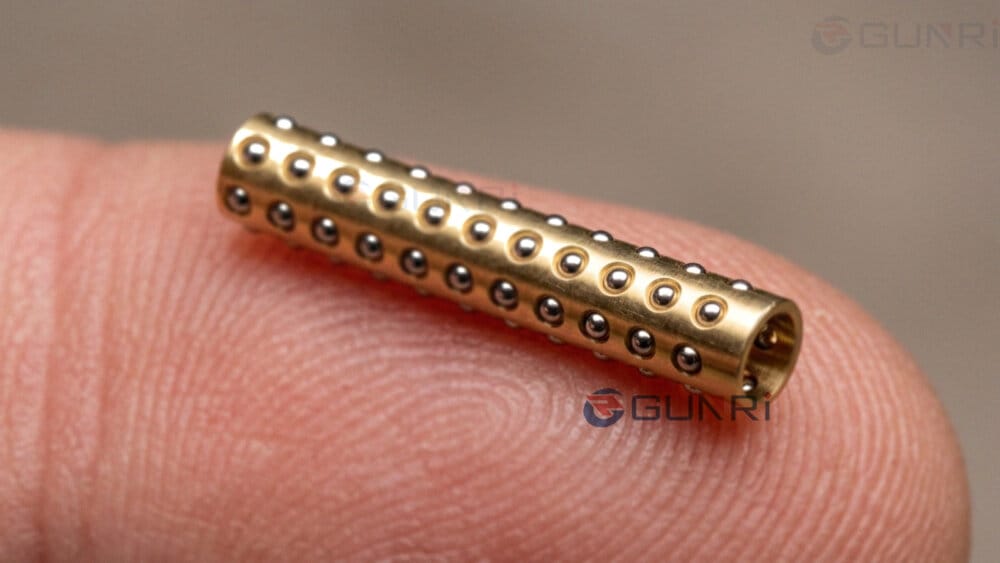
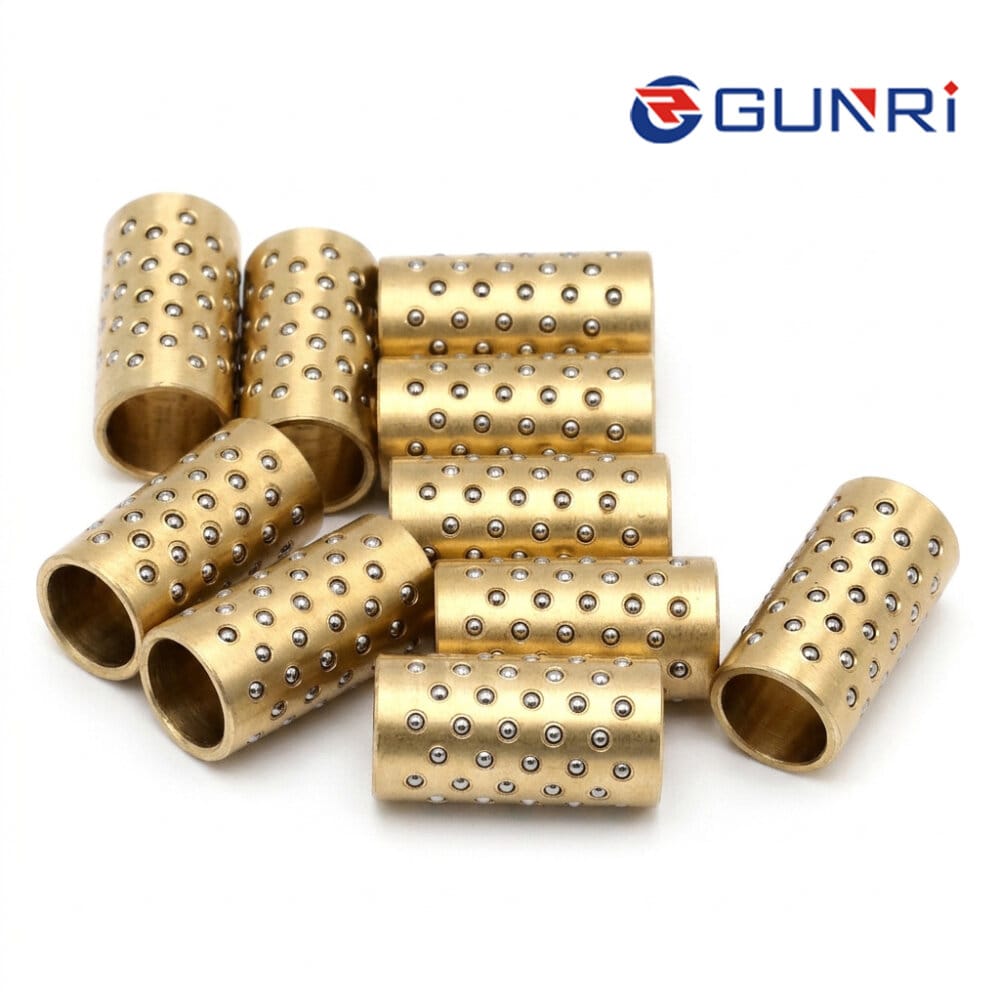
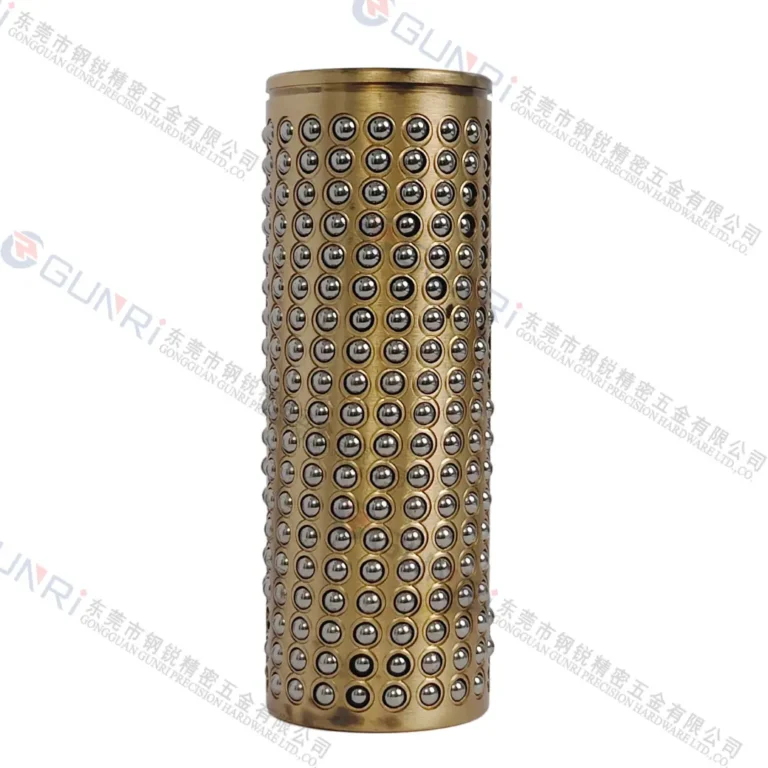
A miniature precision ball cage, also called a miniature ball retainer, holds a series of small balls in defined positions between two mating guide surfaces.
Depending on the design, the balls can provide rolling contact for linear movement, rotational movement, or a combination of both.
For quotation purposes, distinguish between:
- Ball cage only: The retainer body supplied with its captured balls.
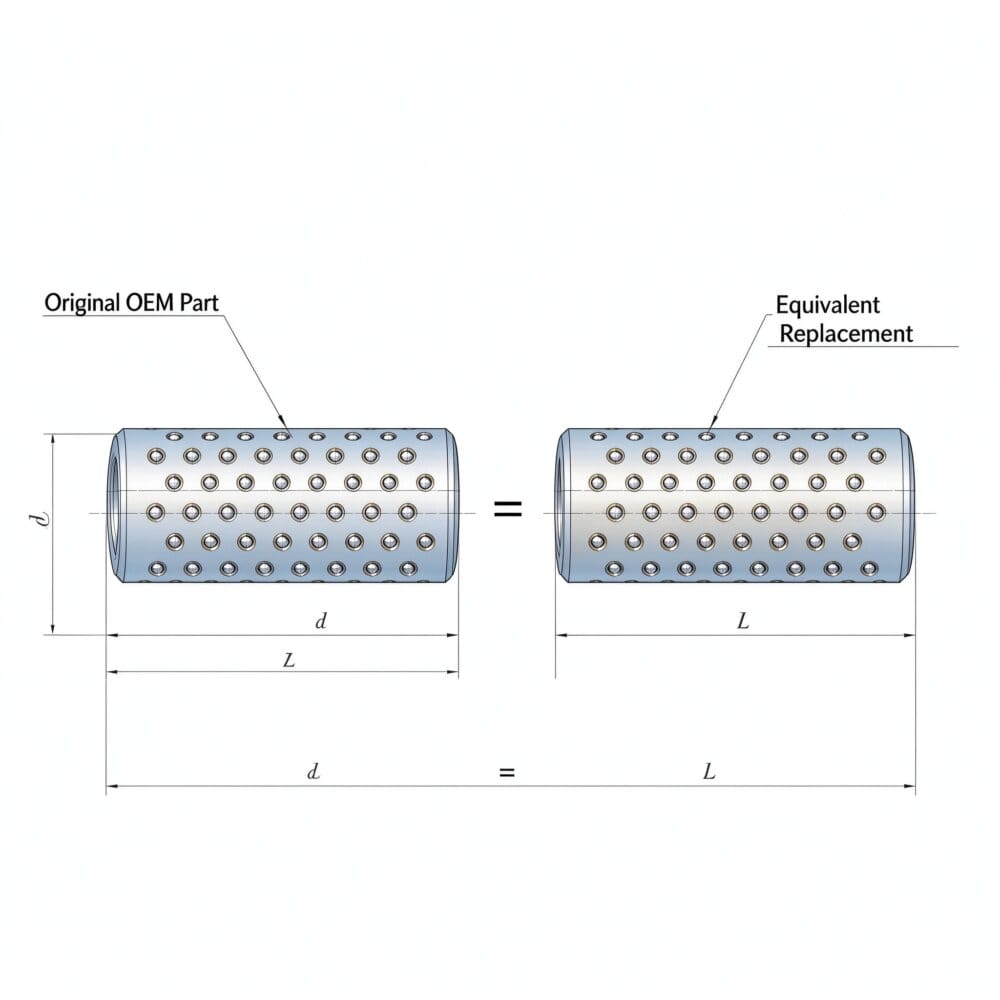
- Custom replacement cage: A ball cage manufactured to match an existing component’s specified requirements.
- Complete guide assembly: A matched set that may include the shaft, guide sleeve, and ball cage.
These are different manufacturing requirements.
If you need only the cage, the manufacturer must understand how it will interact with the existing shaft and sleeve.
If you need the complete guide assembly, the mating dimensions and functional requirements should be reviewed together.
RFQ Tip: State whether you need the ball cage alone or a complete miniature guide assembly.
2. Provide the Critical Dimensions
The dimensional envelope is the starting point for a custom ball cage quotation.
The following information is especially useful:
| Dimension | What to Specify | Why It Matters |
|---|---|---|
| Cage inside diameter (ID) | Nominal diameter and tolerance, if defined | Establishes clearance relative to the shaft |
| Cage body outside diameter (OD) | Nominal diameter and tolerance | Defines the retainer body envelope |
| Overall cage length | Required finished length | Determines available space and cage geometry |
| Steel ball diameter | Ball size and applicable specification | Influences the assembled rolling-contact geometry |
| Shaft diameter | Diameter and tolerance | Helps evaluate the intended fit |
| Guide sleeve inside diameter | Bore diameter and tolerance | Defines the mating guide surface |
| Ball arrangement | Number, rows, spacing, or pattern | Defines the position of the rolling elements |
Important: The outside diameter of the cage body is not necessarily the same as the maximum diameter measured over the installed steel balls.
If possible, identify both dimensions separately.
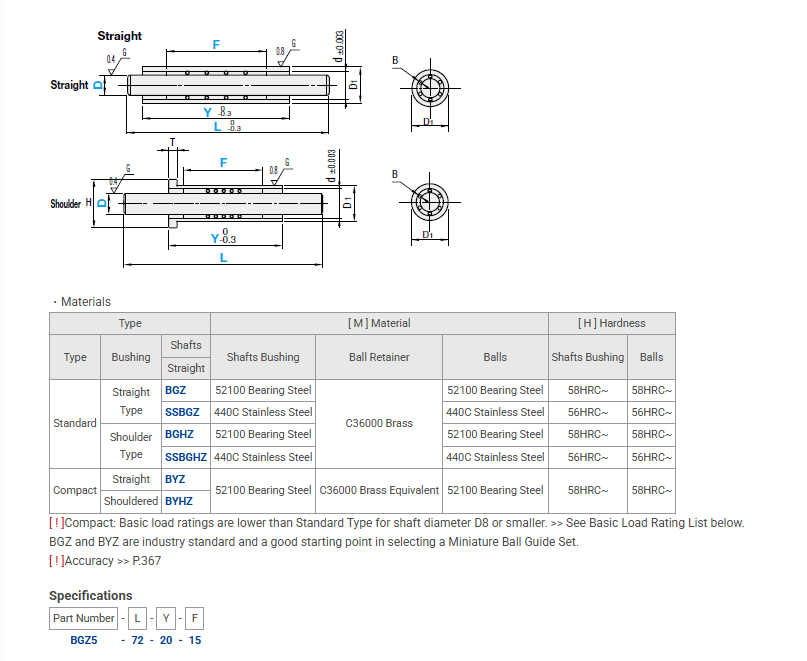
For a miniature guide, the relationship among shaft diameter, ball size, cage geometry, and guide sleeve bore is especially important.
A manufacturer should not assume the correct fit from the cage ID alone.
What if you only know the shaft and sleeve dimensions?
You can still request an initial manufacturing review.
Provide the shaft outside diameter, sleeve inside diameter, available installation length, and intended movement.
The manufacturer can then identify which dimensions or design decisions remain unresolved before a reliable quotation can be prepared.
3. Specify the Steel Ball Arrangement
Two ball cages with similar overall dimensions may behave differently because of their ball arrangement.
Depending on the application, the drawing may specify:
- Ball diameter
- Total number of balls
- Number of rows
- Angular spacing
- Axial spacing or pitch
- Helical or other defined arrangement
- Ball pocket positions
- Ball retention requirements
For some precision linear and rotary guides, a helical ball arrangement is used to distribute the rolling contacts along different tracks.
However, the correct pattern depends on the intended mechanism.
If your design has already been validated, provide the existing arrangement rather than asking the manufacturer to choose a different one without approval.
If you are developing a new mechanism, describe the application and ask whether the proposed geometry can be manufactured.
RFQ Tip: A drawing or close-up photograph showing the ball pattern is often more useful than a written description such as “small brass cage with steel balls.”
4. Confirm the Cage and Ball Materials
Material selection is another important part of the quotation.
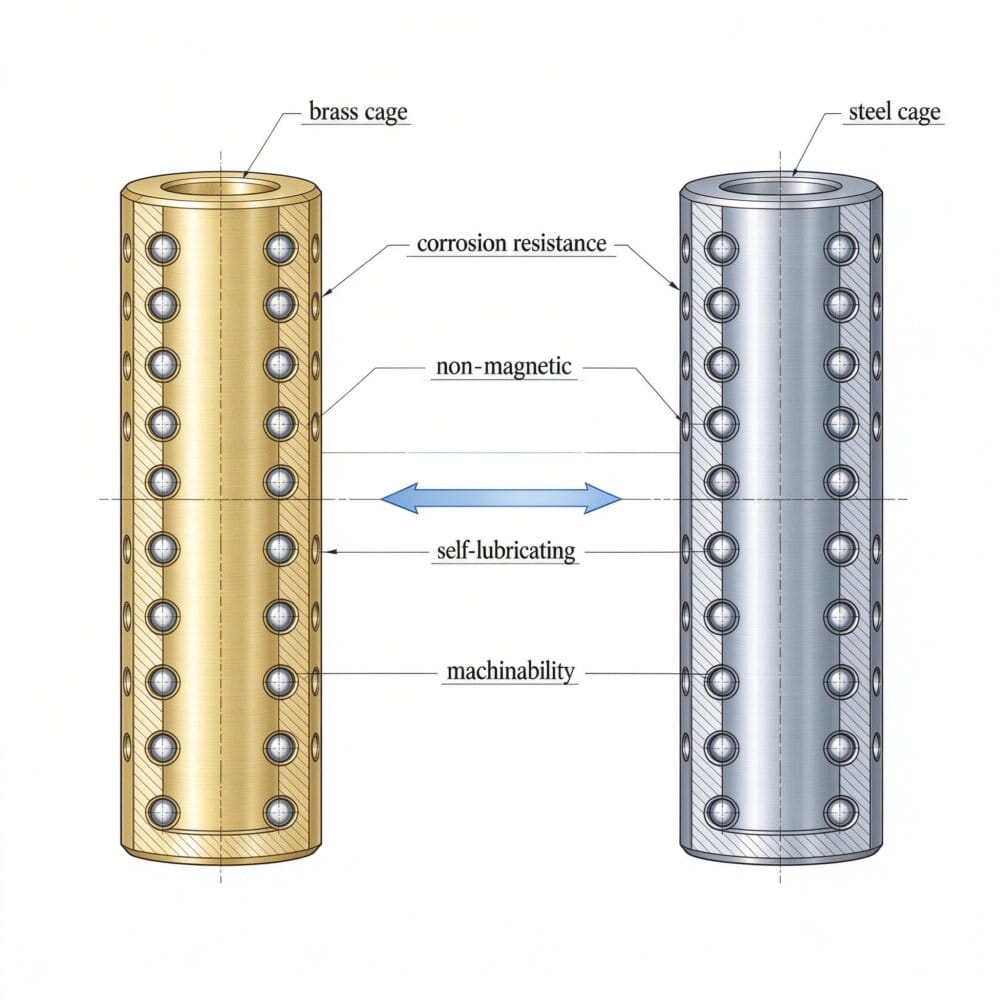
Common ball cage designs use materials such as brass, while the rolling elements may be manufactured from hardened bearing steel, stainless steel, or other materials selected for the application.
The appropriate combination depends on the operating environment, mating surfaces, lubrication, and performance requirements.
When requesting a quote, provide:
- Required cage material or material grade
- Required ball material
- Ball precision grade, if specified
- Surface treatment, if applicable
- Corrosion resistance requirements
- Lubrication conditions
- Operating temperature range, where relevant
If you are reproducing an existing component, the original material specification should be included whenever available.
A material that appears visually similar may not provide equivalent mechanical or environmental performance.
Don’t know the material grade?
State what you know and indicate that the material specification requires confirmation.
This allows the manufacturer to review the requirement without treating an assumption as an approved specification.
5. Explain How the Ball Cage Will Be Used
Not every quotation requires a complete engineering calculation.
However, understanding the application helps the manufacturer identify important risks before production.
Useful information includes:
Type of movement
Is the cage used for linear motion, rotary motion, or combined linear and rotary movement?
Travel and operating conditions
What is the required stroke length, approximate movement frequency, and expected duty cycle?
Loading conditions
Are there known radial loads, moments, or other operating forces?
Mating components
Are the shaft and guide sleeve already manufactured? Are their materials and surface requirements fixed?
Operating environment
Will the assembly operate with lubrication, in a clean environment, or under unusual temperatures or contamination conditions?
These details are especially useful when the customer requires more than a dimensional replacement.
A manufacturing quotation confirms what can be produced. It should not be mistaken for a guarantee of complete assembly performance unless the relevant functional requirements have also been reviewed and validated.
6. Identify Critical Tolerances and Inspection Requirements
Miniature components often have limited space for dimensional variation.
However, not every feature needs the same tolerance or inspection method.
Where applicable, the drawing should identify critical characteristics such as:
- Cage ID, OD, and length tolerances
- Pocket position and spacing
- Concentricity or runout requirements
- Ball diameter and grade
- Retention and free-rotation requirements
- Surface finish requirements
- Other dimensions affecting assembly fit
Also specify whether your project requires:
- First article inspection
- Dimensional inspection records
- A coordinate measuring machine (CMM) report, where appropriate
- Material certificates
- Defined sampling or acceptance criteria
Inspection requirements should be agreed upon before production, particularly for components intended to replace an existing qualified part.
RFQ Tip: Mark critical dimensions on the 2D drawing. A 3D model is useful for geometry, but it does not always communicate the required tolerances and inspection criteria.

Quick RFQ Checklist
- Supply scope and application
- Drawing revision, reference part number, or sample
- Cage ID, body OD, length, ball size and pattern
- Shaft OD, sleeve bore, motion, stroke, and load
- Materials, critical tolerances, inspection, quantity, and target date
Jump to the fill-in RFQ template.
7. Provide Drawings, Samples, or an Existing Part Number
The easiest way to start a quotation is with a complete drawing.
Useful file formats include:
- PDF engineering drawings
- STEP (.step / .stp)
- IGES (.igs / .iges)
- SolidWorks part files (.sldprt)
A 2D drawing and 3D model can complement each other.
The model helps communicate geometry, while the drawing can specify tolerances, materials, inspection requirements, and other manufacturing notes.
What if you don’t have a drawing?
You may still have enough information for a preliminary review.
For example, you can provide an existing sample, an original part number, photographs, or measured dimensions.
For a replacement component, the following information is especially useful:
- Original manufacturer or reference part number
- Photos of the existing cage
- Measured cage dimensions
- Available shaft and sleeve dimensions
- Known problems with the existing supply
- Required quantity
An existing sample can help establish geometry, but it cannot reliably reveal every original tolerance, material requirement, or performance characteristic.
For that reason, reverse-engineered components should be reviewed and validated before being accepted as replacements.
8. Include Prototype Quantity and Estimated Production Volume
Quantity has a direct impact on manufacturing planning and quotation.
A one-piece development prototype and a recurring production order may require different preparation, inspection arrangements, and pricing.
If available, provide:
| Purchasing Information | Example |
|---|---|
| Initial prototype quantity | 2–5 pieces |
| First production quantity | 100 pieces |
| Estimated annual demand | 1,000 pieces |
| Required delivery date | Project-specific |
| Delivery destination | Country or region |
| Inspection documentation | First article report required |
These quantities are illustrative, not minimum order requirements.
You do not need an exact annual forecast during early development.
An approximate range helps the manufacturer understand whether the project involves prototype evaluation, a limited replacement batch, or ongoing OEM supply.
9. What if Your RFQ Information Is Incomplete?
You don’t necessarily need a finalized design to begin a discussion.
An initial request can be based on three common situations.
Situation A: You Have a Complete Drawing
Send the drawing, material requirements, quantity, and inspection expectations.
This is generally the most straightforward route to a manufacturing quotation.
Situation B: You Have an Existing Cage to Replace
Send the original drawing, part number, or sample information.
The manufacturer can review the available geometry and identify any specifications that require confirmation.
Situation C: You Are Designing a New Miniature Guide
Send the shaft diameter, guide sleeve bore, available installation space, movement requirements, and any preliminary ball cage dimensions.
The next step may be a manufacturability review rather than an immediate fixed-price quotation.
The goal of the first RFQ is not to answer every engineering question. It is to provide enough information to identify a practical manufacturing path.
10. Requesting Custom Miniature Ball Cage Manufacturing from GUNRI
GUNRI manufactures custom precision ball cages and ball retainers based on customer drawings and requirements.
According to GUNRI’s published miniature manufacturing specifications, its product range includes:
- Miniature cage inside diameters down to 2.0 mm
- Steel ball diameters as small as 0.6 mm
- Cage lengths starting at 8 mm
GUNRI supports drawing-based custom manufacturing, prototype development, and precision component inspection.
For a custom or replacement project, the initial review focuses on the available geometry, required materials, ball arrangement, and inspection specifications.
Manufacturing feasibility, achievable tolerances, pricing, and delivery arrangements are confirmed according to the individual project.
Start With Your Drawing — Or What You Already Have
You can contact GUNRI even if your specification is not yet complete.
For the fastest initial review, send whichever of the following you have available:
- An engineering drawing or 3D model
- An existing sample or original part number
- Critical cage and mating-component dimensions
- Required prototype or production quantity
- Any special material, operating, or inspection requirements
Request a Custom Miniature Ball Cage Manufacturing Review
GUNRI — Precision Component Manufacturing
Website: https://grmold.com/
Contact: https://grmold.com/contact/
Email: milla@gunri.com.cn
Frequently Asked Questions
Can I request a custom miniature ball cage without a drawing?
Yes. Existing samples, photographs, original part numbers, and measured dimensions can provide a starting point for an initial feasibility review. A confirmed specification will still be needed before production.
Do I need to specify the steel ball diameter?
If the ball diameter is already defined, include it in your request. If it is not, provide the shaft and sleeve dimensions along with the application requirements so the missing design information can be reviewed.
Is the cage outside diameter enough for a quotation?
Usually not. The cage ID, body OD, length, ball diameter, ball arrangement, and mating conditions may all affect manufacturing feasibility and pricing.
Can GUNRI manufacture a replacement for an existing ball cage?
GUNRI can review existing drawings or sample information for custom replacement manufacturing. Dimensional and functional equivalence must be confirmed for the specific application.
Can I order prototype quantities before mass production?
GUNRI’s published service information includes prototype manufacturing without a minimum order requirement. Final availability, quotation, and inspection arrangements should be confirmed for the particular design.
What is the best way to get an accurate quote?
Provide the most complete drawing available, clearly identify the critical tolerances, and include the required quantity and operating conditions. If information is missing, explain what is known and what still needs to be determined.
Copyable RFQ Template
Copy this template into your inquiry. Fill in what you know and mark open specifications as “To be confirmed.”
Company and contact:
Application:
Project: New design / Replacement
Supply scope: Empty retainer / Cage with balls / Complete guide set
Drawing revision, reference part number, or sample:
Cage ID / body OD / overall length:
Envelope over installed balls:
Shaft OD / guide sleeve bore:
Ball diameter / grade / count / arrangement:
Cage and ball materials:
Motion type / stroke / load / operating environment:
Critical tolerances / inspection requirements:
Prototype quantity / first production quantity / estimated annual demand:
Target delivery date / destination:
Open specifications:
Technical references: Mahr MarMotion N502 catalog example and GUNRI’s published miniature ball cage range.