Graphite-Plug Brass Ball Cages for Stamping Dies
A stamping press runs three shifts. The die-set guide posts are lubricated on a scheduled greasing interval, but the line is unattended for long stretches, and the maintenance crew cannot get to every press on time. The brass guide cages wear out early — dry spots on the post, a rough feel on the downstroke, then a galling mark that ruins the bushing. The problem is not the cage material. It is that the cage has no internal lubrication when the grease interval lapses.
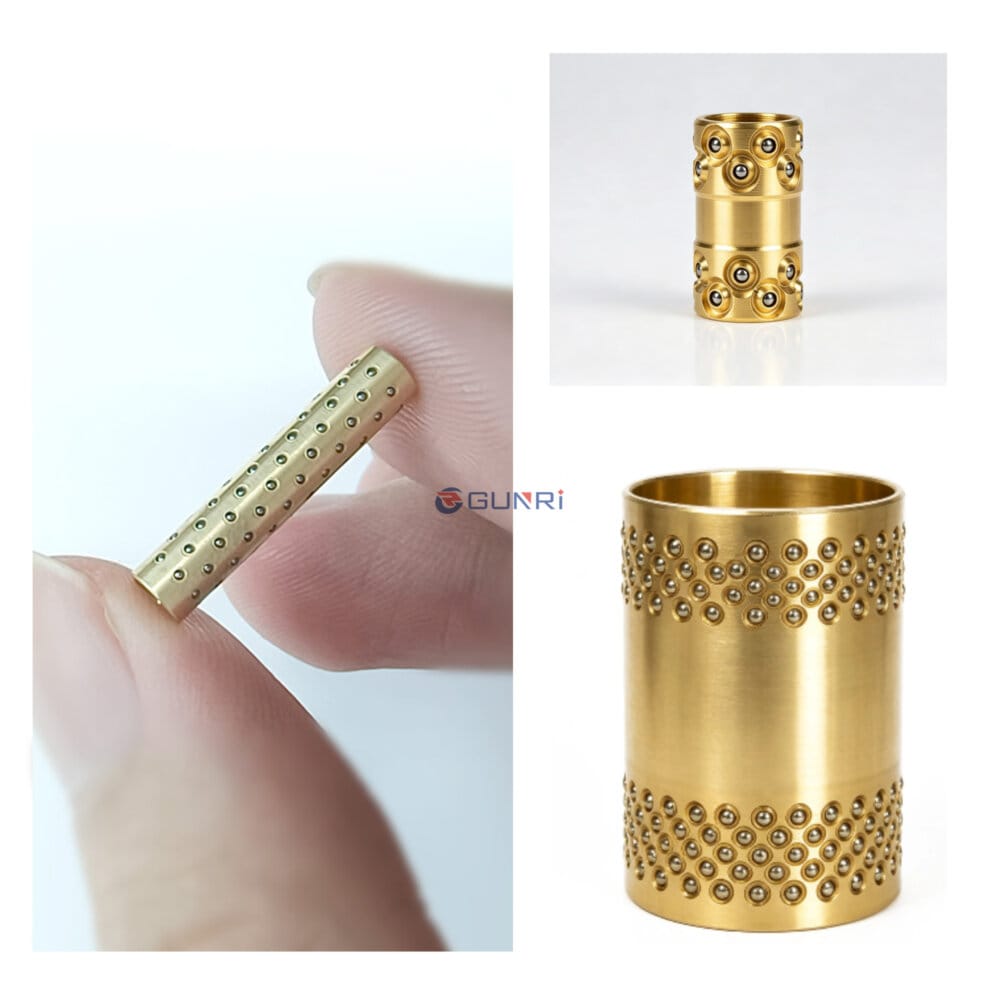
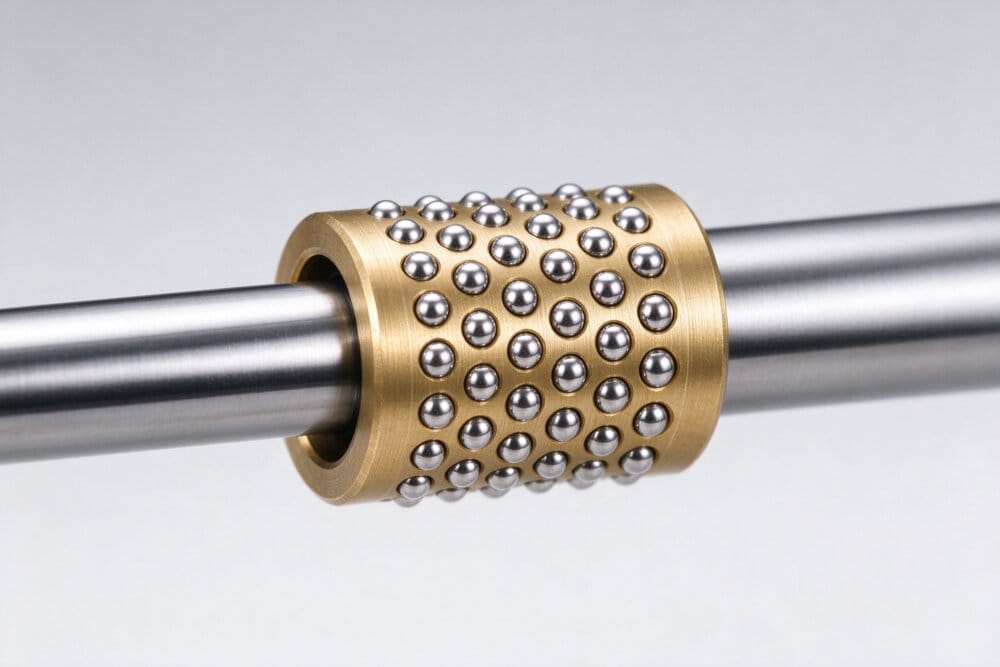
We build brass ball cages with graphite solid-lubricant plugs for stamping die guides. The plugs are pressed into the cage OD or face and feed graphite against the post as the cage travels, so the guide runs low-oil or oil-free between lubrication services. This is the maintenance-free cage the press line asks for when the greasing schedule cannot keep up with the uptime target.
What a graphite plug does
A graphite plug is a small solid-lubricant insert pressed into a machined hole in the cage. As the cage slides on the hardened post, the graphite transfers a film onto the post surface. The film carries the load between the brass cage and the steel post, so the two metals do not touch directly during the moments when the oil film has broken down. The plug wears slowly and the cage keeps the post coated through long intervals between grease services.
This is not a replacement for oil. It is a backup lubricant that extends the interval. A die guide that is greased on schedule will outlive one that runs dry on graphite alone. But the graphite plug is what keeps the guide alive on the off-shift, between services, when the press cannot be stopped to re-lube.
Brass with graphite — where it fits
Brass is the default cage material for stamping die guides. It machines cleanly, holds a sharp pocket edge, and is forgiving against the hardened post. The graphite plug is an add-on to the brass body, not a change of material. We start with the brass cage geometry and drill the plug holes where the lubrication feed does the most good — on the OD that rubs the bushing bore, or on the face that rides against a shoulder.
The brass-plus-graphite configuration is chosen when:
- The press runs unattended for long stretches and the greasing interval cannot be guaranteed.
- The die set is in a hard-to-reach position where scheduled maintenance is slow.
- The application is a drop-in replacement for an existing die-set cage that has been galling.
- The customer wants a low-oil guide rather than a fully dry one — the brass body still benefits from a film of grease, and the graphite covers the gaps.
If you are evaluating a fully dry guide, the bronze body with graphite plugs is the more common choice — see bronze ball cages with graphite plugs for when bronze is picked over brass. The general lubrication trade-off is in ball cage lubrication: graphite, oil, POM.
The die-set guide service case
Stamping dies are the classic application for the graphite-plug brass cage. The guide post and bushing see repeated vertical strokes, moderate loads, and a hostile environment of metal fines and lubricant mist. A plain brass cage relies entirely on the grease the maintenance crew pumps in. A graphite-plug brass cage keeps a film going when that grease is gone.
For the press line, the upgrade shows up as longer intervals between cage replacements and fewer galling marks on the posts. It is not a load rating change — the cage still carries the same balls on the same post. It is a lubrication redundancy that protects the guide through the off-shift hours.
Custom geometry on the graphite cage
We machine the graphite-plug brass cage to your drawing, with the same custom geometry options as any other cage:
- Slotted windows for side loading of the balls.
- Oil grooves that channel grease to the plug locations and the ball pockets.
- Multi-row ball arrangements when the die guide needs more than one row of balls on the post.
- The full envelope range — from the miniature 2.0 mm ID up to 400 mm OD, which covers the large press die cages that show up on big stamping lines.
The plug holes are positioned on the drawing. Tell us where the post sees the most contact and we will place the plugs there. We do not put plugs in places that interfere with the ball pockets or the staking lands.
Inspection and ordering
The graphite-plug brass cage runs through the same CMM inspection as any other cage: pocket location, runout, ID, OD, length, and the plug positions. The inspection report ships with the cage. The plugs are pressed in after the CMM dimension check on the body, so the body dimensions are measured before the plugs are installed.
To order, send the die-set cage drawing or the Agathon / MISUMI / FIBRO part number you are replacing. We will confirm the envelope, place the graphite plugs on the drawing where the post contact is highest, and quote the staked cage. Equivalent parts are covered in Agathon / MISUMI / FIBRO ball cage equivalents, and the custom-cage ordering flow is in custom ball cages made to your drawing.
Send your drawing or a sample to our engineering team for a no-obligation review. We accept STEP, IGES, and SLDPRT files. Every cage is CMM-inspected before shipment.