Agathon / MISUMI / FIBRO Ball Cage Equivalents
A stamping line runs 200 dies. The die-set guide cages on six of them are from Agathon, and the supplier has moved the part number to a long lead time. The die set itself is still good for years. The only failure point is the cage — worn pockets, dry spots, a ball falling out after a tool change. You cannot stop the line to redesign the guide. You need a cage that drops into the existing post and bushing tomorrow.
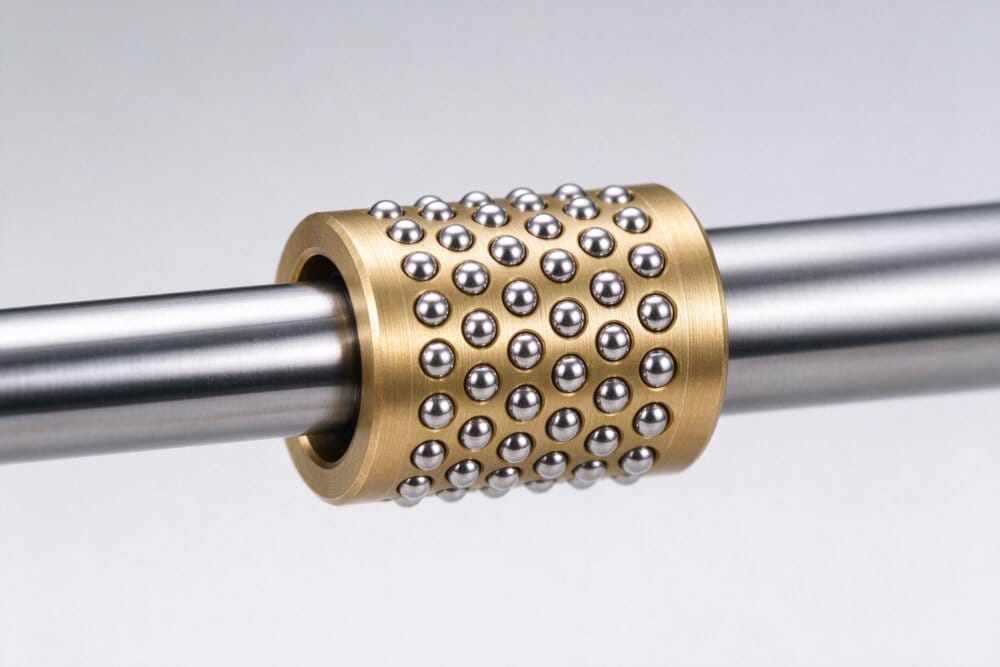
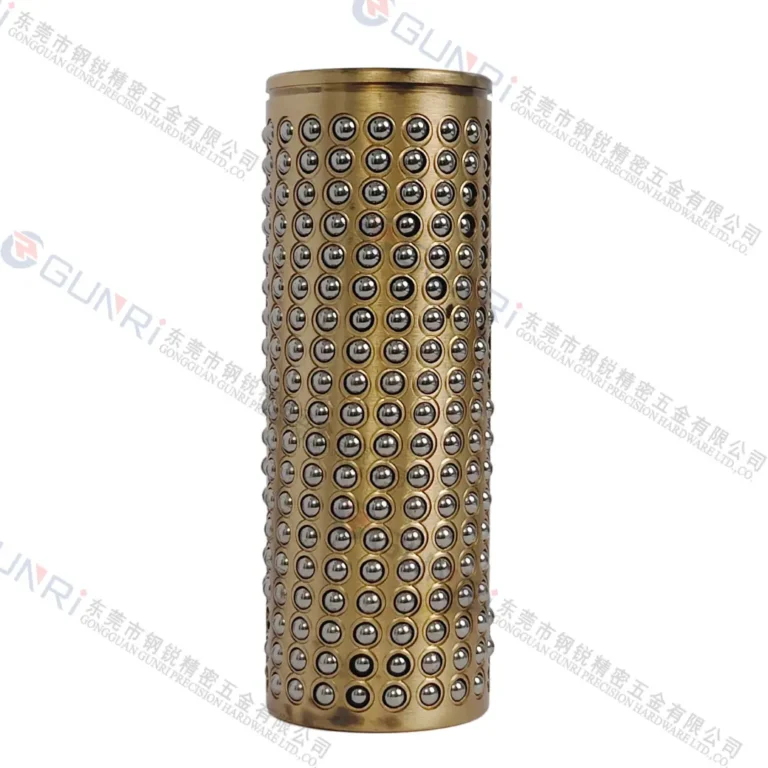
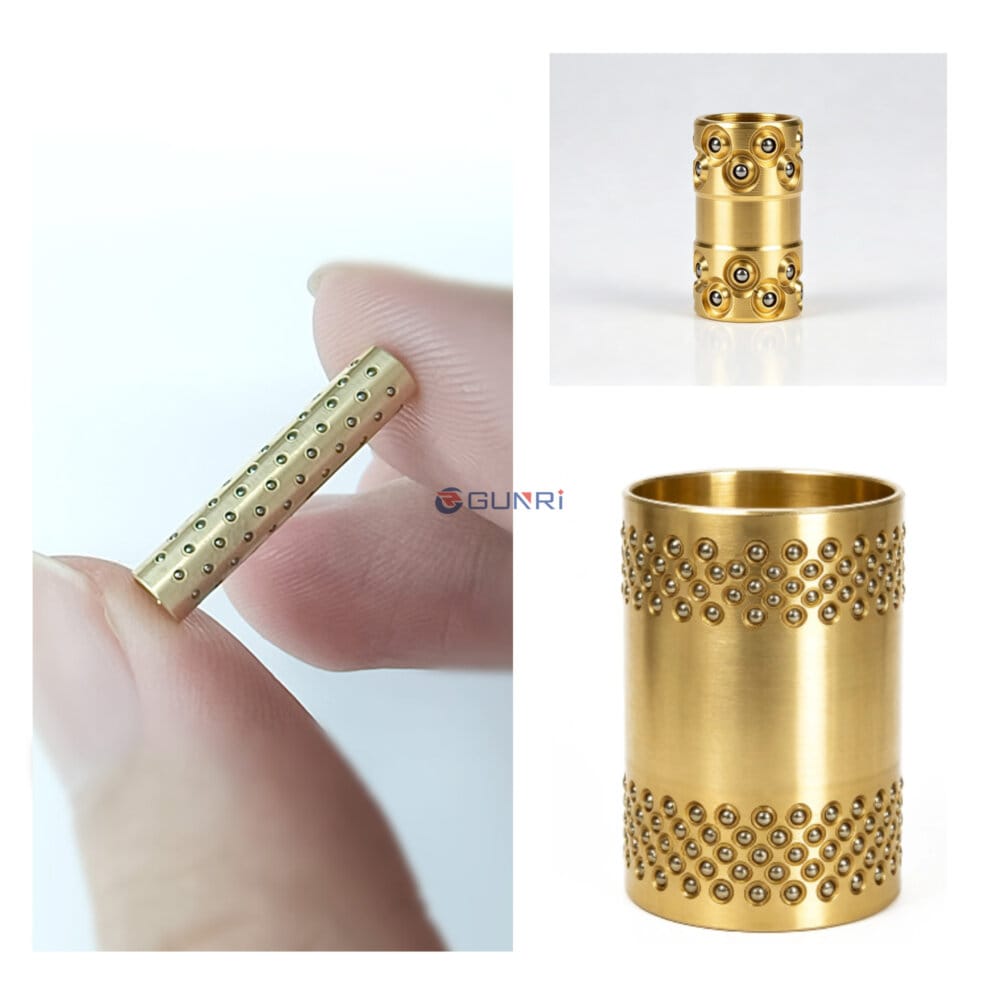
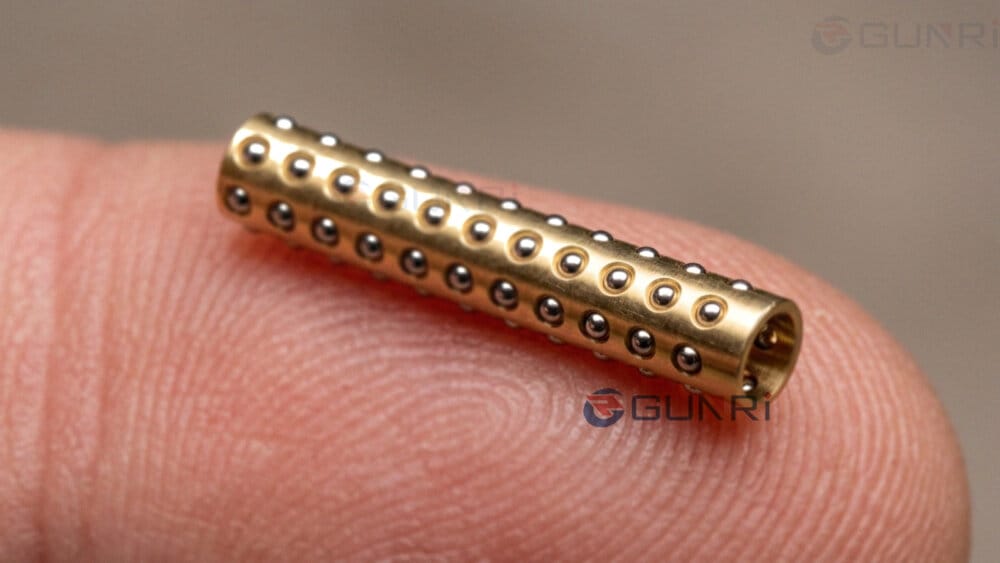
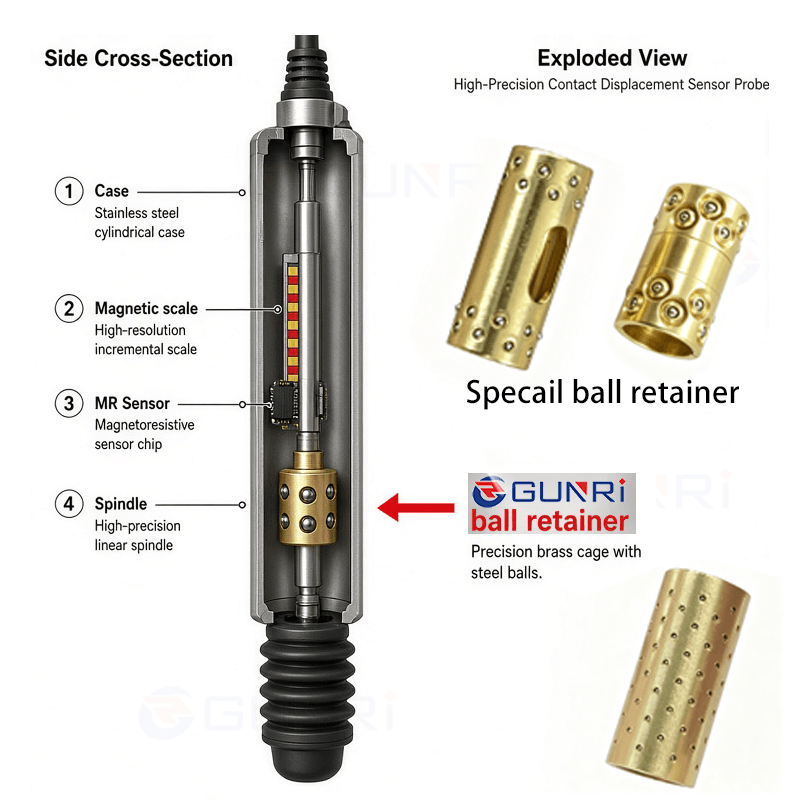
We build drop-in equivalents of Agathon, MISUMI, and FIBRO ball cages for die sets and die-guide applications. The replacement is machined to the envelope of the original part, staked with the same ball arrangement, and inspected on the CMM against the measured dimensions. It goes into the existing housing without reworking the die.
When to replace an OEM cage with an equivalent
Three situations send customers to a replacement source:
- Obsolete or long-lead parts. The original supplier has discontinued the cage or moved it to a multi-week lead time. The die set cannot wait.
- Cost on a running line. The OEM cage is priced for a one-off tool build. A running press needs a repeatable, locally sourced spare at a lower landed cost.
- Wear spares. The die set is in production and the cage is a wear item. You want a standing source of spares that matches the original envelope without surprise dimensional drift.
The replacement is not a redesign. It is a copy of the original envelope and pocket pattern, built in our shop to the same functional fit on the existing post and bushing.
What we need to mirror an Agathon / MISUMI / FIBRO part
To build a true drop-in, we need one of three inputs, in order of preference:
The original drawing
If you have the manufacturer’s 2D drawing or the STEP file, send it. We read the bore, the OD, the length, the ball size, the pocket pitch, and the row arrangement directly from the print. This is the cleanest path — we quote from the drawing and ship a CMM report against those callouts.
A sample cage
If the drawing is lost but the part exists on the shelf, send the sample. We measure the bore, the OD, the length, the ball diameter, and the pocket pitch on our CMM, then produce a reverse-engineered drawing back to you for confirmation before we cut anything. This is how most obsolete-part replacements start.
The supplier part number
If you only have the part number, send it along with any measured envelope you have. We cross-reference the catalog dimension and confirm the bore, OD, length, and ball size with you before quoting. We will not cut metal on a part number alone — we need the envelope confirmed against a measurement or a drawing.
What we match, and what we do not
We match the mechanical envelope that the die set sees: the bore that rides the post, the OD that sits in the bushing, the length, the ball size, and the pocket pattern. The cage functions as a drop-in replacement for the original guide.
We do not represent the part as an OEM Agathon, MISUMI, or FIBRO component. It is an equivalent — machined to the same envelope, inspected to the same functional dimensions, sourced from our shop in Dongguan. If your maintenance manual requires an OEM part number on the BOM, talk to us about how to label the equivalent so your records stay clean.
Material and lubrication on the replacement
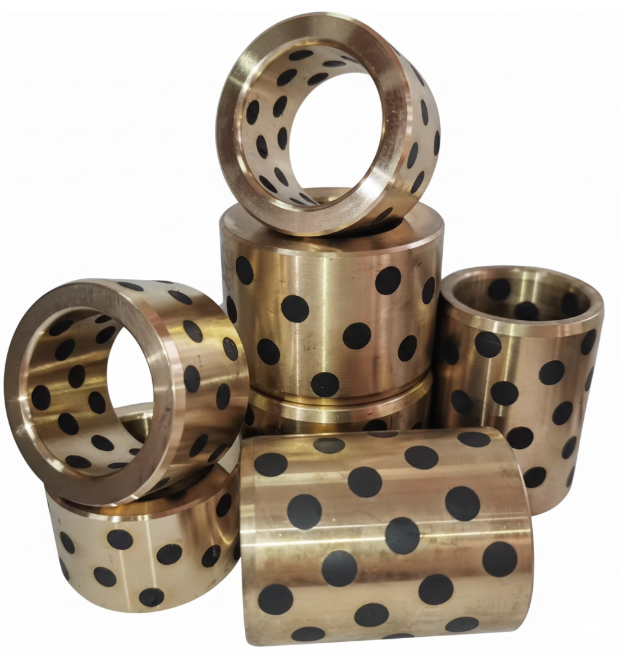
Most die-set cages leave our shop in brass. Where the original ran dry or low-oil, we build the equivalent in bronze with graphite solid-lubricant plugs — see bronze ball cages with graphite plugs and graphite-plug brass cages for stamping dies. The graphite option is a maintenance upgrade over a plain brass cage on a press that runs unattended.
The CMM report on an equivalent
Because we are copying an existing part, the CMM report carries extra weight. We measure the replaced cage against the reverse-engineered drawing and ship the report with the part. Your maintenance team can confirm that the bore, OD, and pocket pitch match the envelope the die was built around. If a future replacement drifts, the report is the baseline.
Related pages: the general custom-cage process is in custom ball cages made to your drawing, and the broader obsolete-part replacement topic is in obsolete ball cage replacement. For the finite-stroke guide set that pairs with the cage on a die, see custom miniature ball bearing guide sets.
Lead time on an equivalent
Once we have the drawing or the sample, the first replacement is machined, staked, and CMM-inspected on our standard lead time. Repeat spares on a running line go into a batch flow. There is no minimum order — a single replacement for a one-off die is treated the same as a standing spares program. See no-MOQ ball cage prototyping for the prototype-to-batch path.
If you are replacing an Agathon, MISUMI, or FIBRO part, or designing a new mechanism, send us what you have. The first article comes with a CMM inspection report.