Bronze Ball Cages with Graphite Solid-Lubricant Plugs
The maintenance engineer on a welding fixture line wants the guide cages to run dry. The environment is too hot for grease, and the position is too enclosed to re-lube on a schedule. A plain brass cage would gall on the post within weeks. The answer is a bronze body with graphite solid-lubricant plugs pressed into the contact faces — a self-lubricating cage that carries the post without oil.
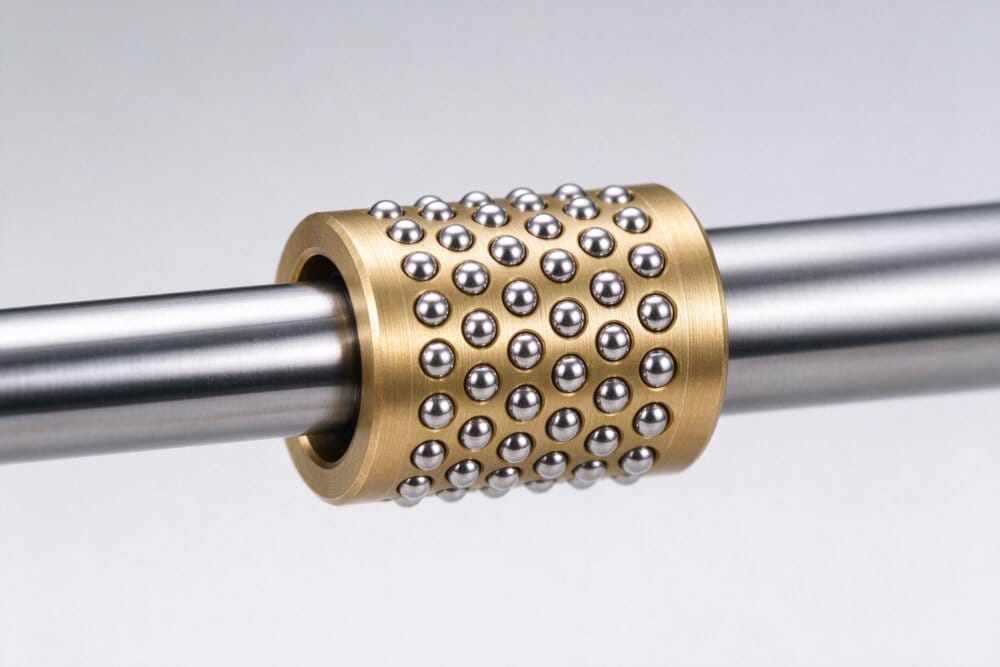
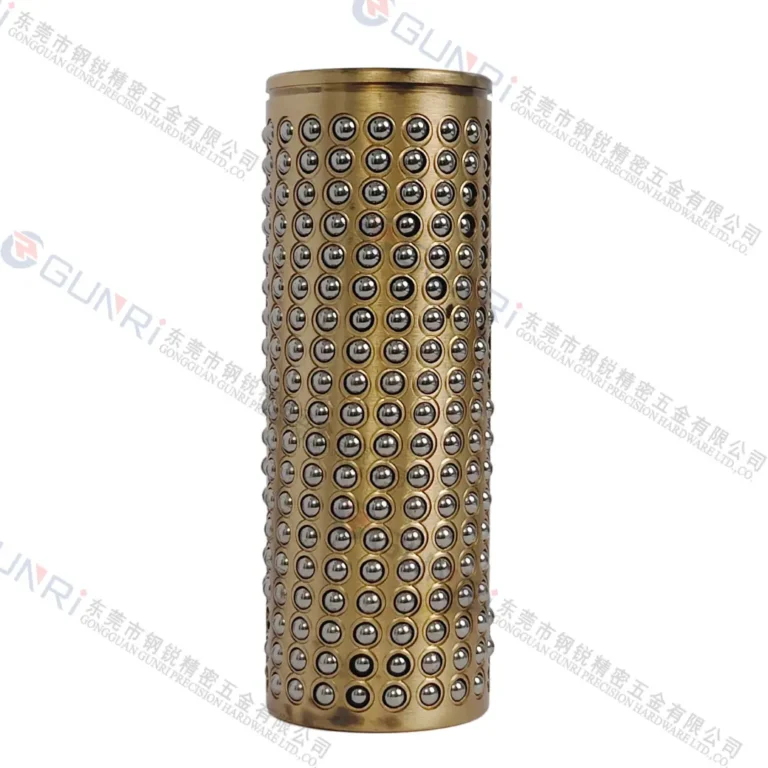
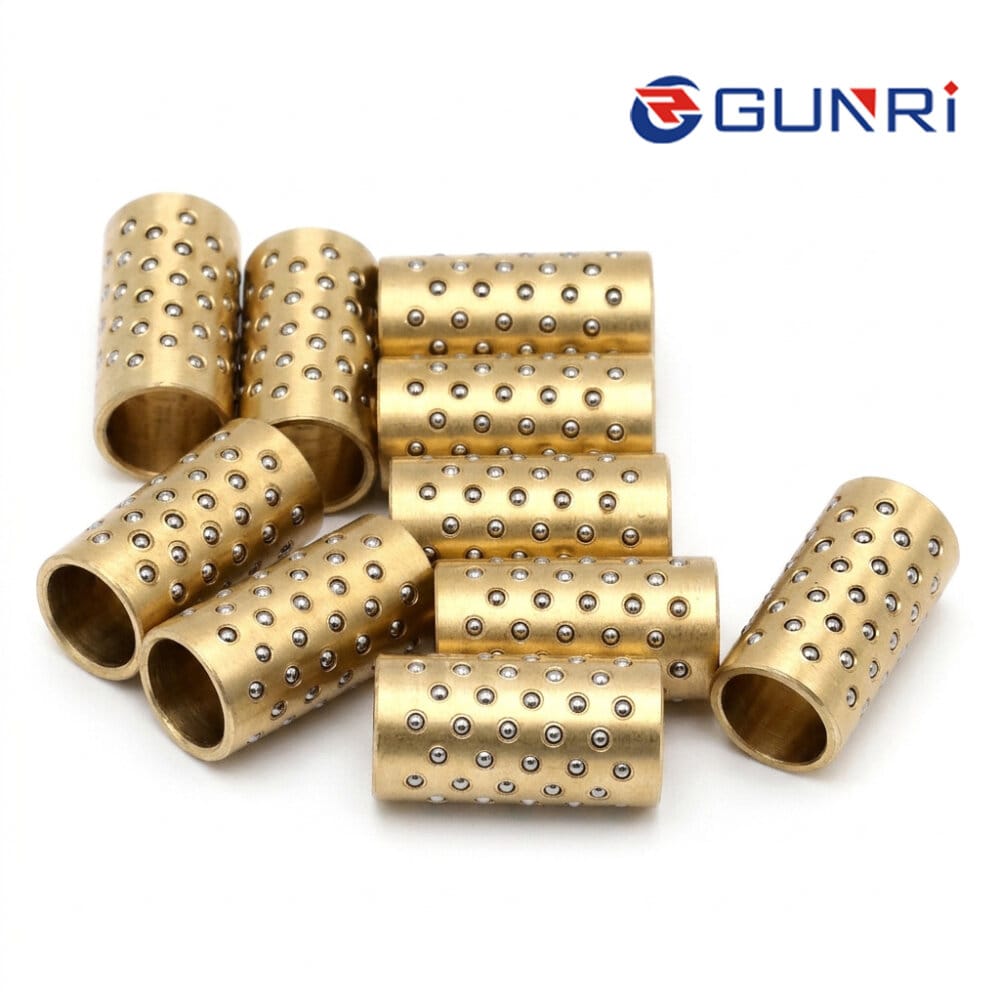
We machine bronze ball cages with graphite plugs for dry and low-oil linear guidance. Bronze is the material of choice when the graphite plug has to live in the body itself, rather than as an add-on to a brass cage. The bronze body carries the load and the graphite feeds the film.
Bronze vs. brass — where the split happens
Brass and bronze are both copper alloys, and both machine well into a cage pocket. The split between them comes down to how the cage is lubricated.
Brass: the default for oil-lubricated guides
Brass machines to a fine pocket edge, is forgiving against a hardened post, and is the starting point for most probe cages and die guides that see oil. It is the material you pick when the guide is greased on a schedule and the oil film is expected to carry the load. The graphite plug on a brass cage is a backup for the moments the oil film breaks down. See machined brass ball cages for the default case, and graphite-plug brass cages for stamping dies for the brass-plus-graphite configuration.
Bronze: the dry-runner
Bronze is the material picked when the cage has to run dry or near-dry. The bronze body is softer than steel and is the intended wear surface against the post; the graphite plugs pressed into the contact faces transfer a solid film that carries the load between the bronze and the steel. The pair — bronze body plus graphite film — is a recognized dry bearing configuration, and it is the standard answer for guides where grease is unwanted or unworkable.
Bronze is chosen over brass when:
- The environment is too hot for oil or grease to stay in place.
- The guide is sealed or enclosed and scheduled re-lubrication is not practical.
- The application is a clean, low-particulate process where oil mist would be a contaminant.
- The customer wants a fully dry guide rather than a low-oil one.
How the graphite plugs sit in the bronze body
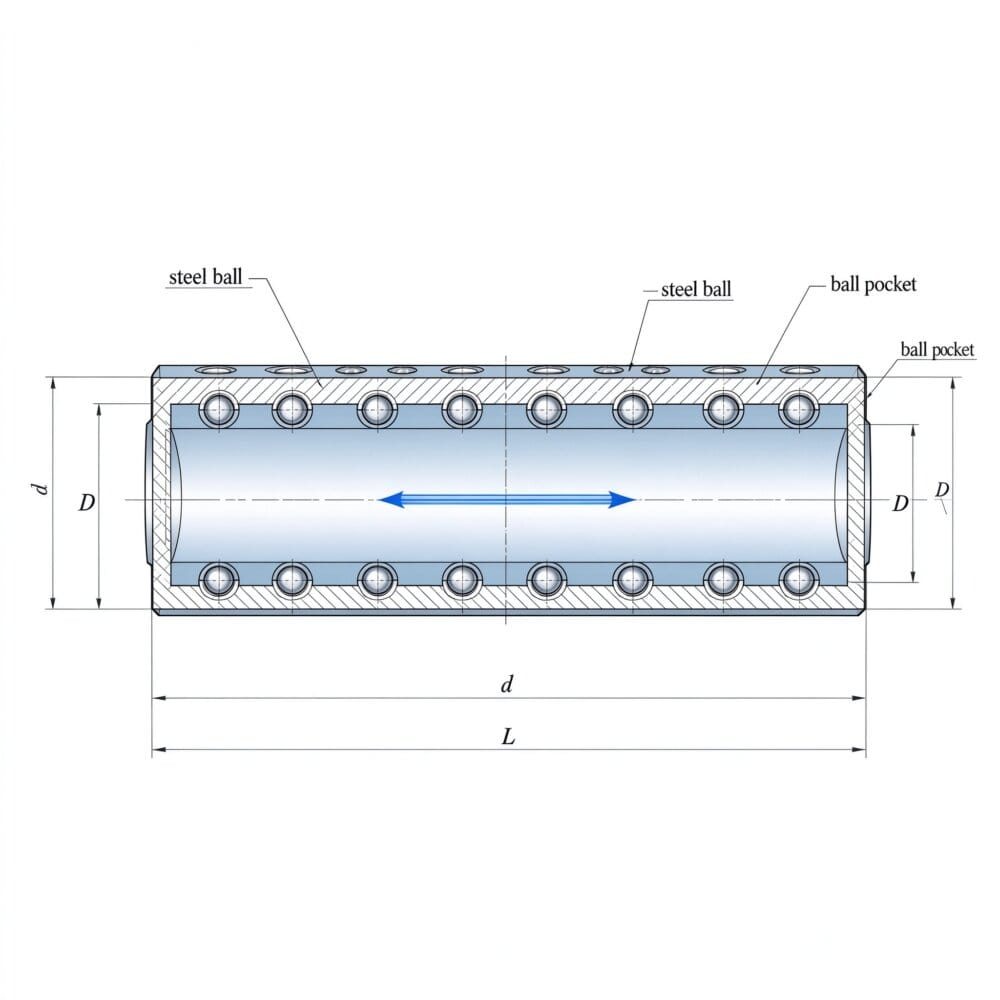
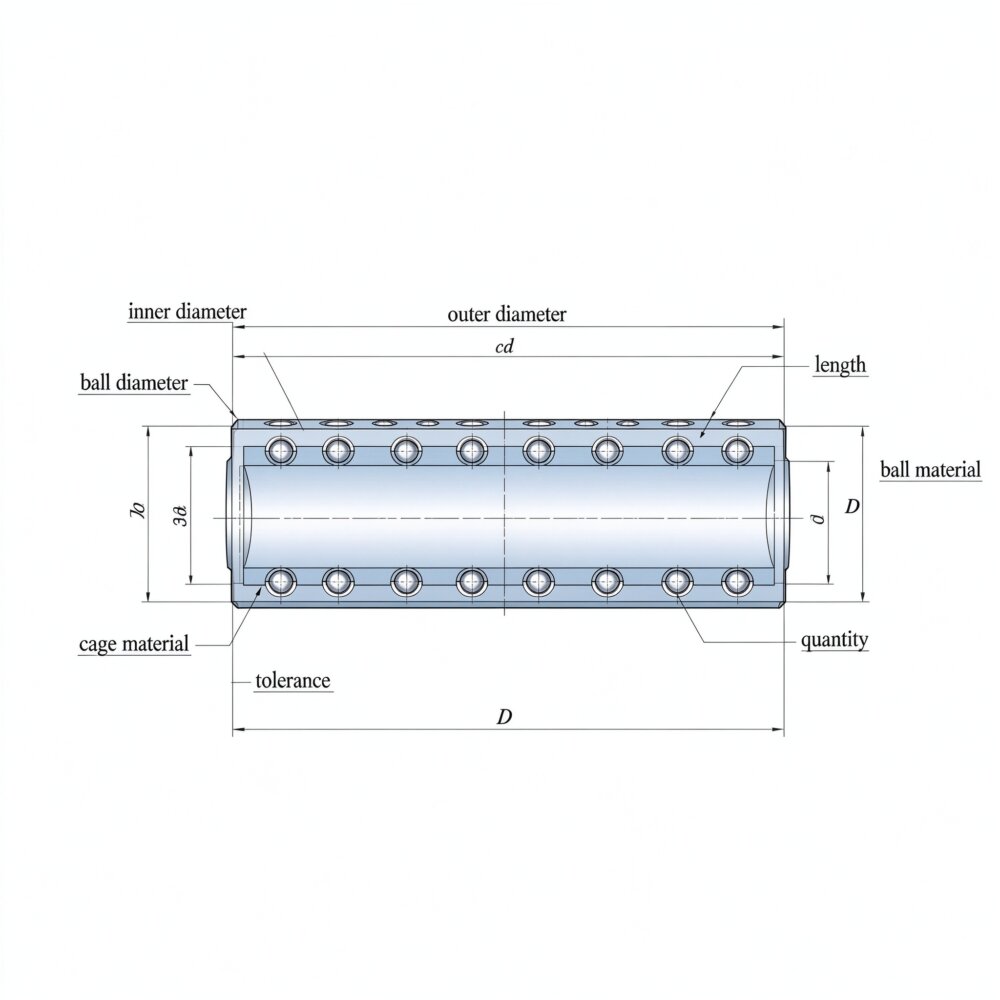
The graphite plugs are pressed into drilled holes in the bronze body, positioned on the contact faces that rub the post or the bushing bore. As the cage travels, the graphite transfers a film onto the mating surface. The plug wears slowly; the film remains. The bronze body itself wears at a controlled rate against the post, and the combination gives a dry guide that does not rely on an oil reservoir.
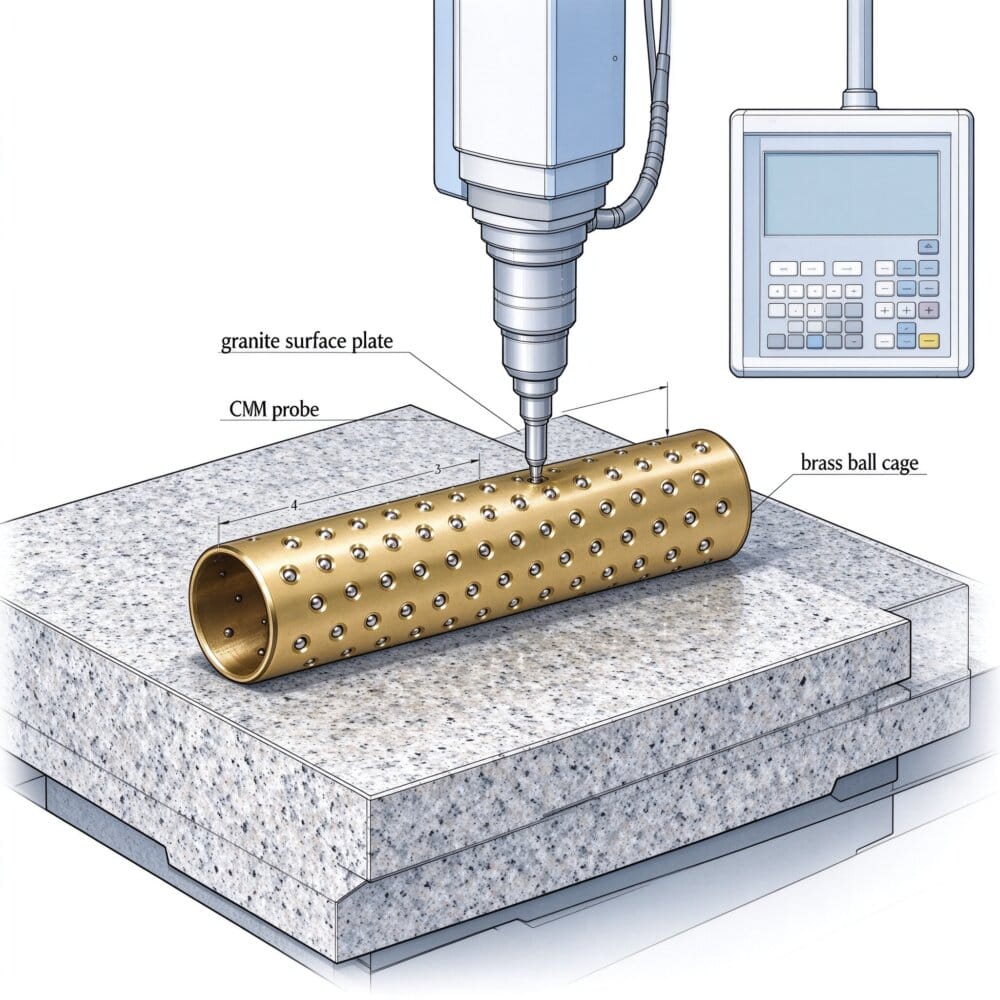
The plug holes are dimensioned on your drawing. Tell us which face contacts the post and we will place the plugs there, clear of the ball pockets and the staking lands. The CMM inspection confirms the pocket location and the body envelope before the plugs are pressed in.
Where bronze graphite cages go to work
The dry-running bronze cage shows up in places where oil is the problem:
- Welding and hot-fixture guides where grease would carbonize.
- Sealed die sets where the maintenance crew cannot reach the post.
- Food-contact or pharmaceutical equipment where oil mist is a contamination risk — here the bronze graphite cage competes with POM resin, which is also self-lubricating but at lighter loads. See POM self-lubricating ball cages for the polymer case.
- Long-interval maintenance lines where the greasing schedule cannot be guaranteed.
The general lubrication trade-off — graphite, oil, POM — is laid out in ball cage lubrication: graphite, oil, POM. For the die-set application where the brass-plus-graphite configuration is usually enough, see graphite-plug brass cages for stamping dies.
Custom geometry on the bronze cage
The bronze graphite cage follows the same custom geometry options as any other cage: slotted windows for side loading, oil grooves for the low-oil case where some grease is still used, and multi-row ball arrangements for higher load paths. The envelope range runs from the miniature 2.0 mm ID up to 400 mm OD. For the miniature end where the pocket geometry is tightest, see miniature ball cages at 2.0 mm ID.
Ordering a bronze graphite cage
Send the drawing with the body envelope, the ball spec, and the plug positions. If you are replacing an existing die-set or fixture cage that has been running dry, send the sample — we will measure the envelope and place the plugs on the contact faces. The CMM report ships with the cage. There is no minimum order; a single dry-runner cage for a fixture in development is quoted the same as a batch for a running line.
Have a non-standard dimension or an obsolete part to replace? Send us the drawing, sample, or just the shaft and bore sizes, and we will quote within one to two working days. No minimum order.