Machined Brass Ball Cages: When to Specify Brass
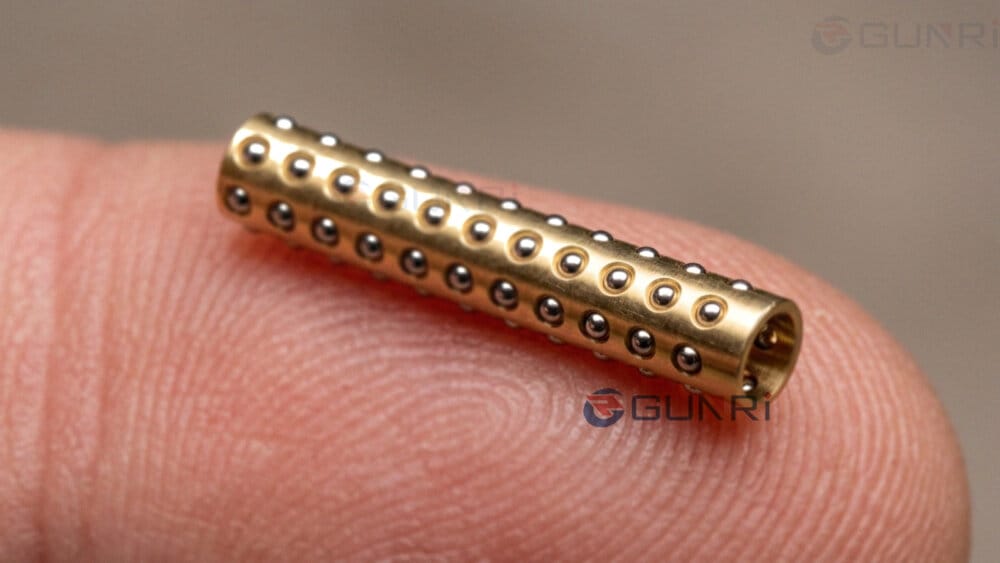
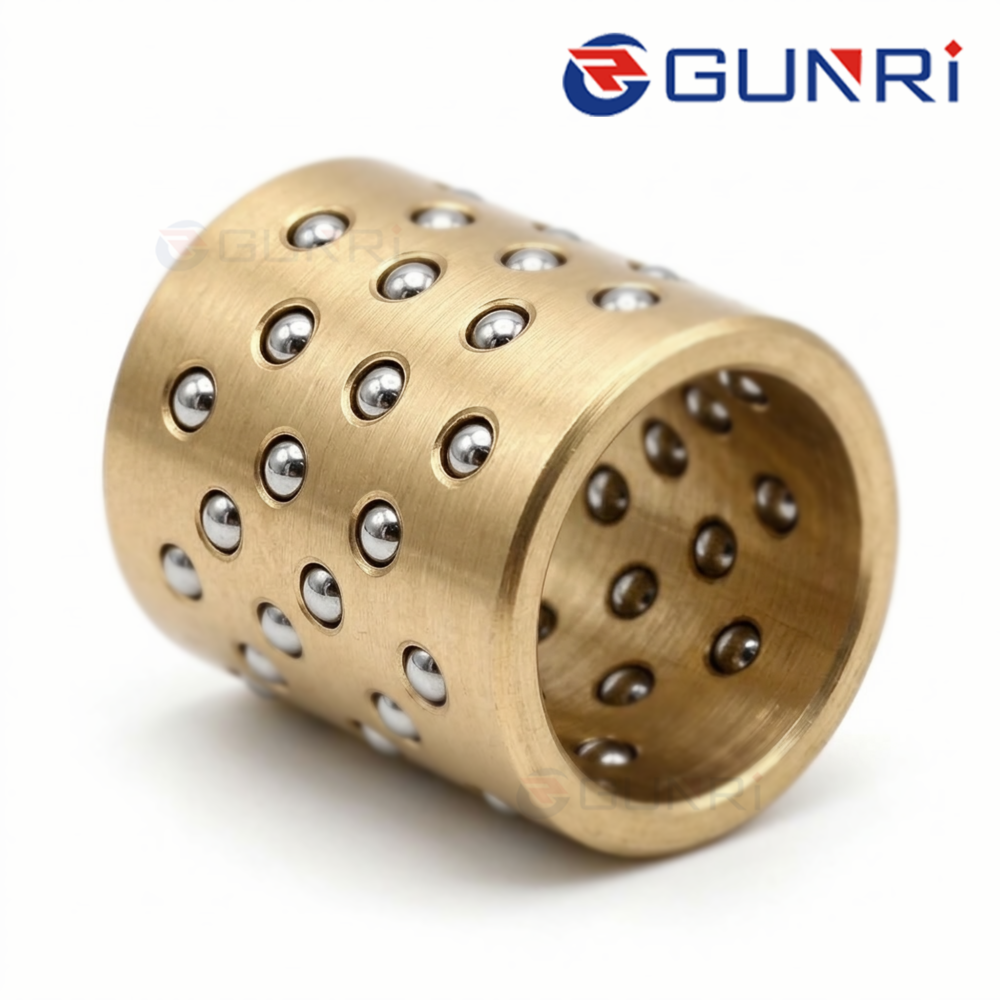
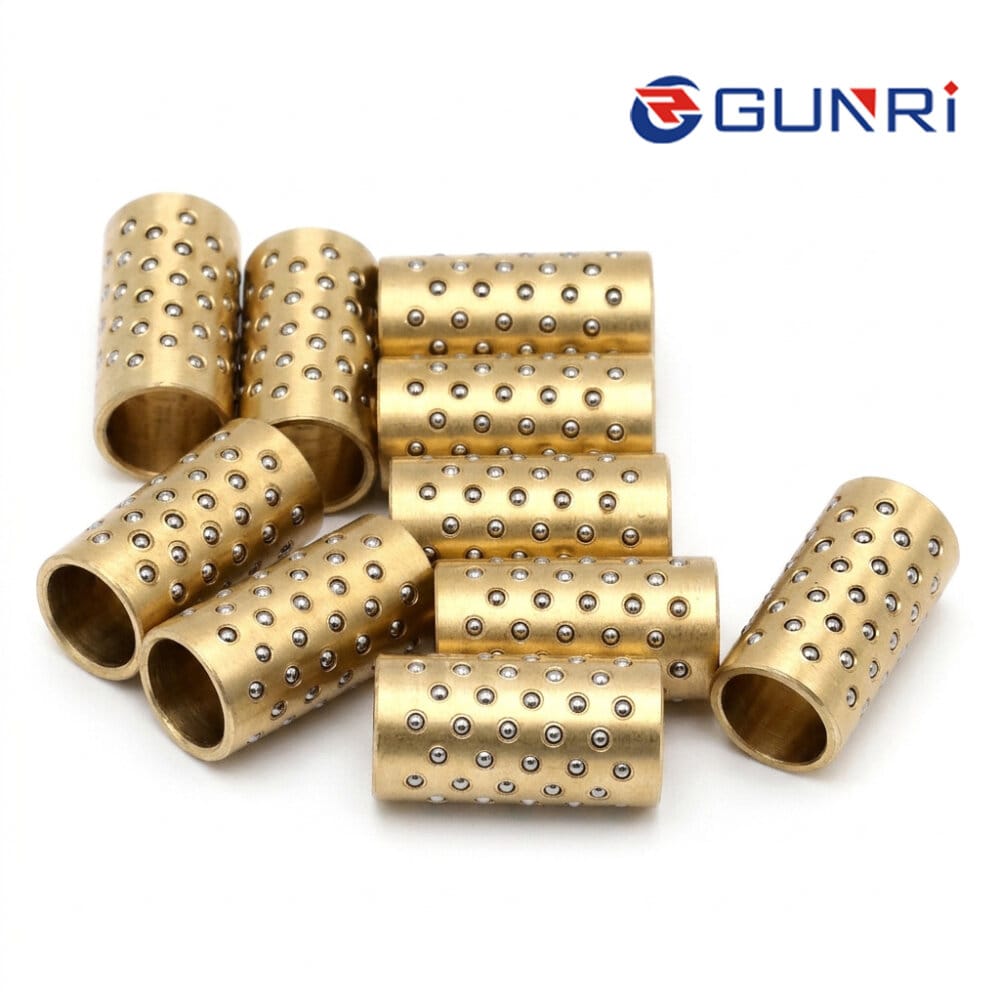
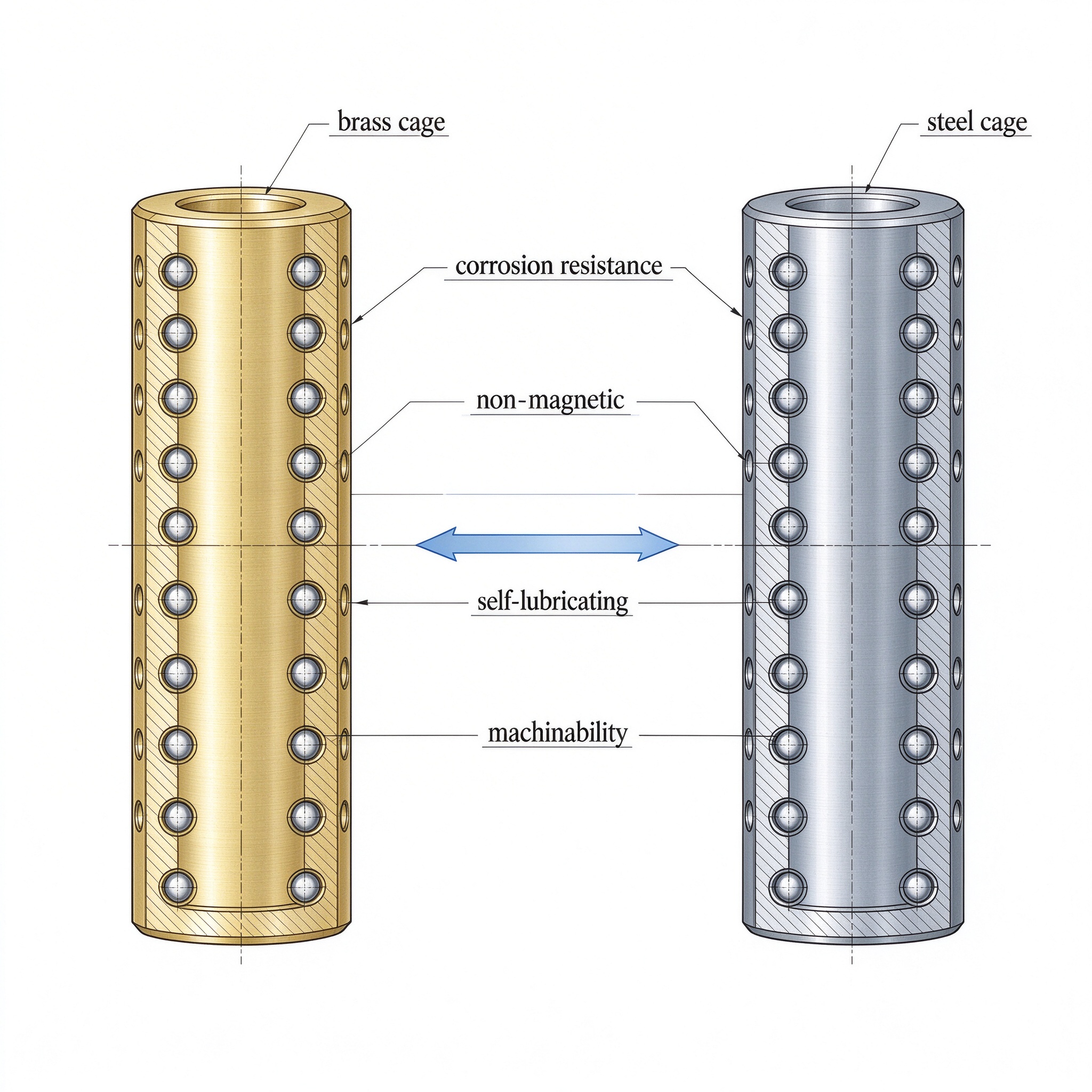
The first time a designer specifies a ball cage, the drawing comes in with no material callout. The default we reach for is brass. It is not an accident — brass cuts to a clean pocket edge, is forgiving against a hardened shaft, and costs less to machine than aluminum or to press with graphite than bronze. Most probe cages, die-set guide cages, and general linear retainers that leave our shop start in brass. This is the case for why brass is the default, and when you should step off it.
Why brass is the starting material
It machines to a sharp pocket edge
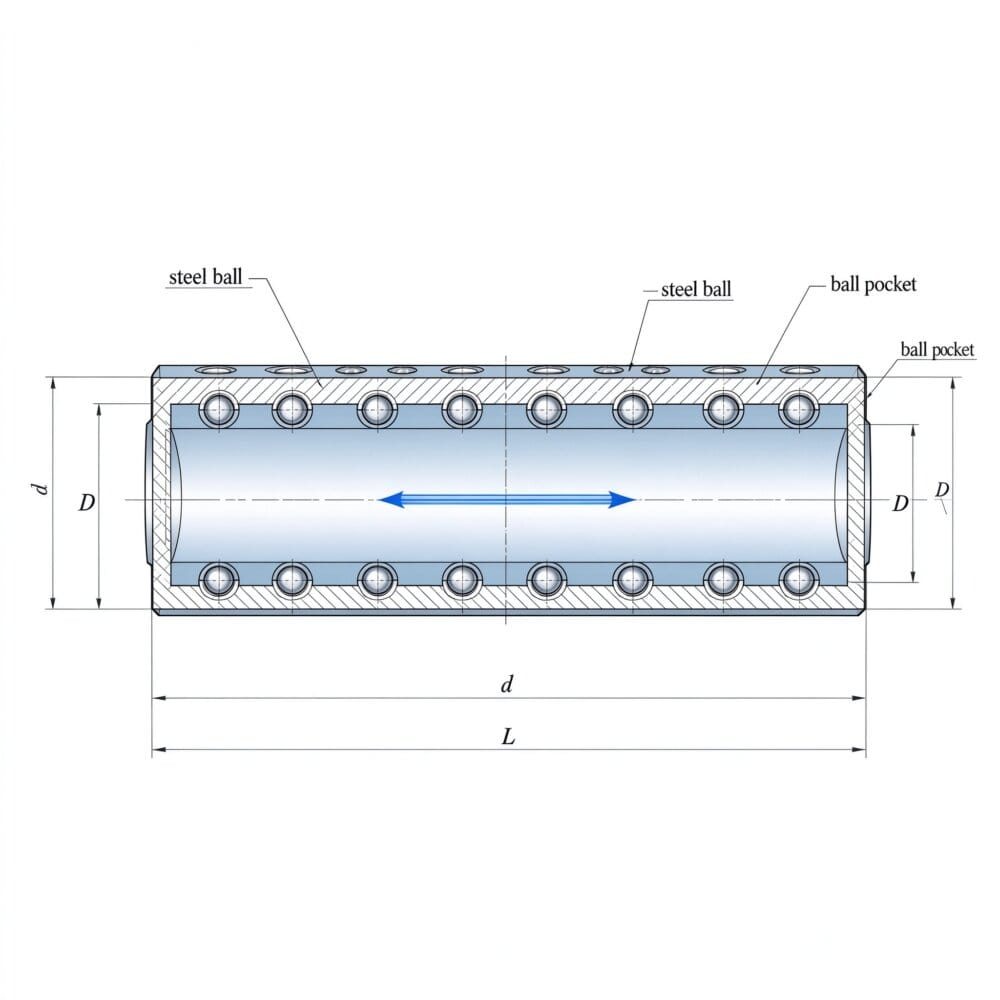
A ball pocket is a small, precise seat. The drill or end mill that cuts it has to leave a clean land around the ball — the edge the staking operation deforms to hold the ball captive. Brass cuts cleanly, with little work-hardening, so the pocket edge comes off the machine ready for staking. There is no secondary deburring step that rounds the land before the balls go in. That sharp land is what lets the staking hold the ball without pinching it.
It is forgiving against a hardened shaft
A brass cage running on a hardened steel post is a recognized sliding pair. The brass wears against the post rather than the post wearing against the brass — the cage is the intended consumable. If the guide runs dry for a short stretch, the brass will gall less than a steel-on-steel pair would. The maintenance engineer replaces the cage, not the post. This is the failure mode you want in a die guide: the cheap, replaceable part wears before the expensive shaft does.
It stakes cleanly
Staking deforms the cage edge around the ball. Brass deforms predictably under the staking tool — it flows without cracking, so the land closes around the ball with a consistent pressure. The operator can set the stake force once for a given ball size and run the batch. This is why most miniature probe cages, where the stake has to be light and repeatable, are machined from brass. The process detail is in how ball cages are staked.
Where brass shows up
The brass default covers the majority of custom cage work we see:
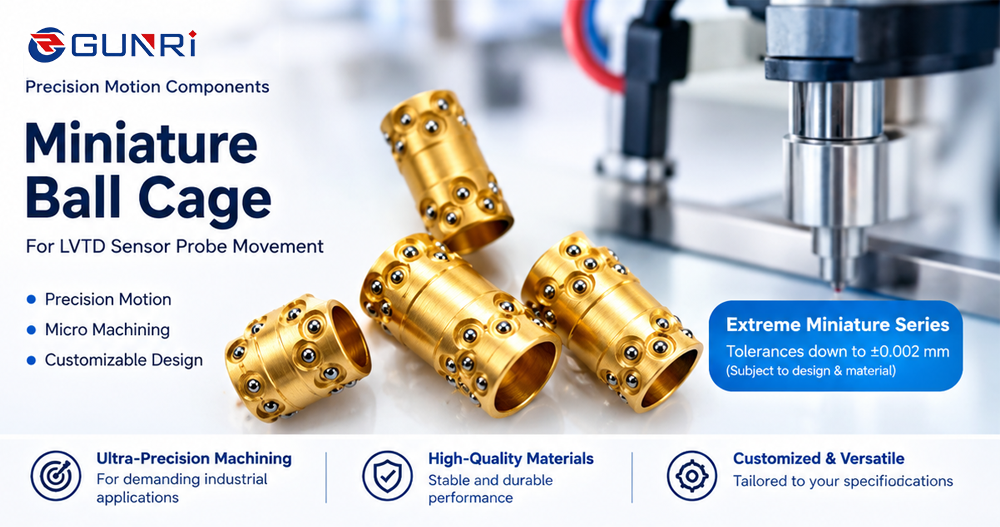
- Captive and guided gage heads — the short, concentric cage inside a probe barrel. Brass machines to the miniature envelope (down to 2.0 mm ID, 0.6 mm balls) and stakes cleanly at that scale. See miniature ball cages at 2.0 mm ID and ball cages for LVDT gage heads.
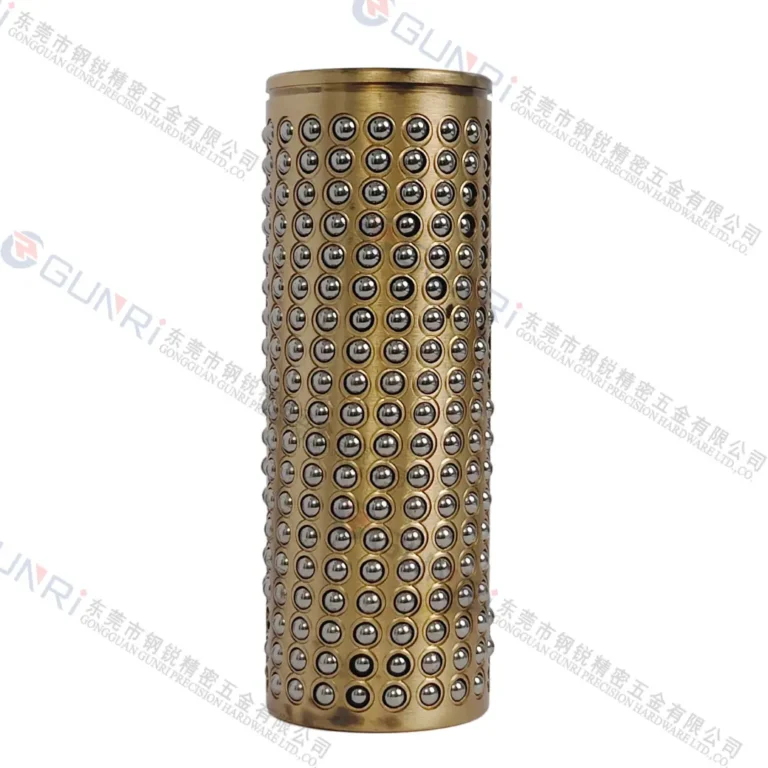
- Stamping die-set guide cages — the larger cages on press posts, where brass is the OEM default in Agathon, MISUMI, and FIBRO parts. Our equivalents in brass drop into the same envelope. See Agathon / MISUMI / FIBRO ball cage equivalents.
- General linear retainers — a short row of balls between a shaft and a sleeve in an actuator or a slide, where no special lubrication or inertia requirement pushes you off brass.
When to step off brass
Brass is the default, not the rule. We move off it in three directions.
Bronze with graphite plugs
When the guide has to run dry or near-dry, we move to bronze with graphite solid-lubricant plugs. The bronze body is the dry-running pair against the post, and the graphite feeds the film. This is the choice for welded fixtures, sealed dies, and low-oil environments. See bronze ball cages with graphite plugs. The middle ground — brass body plus a graphite plug as a backup lubricant — is covered in graphite-plug brass cages for stamping dies.
Aluminum alloy
When inertia matters — a moving carriage, a high-speed slide, an actuator head — we move to aluminum. Aluminum is lighter than brass, so the moving mass drops. The trade-off is wear: aluminum does not carry the dry-run life of brass against a hardened post, so it is paired with a hardened shaft and a defined duty cycle. The inertia case is in aluminum ball cages for low inertia.
POM resin
When oil is unwanted and the load is light — food contact, cleanroom, optical positioning — we move to POM. POM is self-lubricating, runs dry, and is quiet. It is not a load-carrying brass substitute; it is a light-load polymer guide. See POM self-lubricating ball cages for where the polymer fits.
The material trade-off at a glance
If the drawing has no material callout and the application is a normal oil-lubricated guide on a hardened shaft, we build in brass. If the application is dry, we move to bronze-plus-graphite. If the moving mass has to drop, we move to aluminum. If oil is forbidden and the load is light, we move to POM. The full material comparison is in ball cage materials: brass, bronze, aluminum, POM.
Ordering a brass cage
Send the drawing. If the material is unspecified and the application is a standard guide, we will quote in brass and note the alternative materials on the quote so you can change the callout before we cut. The CMM inspection runs on the brass body: pocket location, runout, ID, OD, length. The report ships with the cage. There is no minimum — a one-off brass cage for a prototype probe is quoted the same as a batch for a running die.
We build custom cages from prototype through production. Start on the contact page with your drawing or sample, and we will work out the ball arrangement, material, and staking style with you.