Miniature Ball Cages: 2.0 mm ID and 0.6 mm Balls
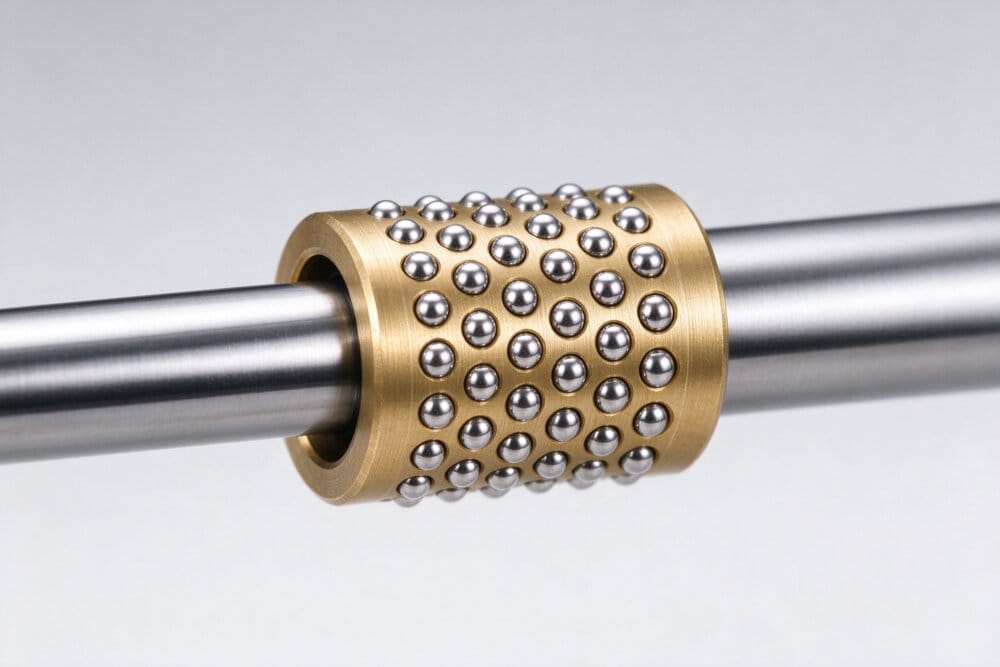
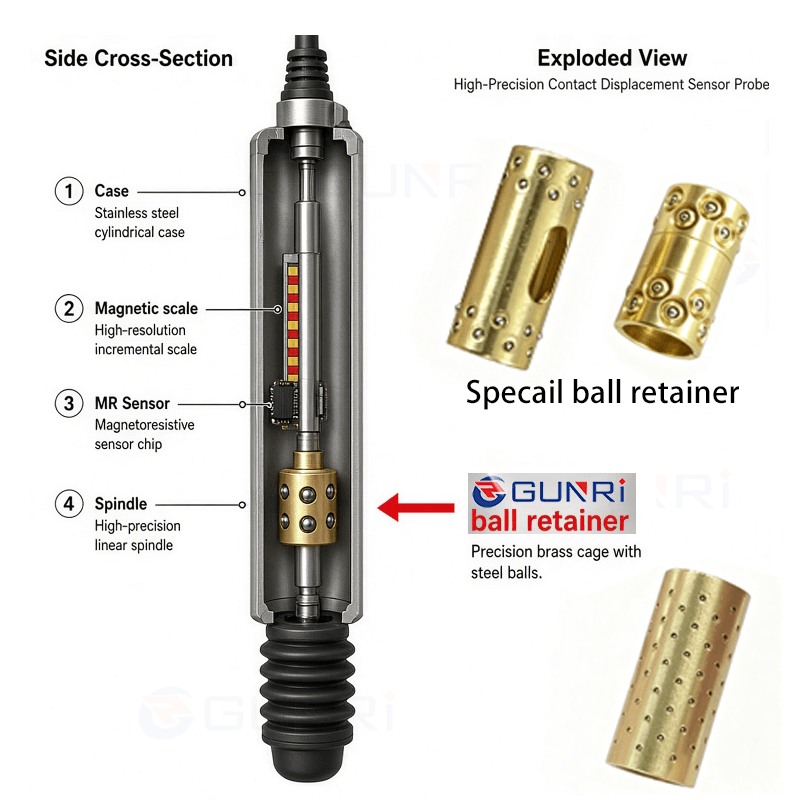
A displacement probe has to fit inside a Ø8 mm barrel. The shaft inside is 3 mm. The cage that carries the balls between shaft and barrel has to slip over that shaft and still leave wall thickness for the housing. When the math lands on a 2.0 mm bore and 0.6 mm balls, you are in miniature territory — and catalog cages stop well before you get there.
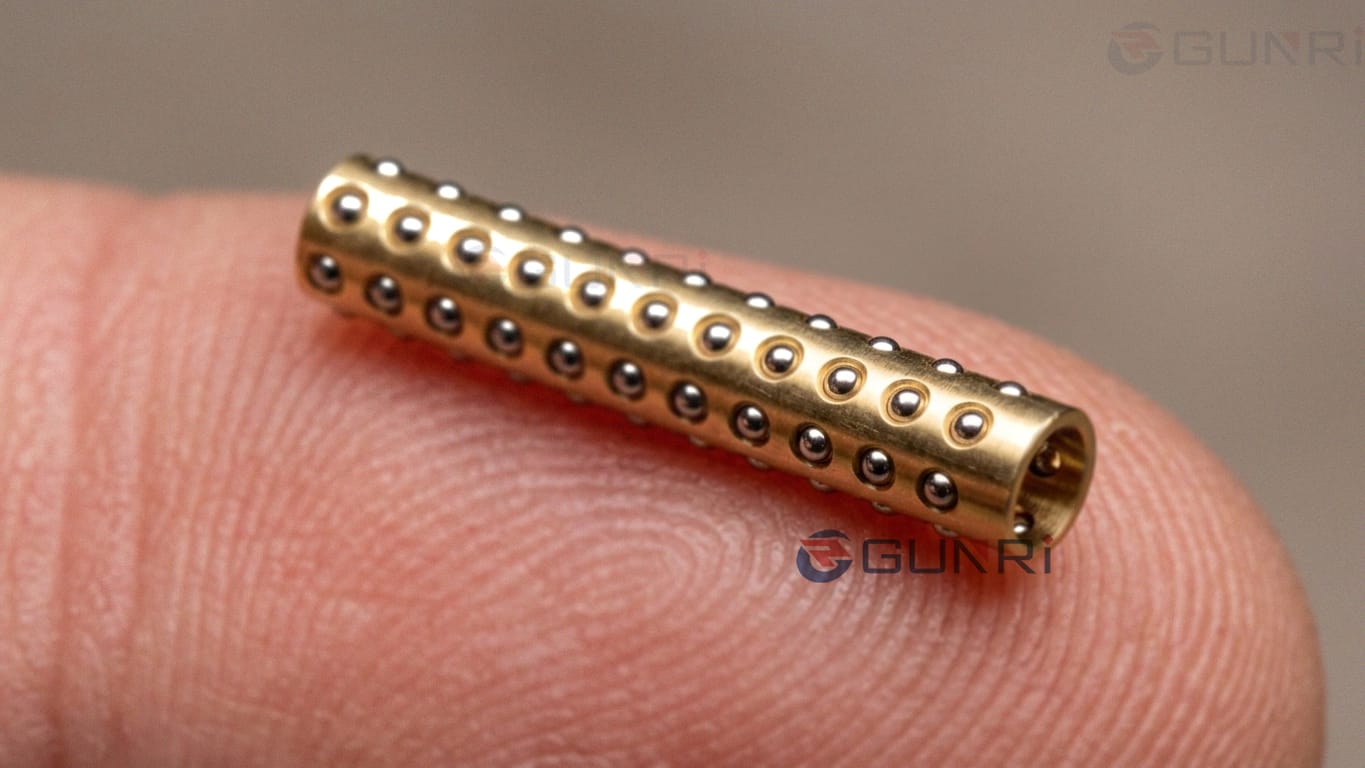
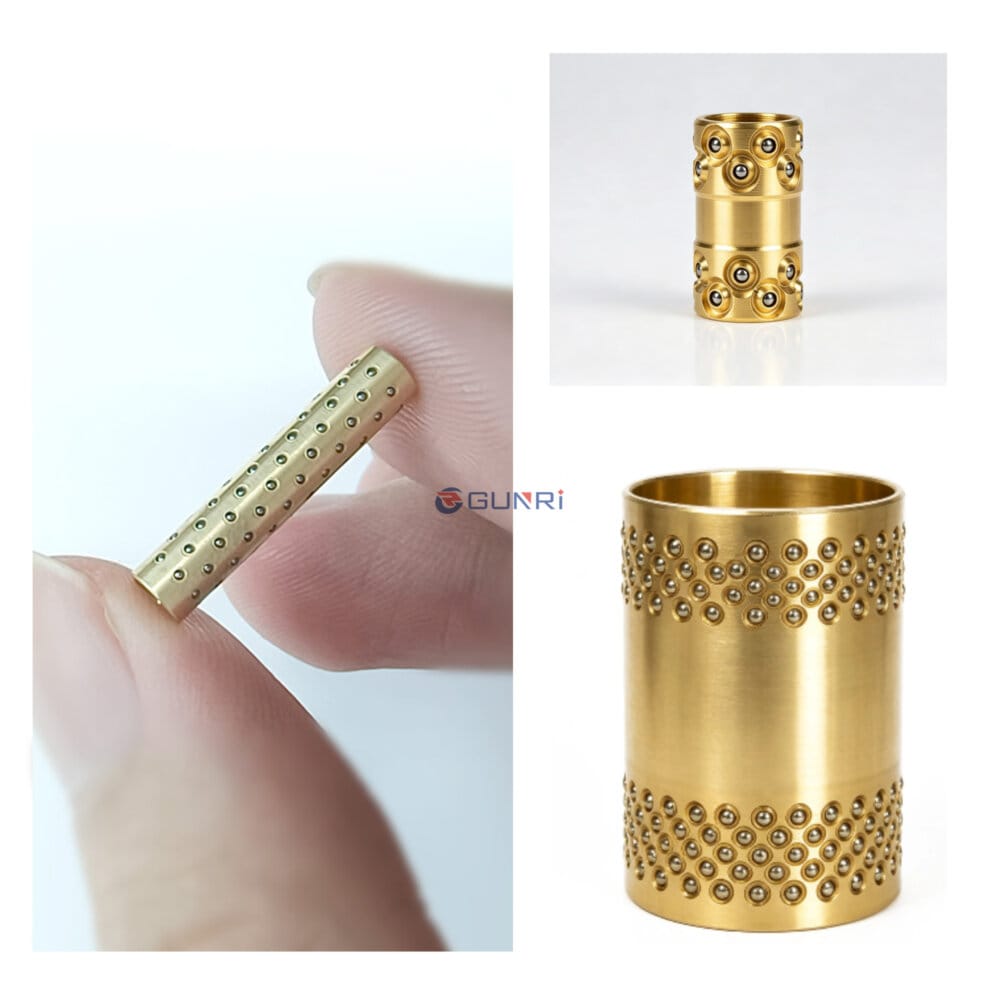
We machine miniature ball cages down to a 2.0 mm inner diameter, with 0.6 mm balls, at a minimum length of 8 mm. This is the envelope for guided gage heads, miniature actuator barrels, and small linear stages where the whole mechanism has to disappear inside a hand-held or instrumentation housing.
The miniature envelope
The numbers that define the range are fixed by what our machining and staking setup can hold:
- Minimum inner diameter: 2.0 mm
- Minimum ball diameter: 0.6 mm
- Minimum cage length: 8 mm
Above that floor the cage scales up normally. The miniature floor is not a recommendation — it is the point below which the pocket geometry and the staking operation stop being repeatable on our equipment. We have run custom miniature cages for probes and small actuators inside this envelope, and the geometry is defined by the customer’s drawing, not by a stock list.
Why miniature is harder than it looks
A small cage is not just a big cage scaled down. Two problems dominate.
Pocket geometry shrinks with the ball
The ball pocket is sized around the ball diameter. On a 0.6 mm ball, the pocket opening, the pocket depth, and the land that supports the ball are all fractions of a millimeter. The drill or end mill that cuts the pocket has to be rigid enough to hold position on a 2.0 mm bore wall, and it has to be small enough not to break through the opposite side. Pocket location error that you would ignore on a 25 mm cage shows up as a binding point on a 3 mm shaft. The CMM inspection that catches this is the same one we run on larger cages — but the tolerance stack is tighter, so the report matters more.
Staking a tiny ball
Staking deforms the cage edge around the ball to hold it captive. On a 0.6 mm ball, the stake is a light mechanical caulk, not a heavy rivet. Too much pressure and the ball is pinched and will not rotate; too little and the ball falls out when the cage is handled. The staking force has to be set per ball size, and the operator has to inspect the free-rotation condition after each cage. This is hand-finish work, not a high-speed press operation.
If you want the process detail, how ball cages are staked covers the mechanics; the miniature version is the same operation at a smaller scale with a lighter touch.
Where miniature cages go to work
The 2.0 mm / 0.6 mm envelope lands in applications where the guidance has to live inside a narrow tube.
Captive and guided gage heads
Captive displacement probes — the kind used on height gages, bore gages, and comparative gaging — carry a guided plunger. The plunger runs on a row of balls held in a small cage inside the probe barrel. The cage has to be short, concentric to the barrel, and quiet enough that the gage signal is not contaminated by stick-slip. This is the application that pushes ID down to 2.0 mm. Note that the ball cage is a mechanical guide, not the sensing element; the LVDT or half-bridge behind it does the measurement. The cage exists so the plunger moves without lateral play. We have written about this distinction in do LVDTs use ball cages and about the broader family in ball cages for LVDT gage heads.
Miniature actuator barrels
Small linear actuators used in camera autofocus, syringe pump plungers, and optical alignment move a shaft inside a close-fitting sleeve. A miniature ball cage between them removes sliding friction and keeps the shaft centered. The same envelope applies: the cage has to be short enough to fit the actuator body and small enough that the sleeve wall stays manufacturable.
Small translation stages
Micromanipulators, microscope XY stages, and fiber alignment fixtures use short travel where a linear bearing is overkill. A miniature ball cage on a precision shaft gives a low-friction, low-backlash guide in a package smaller than a cartridge bearing. Related pages: ball cages for microscope XY stages and ball cages for fiber-optic alignment.
Material choice at the miniature end
Miniature cages are most often machined from brass. Brass cuts to a fine pocket edge, is forgiving against the hardened probe shaft, and does not need a graphite plug in a light-load probe application. POM resin is an option when oil is unacceptable in the application, but POM miniature cages are used at lighter loads than brass. For the material trade-offs, see machined brass ball cages and POM self-lubricating ball cages.
Ordering a miniature cage
For a miniature cage, send the 2D drawing with the bore, the shaft, the ball size, and the length. If you only have the probe or actuator barrel, send the sample — we can measure the bore, the shaft diameter, and the available length and work back to a ball size. We will confirm the envelope against our 2.0 mm / 0.6 mm / 8 mm floor before we quote. The CMM report ships with the cage.
Have a non-standard dimension or an obsolete part to replace? Send us the drawing, sample, or just the shaft and bore sizes, and we will quote within one to two working days. No minimum order.