Ball Cages for LVDT Probes: Fit, Stroke and Selection
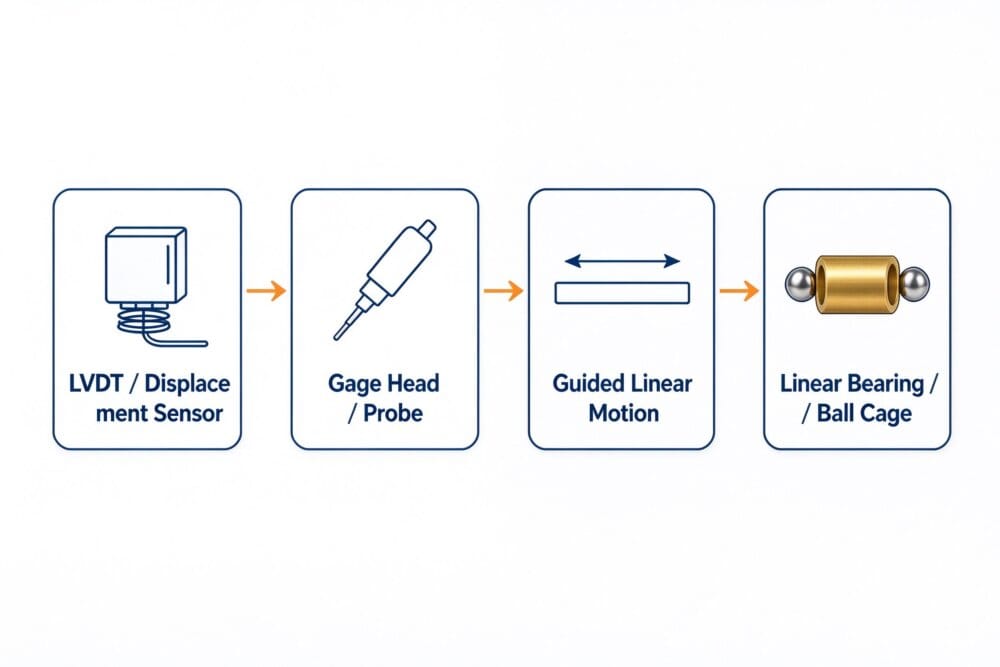
A contact-type LVDT gauging probe combines an electrical displacement transducer with a mechanical plunger assembly. If readings vary with approach speed or direction, investigate mechanical friction and guidance alongside mounting, contact force, temperature, and the electrical measurement chain. A change in readings alone does not identify the faulty component.
Where a ball cage fits in an LVDT probe
An LVDT measures linear displacement through the position of a magnetic core relative to its coils. Some contact probes use a ball-guided plunger; others use different guidance arrangements or rely on guidance elsewhere in the machine. A ball cage is not a requirement of the LVDT sensing principle.
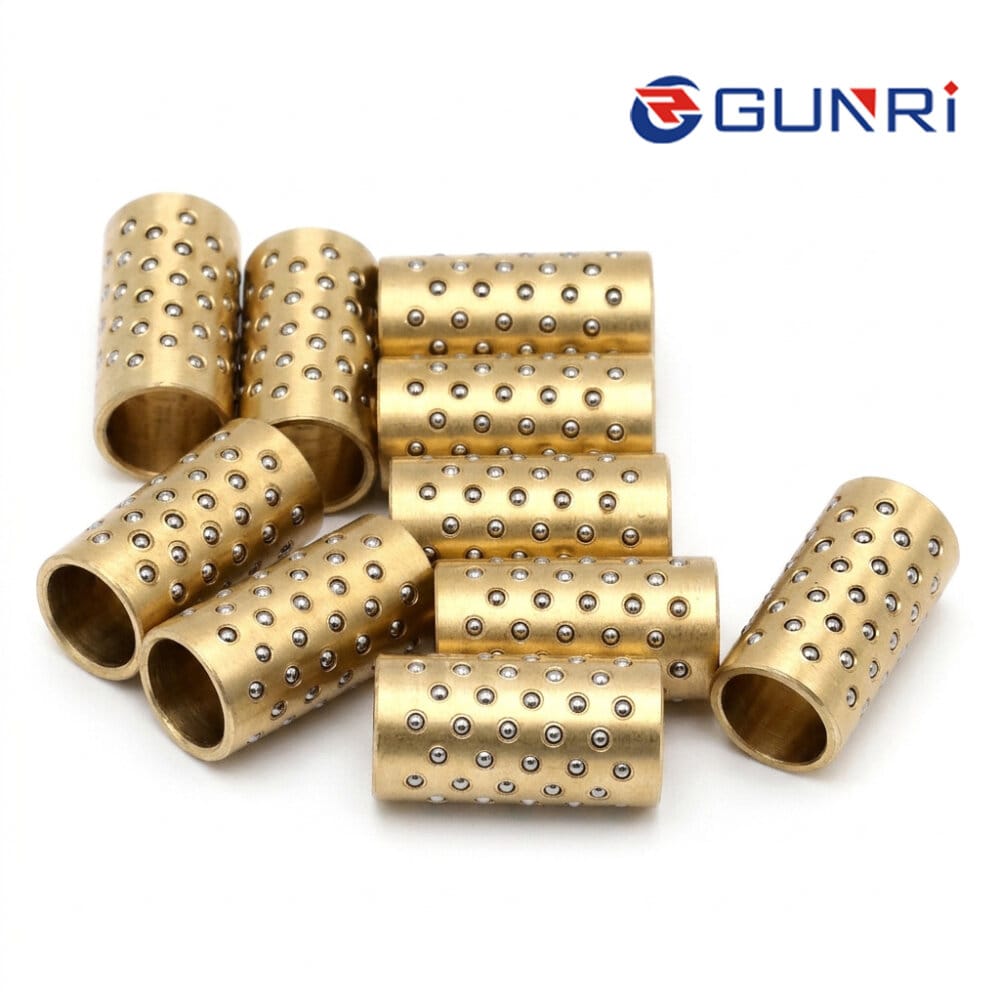
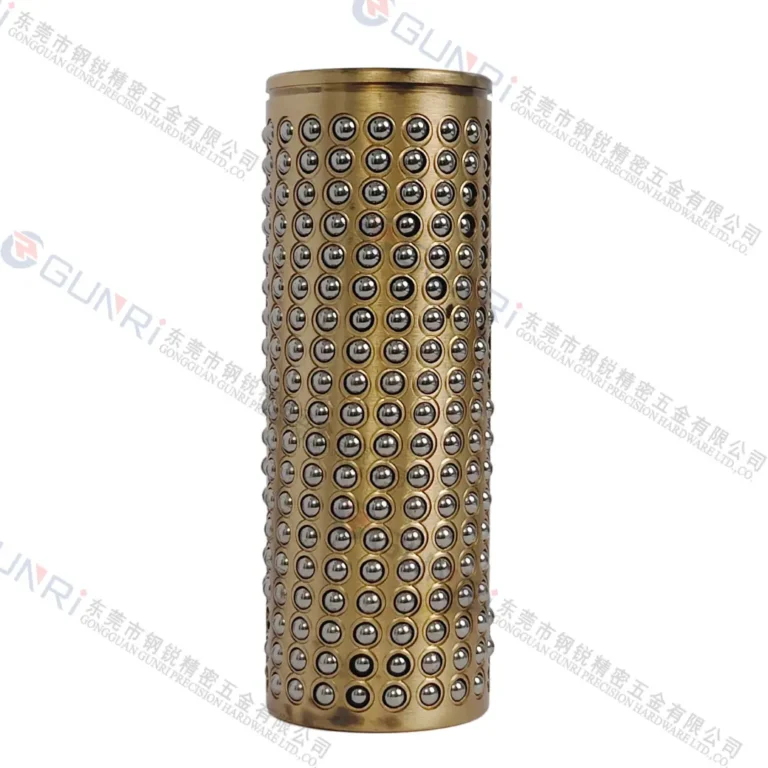
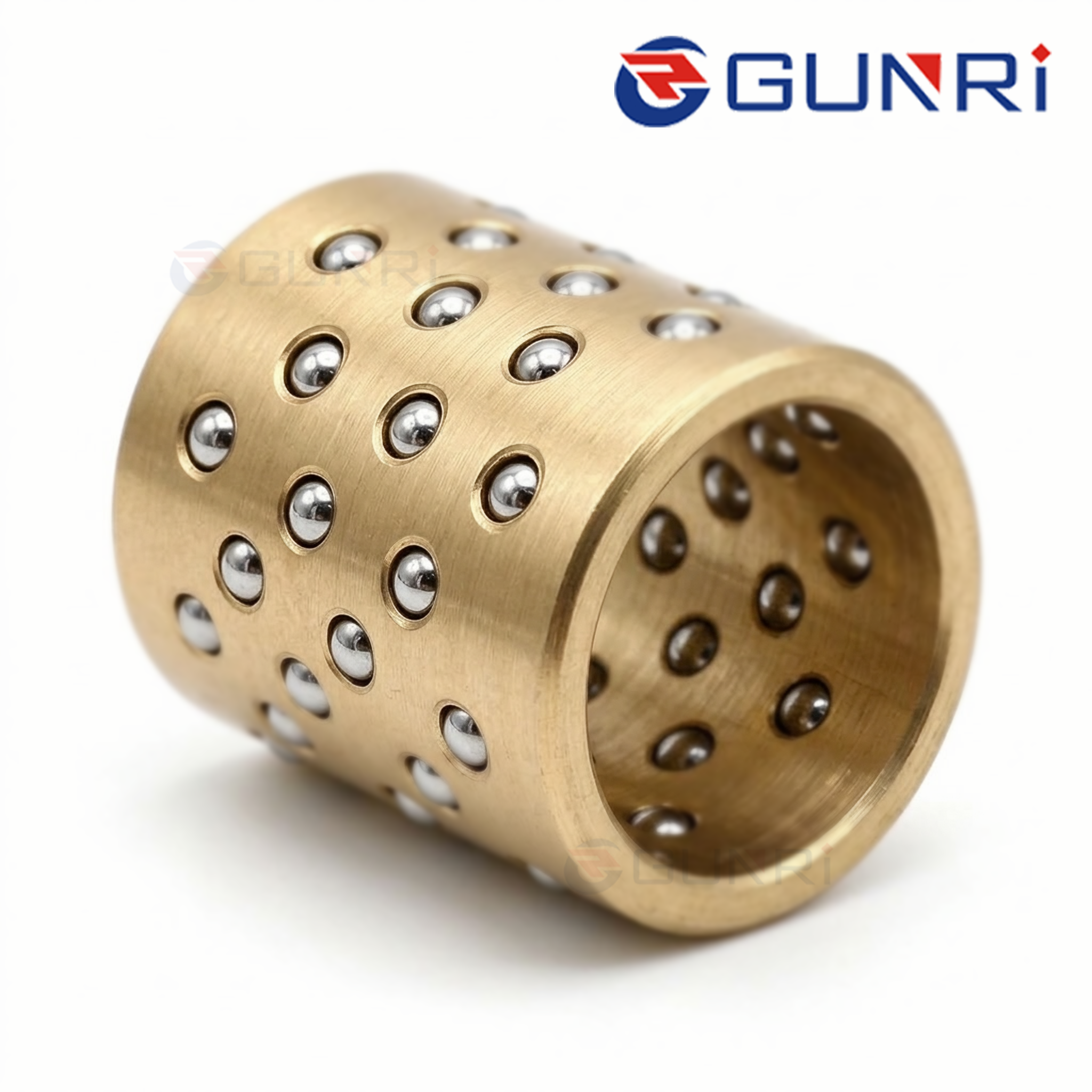
A miniature ball cage retains and spaces rolling elements between suitable shaft and sleeve surfaces. It can support a rolling guide, but it does not establish probe accuracy by itself. The mating geometry, clearance or preload, contact force, lubrication, and applied loads must be considered as an assembly.
Check cage travel before selecting the length
In a conventional finite-stroke rolling guide with a stationary outer sleeve, the cage travels approximately half the moving shaft distance under ideal rolling conditions. It should not be assumed to remain fixed in the housing. Provide sufficient cage travel, ball engagement, and end clearance throughout the operating stroke.
This relationship applies to the stated rolling-guide arrangement. Check the actual assembly drawing, retention method, and supplier guidance for the proposed design. Slip or cage migration can change the operating position and must be considered during validation.
Fit, radial play, and angular support
Radial clearance or preload depends on ball size and the dimensions and form of the mating surfaces. Ball-row spacing and the engaged guide length also affect angular support under side loads. Adding rows alone does not guarantee a particular clearance or stiffness.
Review shaft and sleeve diameter tolerances, roundness, straightness, hardness, and surface finish together. Do not specify a numerical fit or preload from the cage dimensions alone; confirm the requirements for the complete guide.
Friction and touch repeatability
Rolling guidance can reduce sliding friction in a suitable assembly, but seals, contamination, lubrication, preload, and misalignment still affect breakaway force. Excessive side load or an unsuitable fit can cause binding even when balls are used.
Evaluate return behavior and repeated touches at the intended approach speeds, probe orientations, contact forces, and operating temperatures. A dimensional inspection of the cage does not replace these functional checks.
Material and ball retention
Metal cages can use mechanically formed pocket edges to retain the balls. Polymer cages use a different retention geometry. For an introduction to the manufacturing method, see how ball cages are staked. Retention must allow the intended ball motion without excessive drag or ball escape.
Select cage material for the available space, loads, temperature, chemical exposure, and manufacturing requirements. A polymer cage alone does not make a complete guide non-magnetic or suitable for a cleanroom. Likewise, graphite additions do not by themselves establish that the rolling contacts can operate without lubrication. Assess the complete material and lubrication system for the application.
What to check when a probe sticks or repeats poorly
- Check mounting alignment and external side loads before changing the cage.
- Inspect the shaft, sleeve, balls, and retention features for damage, contamination, or contact marks.
- Check clearance or preload against the approved assembly dimensions.
- Verify free travel, cage position, and end clearance over the full operating stroke.
- Measure return behavior and repeatability under defined test conditions, then assess the electrical measurement chain as needed.
When another guide arrangement may be appropriate
A ball cage may be worth evaluating where compact rolling guidance and a finite stroke suit the probe design. Alternative guidance may be appropriate where the mechanism already constrains motion or where environmental, stroke, or maintenance requirements favor another arrangement. Compare the complete assemblies rather than assuming one bearing type always gives better measurements.
From selection to a custom component
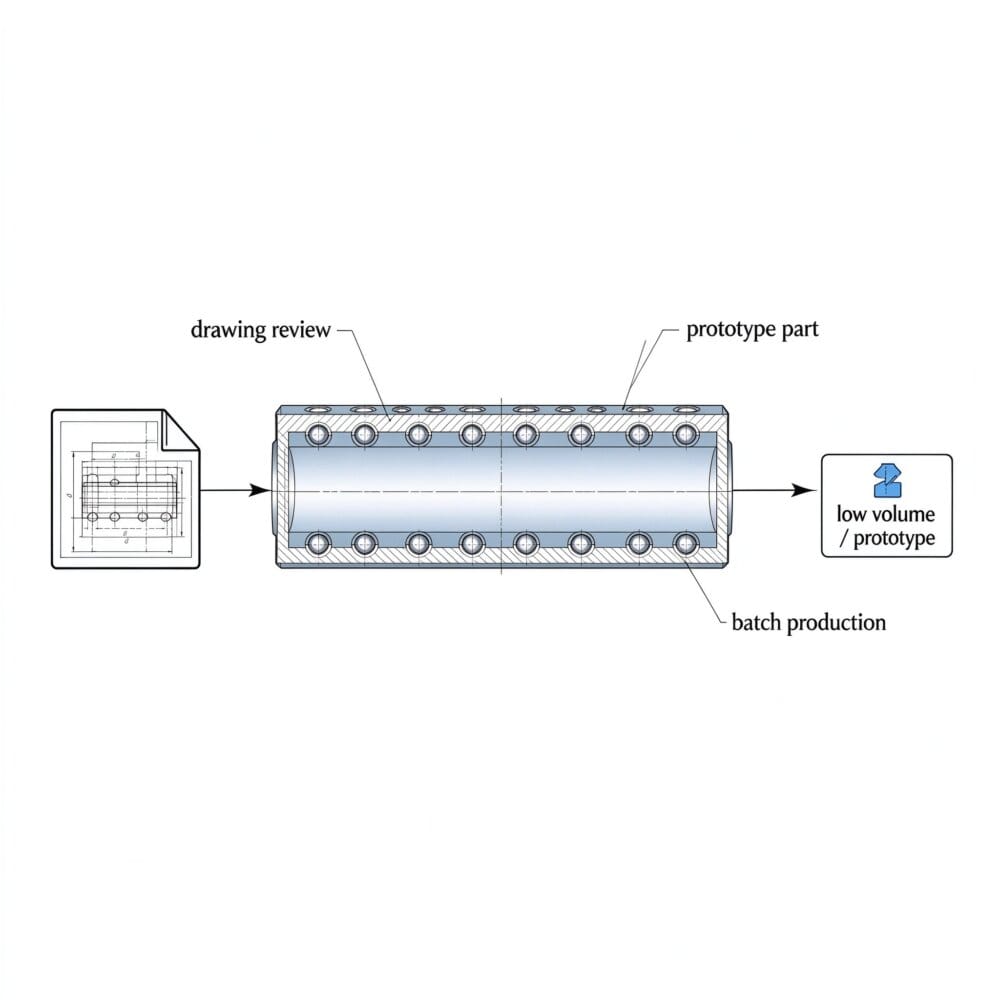
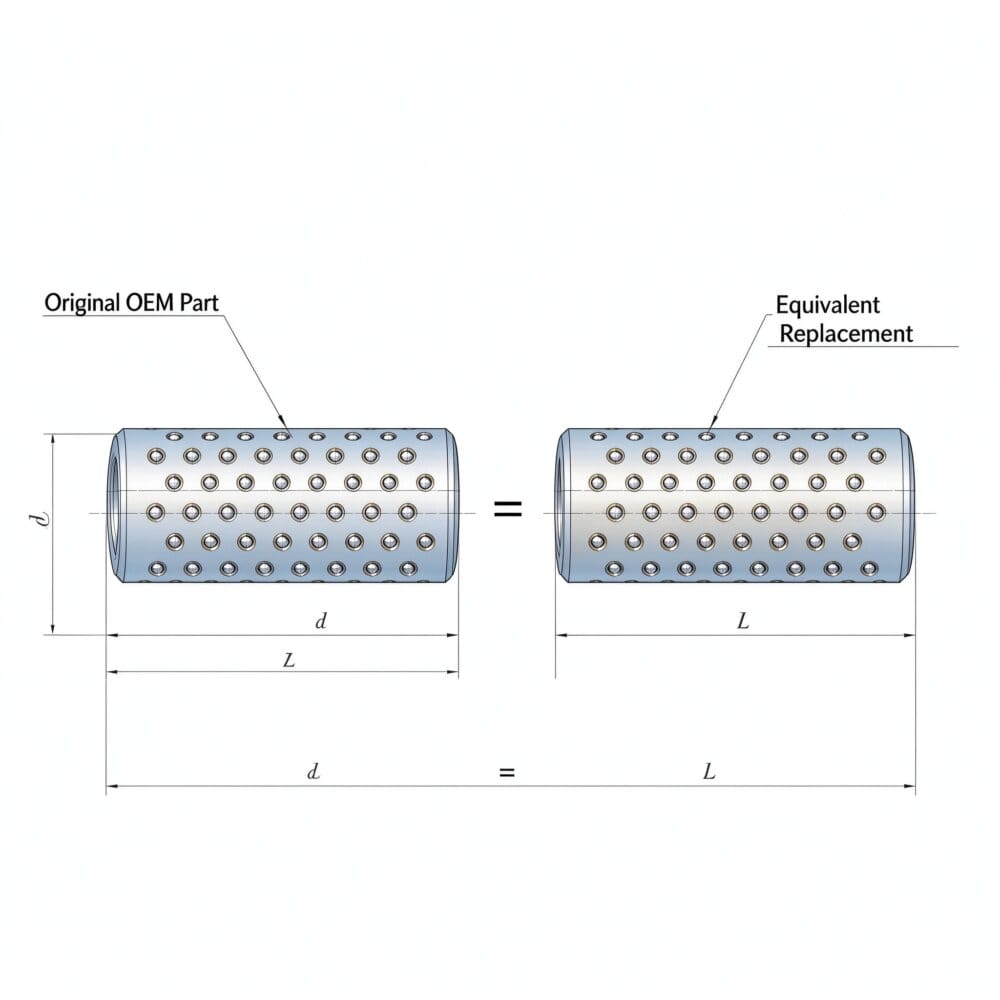
For a manufacturing review, provide the cage drawing together with mating dimensions, ball specifications, operating stroke, loads, lubrication requirements, and sample acceptance criteria. Manufacturing feasibility and inspection methods should be agreed for the specific part. Replacement of an existing catalog component requires a documented dimensional and functional comparison.
See custom miniature ball cages for LVDT probes for the drawing review and quotation information, or contact GUNRI with your application requirements.
Technical references
- FIBRO ball guide catalog: cage travel guidance for the cataloged finite-stroke arrangement. This reference does not establish interchangeability with a GUNRI component.
- MARPOSS gauging probes: examples of contact probe configurations and application-dependent measuring forces and ranges.