Custom Miniature Ball Cages for LVDT Sensors: Precision Probe Guidance and OEM Manufacturing
In a precision displacement sensor, measurement performance depends on more than the sensing element. The mechanical guidance of the moving probe is equally important, especially in contact-type LVDT gauging probes where the measuring shaft repeatedly travels along its axis.
For sensor manufacturers developing compact measuring instruments, finding a suitable miniature linear bearing or probe guidance component can be challenging. Standard components may not meet the required dimensions, ball arrangement, or assembly constraints.
A custom miniature ball cage provides a potential solution for compact linear guidance applications requiring smooth axial movement, controlled shaft support, and application-specific construction.
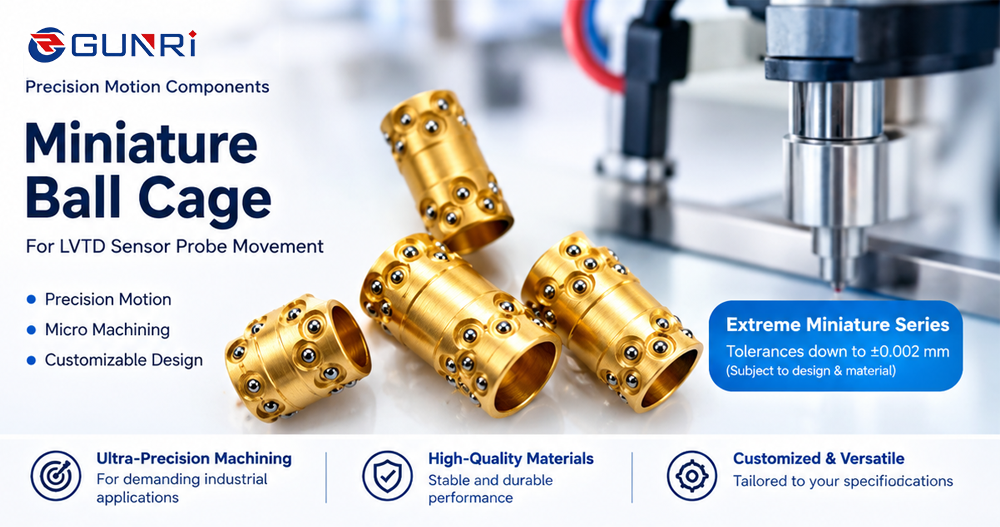
Custom miniature ball cages for LVDT sensor probes, contact displacement gauges, and precision measuring instruments — manufactured according to customer drawings and application requirements.
1. Why Probe Guidance Matters in LVDT Sensors
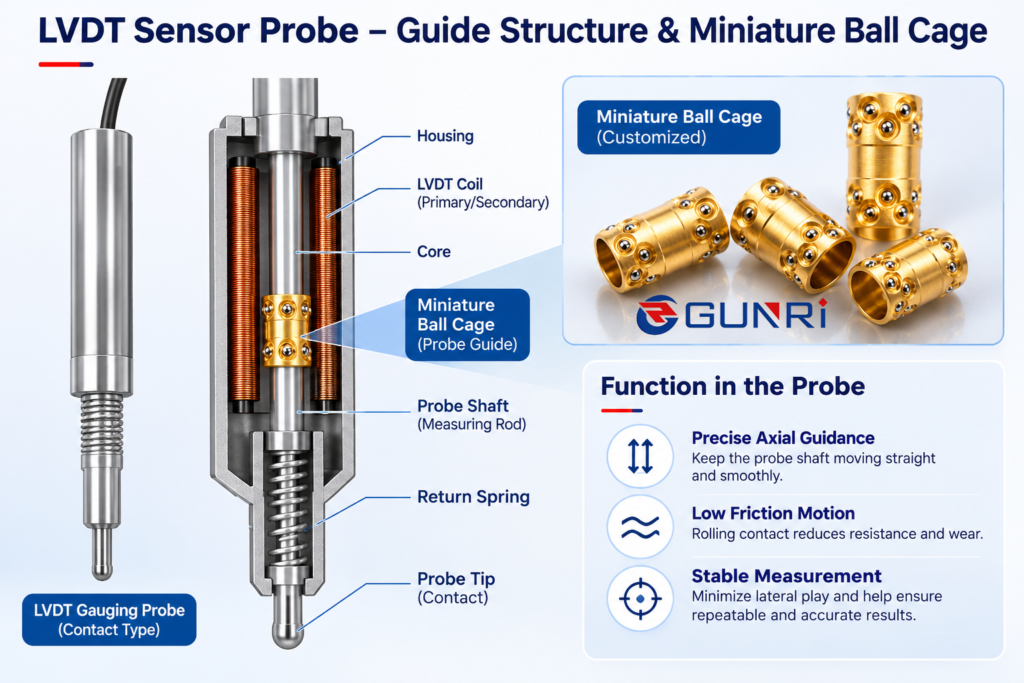
An LVDT (Linear Variable Differential Transformer) measures linear displacement through electromagnetic induction. Although the sensing principle itself is non-contact, many LVDT gauging probes incorporate a spring-loaded mechanical shaft that physically contacts the workpiece.
During measurement, the probe shaft moves back and forth. Its guiding mechanism must maintain appropriate alignment while allowing repeatable axial travel.
Inadequate mechanical guidance may contribute to:
- Excessive radial movement or shaft play
- Increased friction during reciprocating motion
- Unwanted effects from lateral loading
- Premature wear of mechanical contact surfaces
- Reduced measurement repeatability
This is why precision linear bearing assemblies and carefully designed probe guidance mechanisms are important in many contact-type displacement sensors.
2. What Is a Miniature Ball Cage?
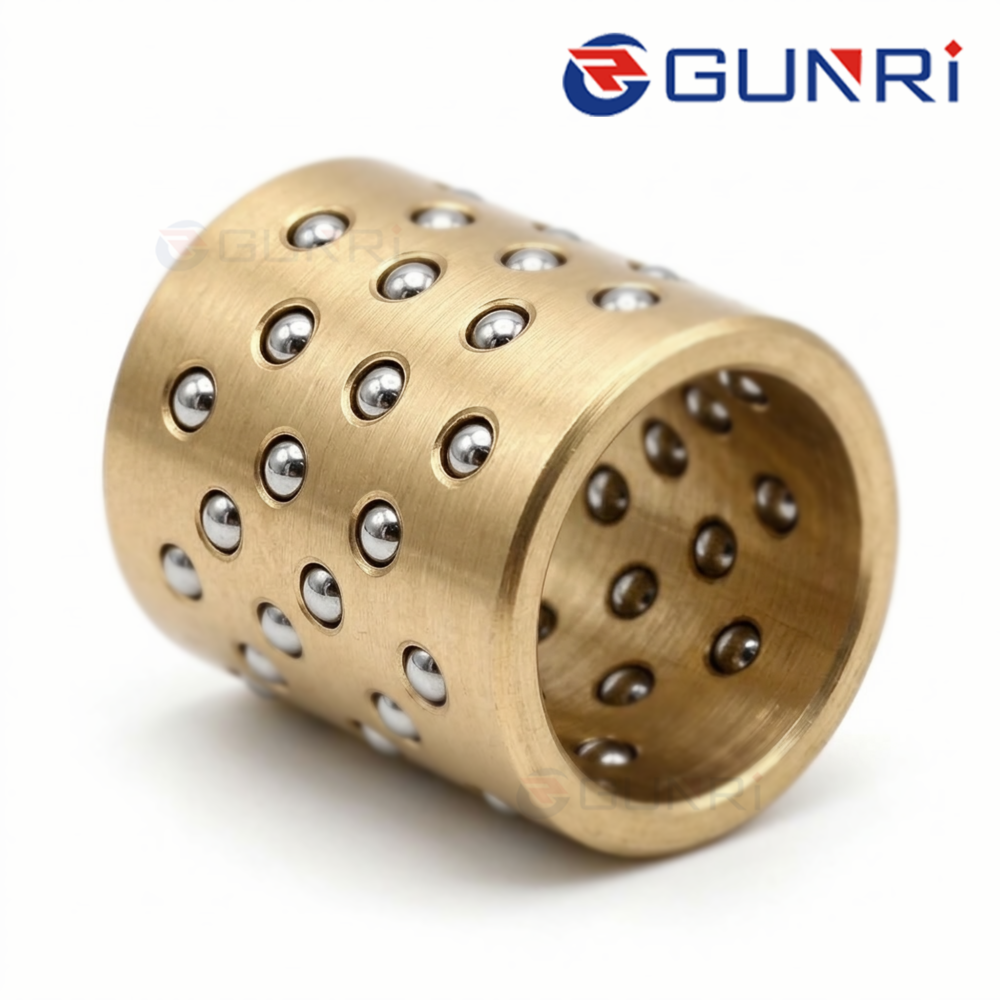
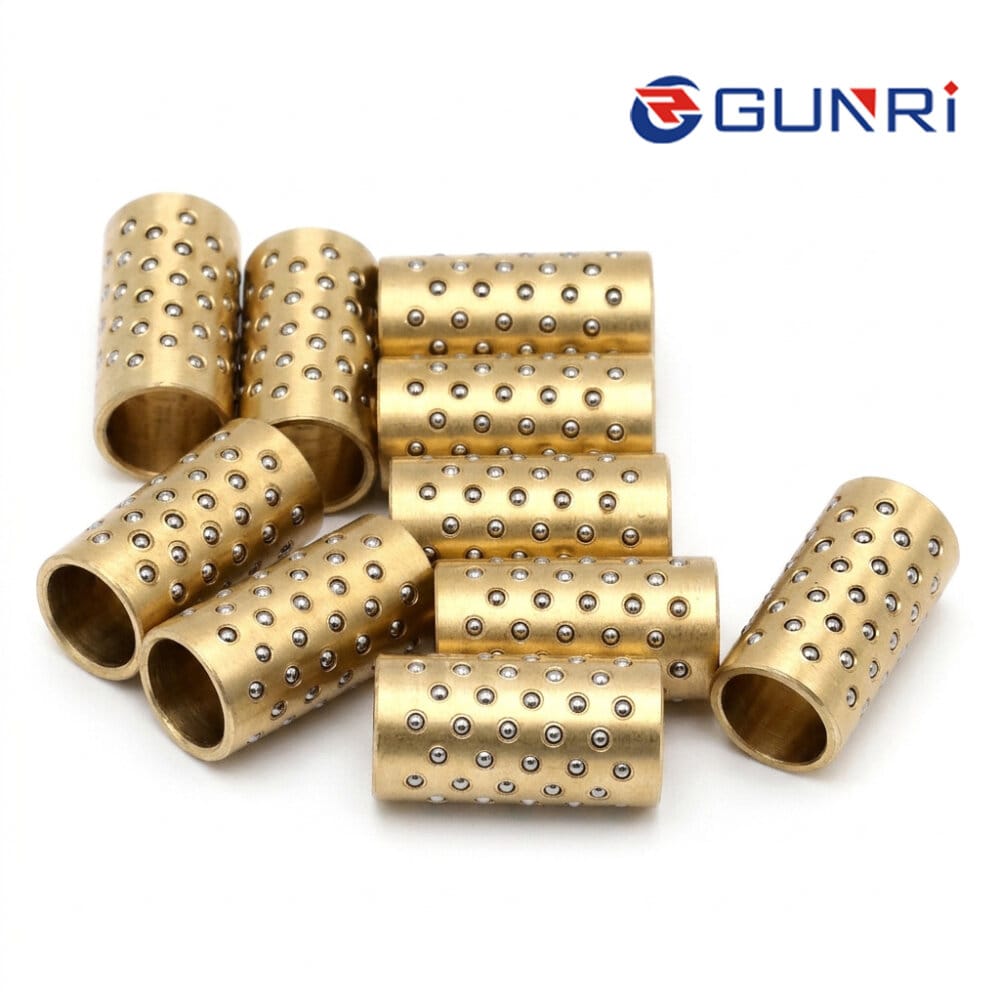
A miniature ball cage is a compact mechanical retainer designed to hold small precision balls in defined positions.
In a properly engineered linear guide assembly, the balls roll between the moving shaft and its mating guide surface. This arrangement can help reduce sliding friction and provide controlled support for axial motion.
Compared with larger linear bearing assemblies, miniature ball cages can be designed for installation within compact sensor housings and precision instruments.
Typical Structural Features
- Miniature cylindrical metal cage body
- Precisely machined ball pockets
- Multiple rows of miniature steel balls
- Application-specific ball arrangements
- Custom inner and outer diameters
- Special lengths and structural details
The ball cage is only one part of the complete guide assembly. Shaft diameter, housing geometry, surface finish, clearance, operating stroke, and loading conditions must be evaluated together.
3. Custom Ball Cage Design for LVDT Probe Applications
Not every displacement sensor can accommodate a standard catalog bearing component. Sensor manufacturers may require special cage dimensions, ball configurations, or structural details to match an existing probe design.
In these cases, a custom miniature ball cage manufactured to drawing may provide greater flexibility for the mechanical design.
3.1 Miniature Dimensions
The cage must fit within the sensor’s available installation space without interfering with the moving probe shaft or surrounding components.
3.2 Ball Arrangement and Retention
Ball diameter, pocket geometry, row distribution, and retention method must be considered together. These details affect assembly feasibility, contact conditions, and motion behavior.
3.3 Shaft and Housing Compatibility
The cage must be evaluated together with its mating components. Shaft hardness, diameter, surface finish, housing bore, and assembly clearance influence the performance of the complete guide system.
3.4 Smooth Reciprocating Motion
A contact displacement probe may perform repeated axial movements throughout its service life. Friction, side loading, lubrication, operating stroke, and wear should therefore be evaluated under actual working conditions.
3.5 Precision Manufacturing and Inspection
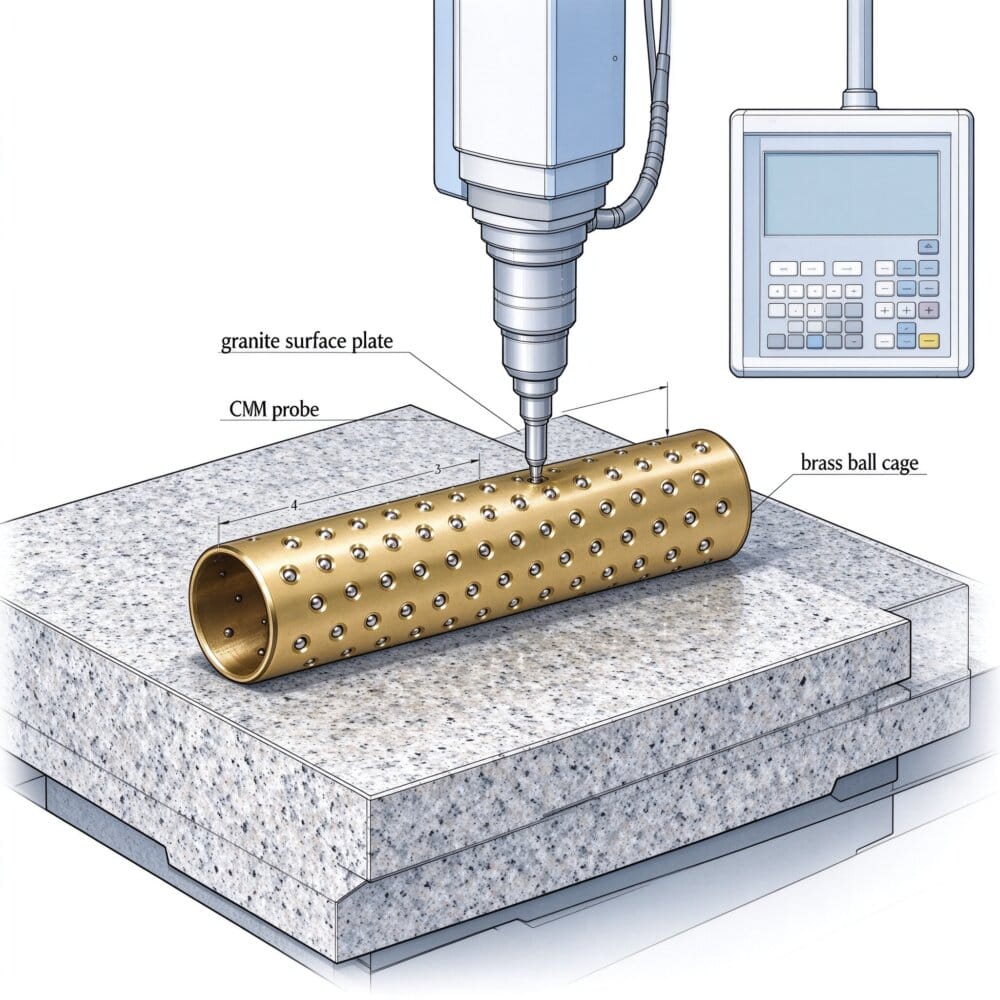
Miniature components require careful attention to machining quality, ball pocket geometry, surface finish, and dimensional consistency. Inspection requirements should be defined according to the customer’s engineering drawings and agreed acceptance criteria.
4. From Custom Drawings to Precision Manufacturing
GUNRI provides custom manufacturing solutions for miniature ball cage components used in precision motion applications.
Our focus is on non-standard components manufactured according to customer drawings, samples, and application requirements, rather than supplying only fixed-size catalog products.
Typical Custom Manufacturing Workflow
This drawing-based manufacturing approach allows sensor manufacturers to evaluate application-specific components without necessarily redesigning their entire assembly around standard catalog parts.
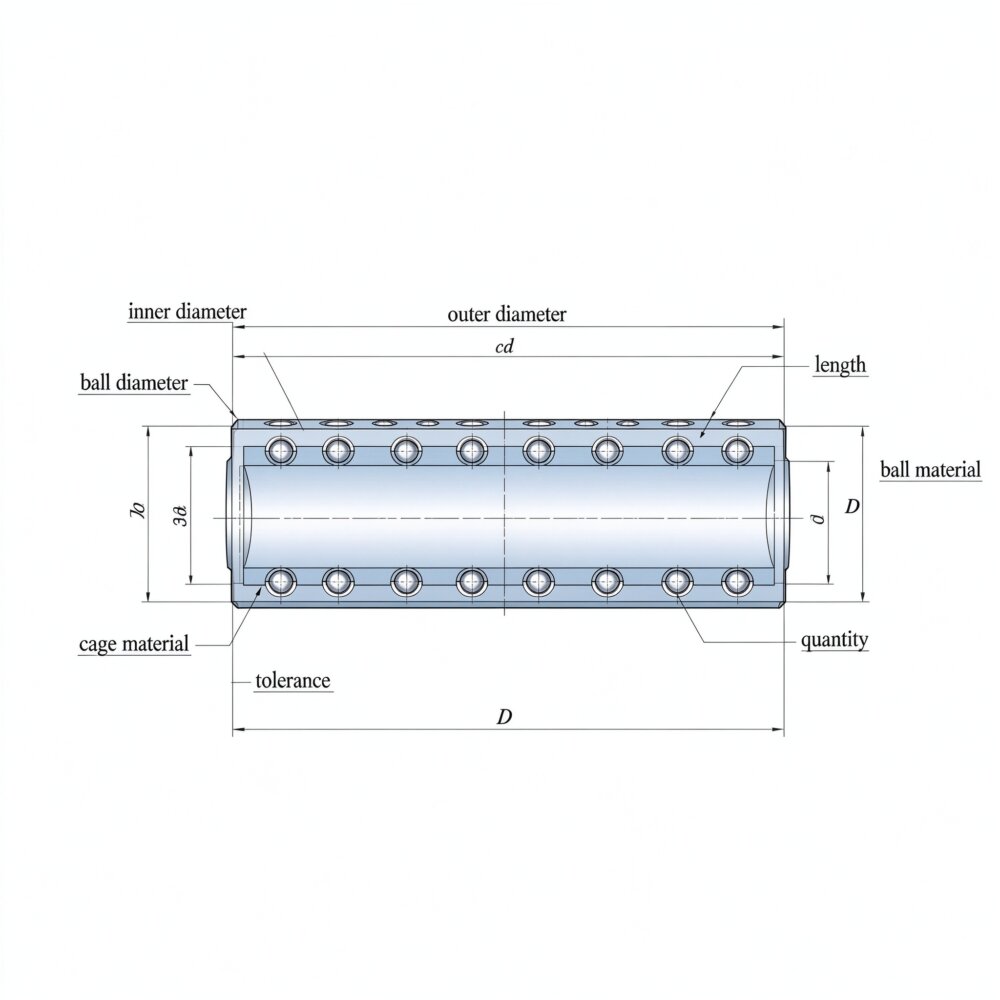
5. What Information Is Needed for a Custom Ball Cage Quote?
Providing clear technical information helps manufacturers evaluate machining feasibility, inspection requirements, and production costs more efficiently.
| Specification | Information Required |
|---|---|
| Outer Diameter | Required cage OD |
| Inner Diameter | Required cage ID |
| Overall Length | Cage length and allowable tolerance |
| Cage Material | Preferred material and grade |
| Ball Specifications | Diameter, material, quantity, and arrangement |
| Critical Tolerances | Dimensional and geometric requirements |
| Application | Sensor type and operating conditions |
| Motion Requirements | Stroke, speed, load, and duty cycle |
| Order Quantity | Prototype quantity and expected production volume |
Engineering drawings in PDF, STEP, or other suitable formats can help clarify the requirements. Physical samples may also be useful when complete drawings are unavailable.
6. Frequently Asked Questions
Can a miniature ball cage be customized for an existing LVDT probe?
Yes, custom manufacturing can be evaluated using the existing probe’s drawings, dimensions, and operating requirements. Compatibility with the shaft and housing must be considered during design review.
Is a miniature ball cage the same as a complete linear bearing?
No. A ball cage retains and positions the rolling elements. A complete linear bearing or guide assembly also depends on suitable mating shaft and housing surfaces.
What affects the performance of a miniature ball cage?
Important factors include ball diameter, cage geometry, mating surface quality, clearance, lubrication, operating stroke, and applied loads.
Can GUNRI manufacture miniature ball cages from customer drawings?
GUNRI supports drawing-based custom manufacturing projects. Feasibility, material selection, tolerances, and order requirements are reviewed according to each application.
7. Looking for a Custom Miniature Ball Cage Manufacturer?
If you are developing an LVDT sensor, contact displacement probe, precision measuring instrument, or miniature linear motion assembly, a custom ball cage may be worth evaluating.
GUNRI focuses on non-standard miniature ball cage manufacturing for customers who require components made to their specific drawings and application needs.
Need a Custom Miniature Ball Cage?
Send us your engineering drawing, sample, or application requirements to discuss custom manufacturing feasibility and quotation.
Contact GUNRI for a Custom Quote
Drawing-Based Manufacturing | Custom Components | Precision Motion Applications