Ball Cages for Semiconductor Inspection and Metrology Stages
A wafer inspection stage moves a chuck between die positions. The encoder reads motion to nanometers. The image of a defect smears. The linear scale is calibrated, the servo loop is tuned, and the chuck is flat. The carriage is drifting sideways on its guide because the balls that used to support it are no longer where they should be.
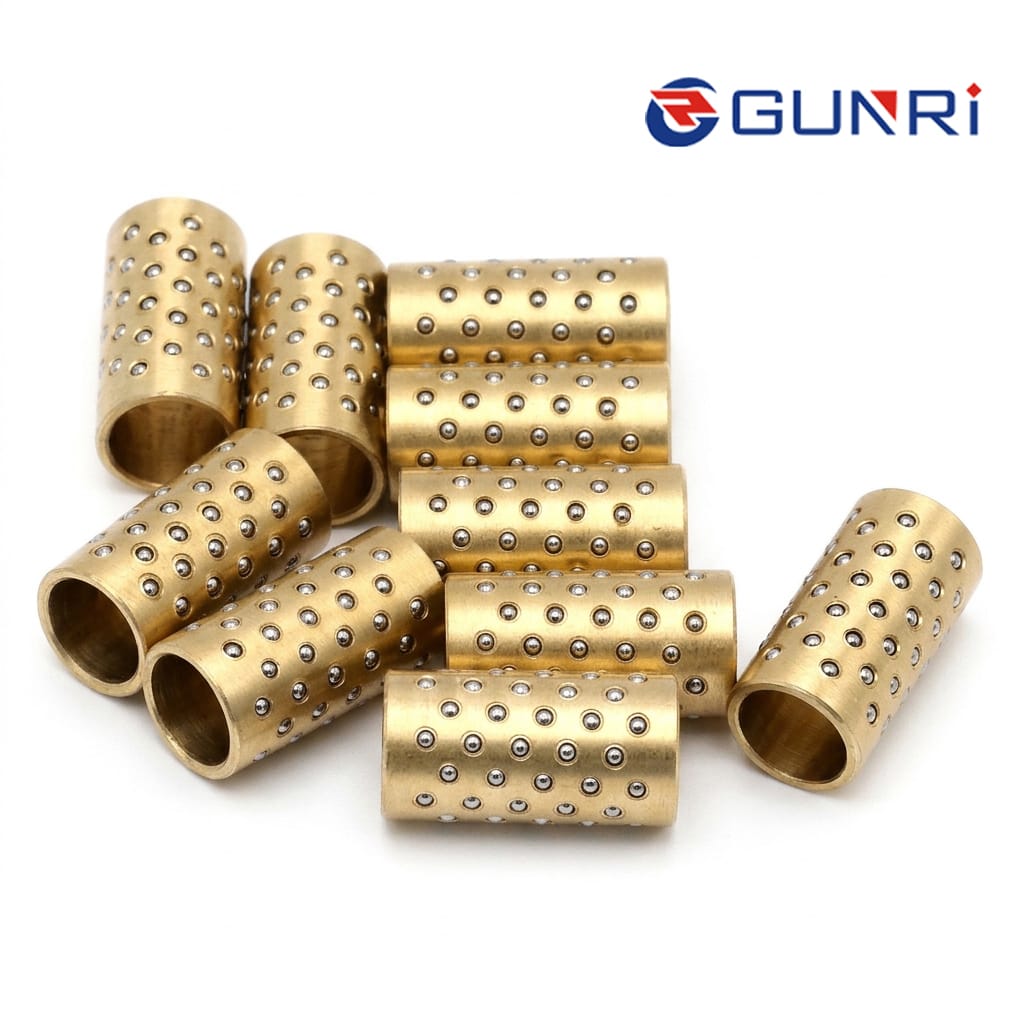
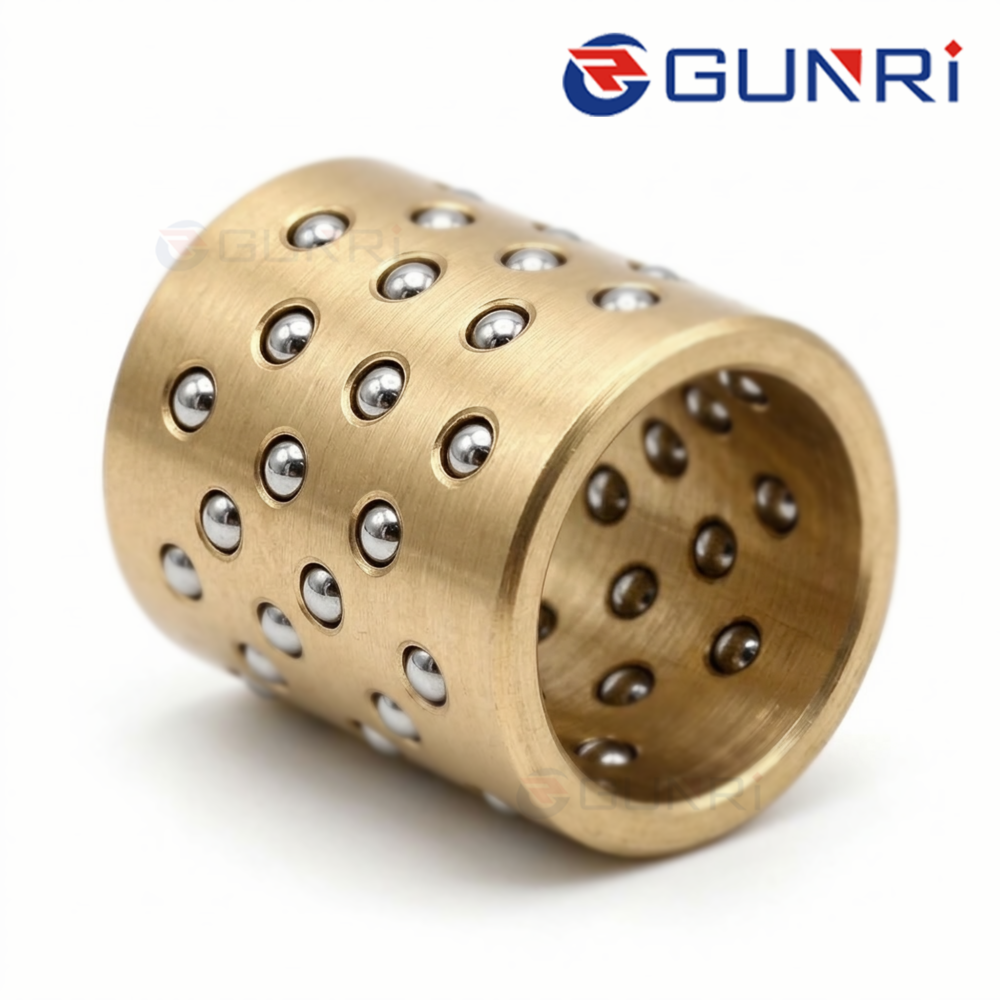
Semiconductor inspection and metrology stages live in a world where straightness, cleanliness, and repeatability all matter at once. A miniature ball cage inside the stage carriage is the part that keeps the moving element on its line without adding a lubrication burden the cleanroom cannot tolerate.
What a metrology stage actually needs
A scanning or inspection stage carries a wafer, a reticle, or a sensor head across a field. The encoder reads the carriage position, and the optics or probe take data at known points. If the carriage has lateral play, if it rotates around the vertical axis, or if it sticks and lurches, the data comes out misregistered.
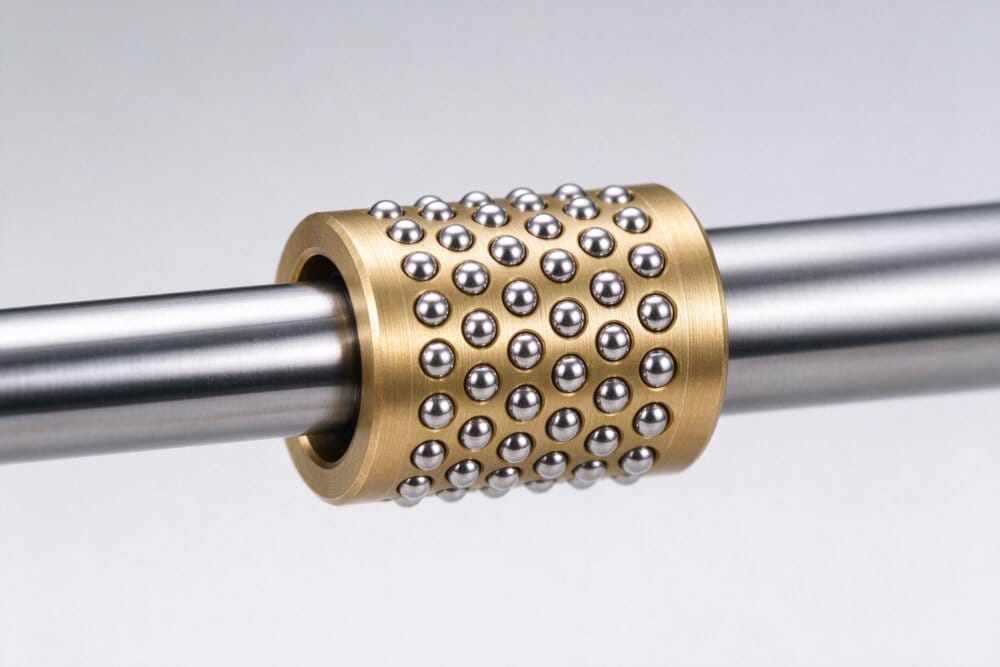
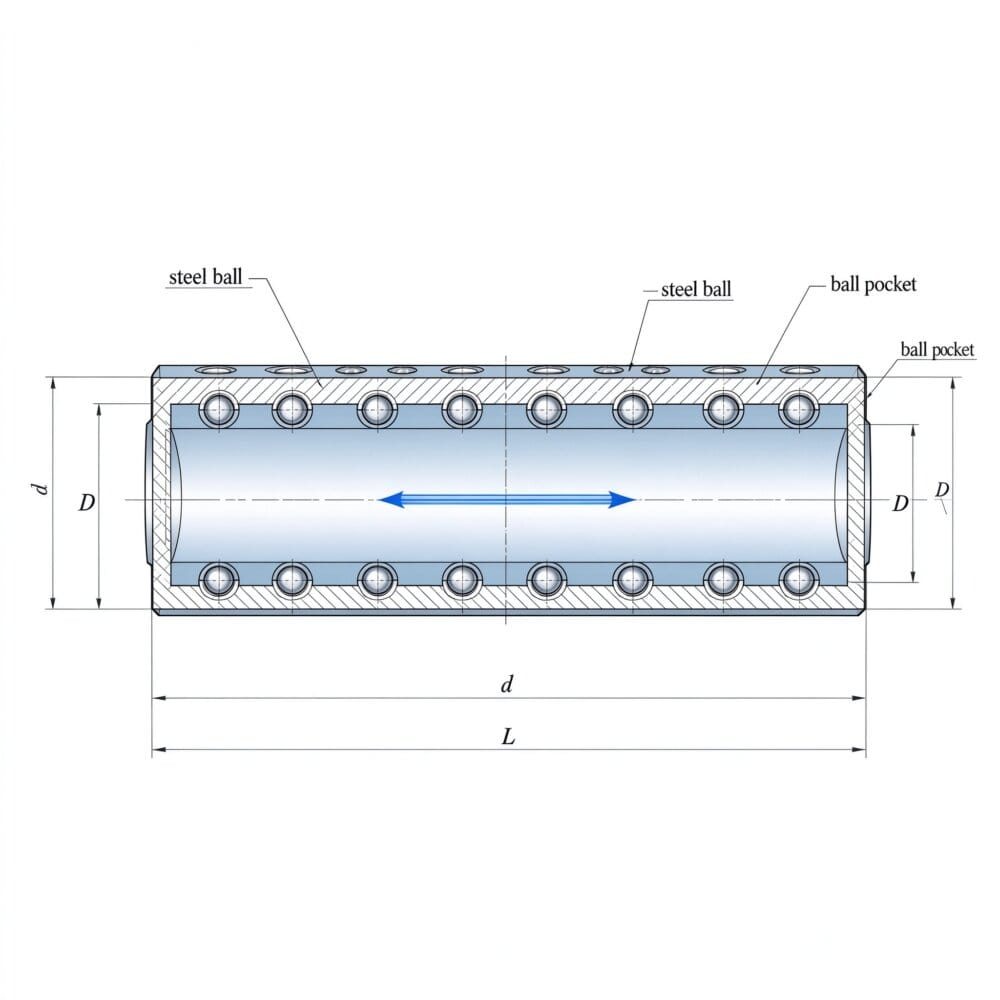
Crossed roller bearings and air bearings are common at the high end. Inside sub-assemblies — a Z-axis lift for the objective, a fine-trim stage under the sensor, a manual alignment puck — a smaller ball cage often does the job. It is a thin ring of balls between a plunger or carriage and its housing, holding the moving part on its axis with very low drag.
Why cleanliness changes the material choice
A cleanroom cannot tolerate free grease. Oil can outgas, smear, or become a particle source. A brass or bronze cage with graphite solid-lubricant plugs runs dry: the graphite transfers a thin film to the ball and race, and there is no liquid to migrate. We cover this at graphite plug brass ball cages.
A POM cage is the other cleanroom-friendly option. It is self-lubricating, it does not shed metal particles, and it works in light-load fine-adjustment positions. See POM self-lubricating cages. For higher speeds or acceleration, an aluminum cage keeps moving mass low, which matters when the stage has to step between die positions quickly.
Geometry that matters on a stage
Slotted windows for long travel
A metrology stage has a defined stroke. Slotted ball windows let the balls roll with the carriage through the full stroke, instead of the cage shifting end-to-end and adding a dead zone at the ends. Read more at slotted window ball cages.
Multi-row arrangements for angular stiffness
A long optical column or a heavy inspection head imposes a moment. Two or three ball rows spread that moment across the length of the carriage and reduce yaw and pitch. This is the difference between a carriage that tracks straight and one that rotates a fraction of a degree as it reaches the end of travel, which is enough to blur a scanned image.
Oil grooves where lubrication is allowed
Inside a sealed linear module where grease is acceptable, a shallow oil groove on the cage holds a small film at the ball line. The groove acts as a reservoir. Outside that sealed module, the dry-running or POM options take over.
Sizing and inspection
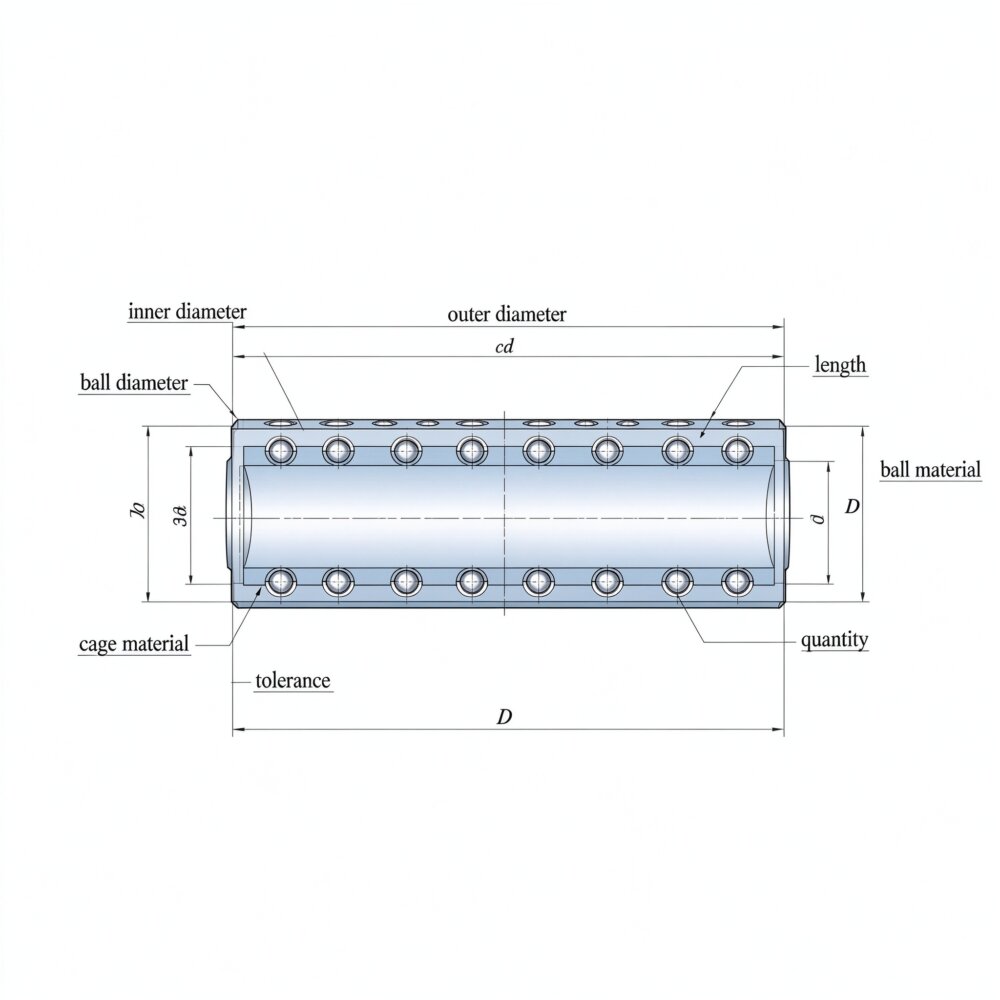
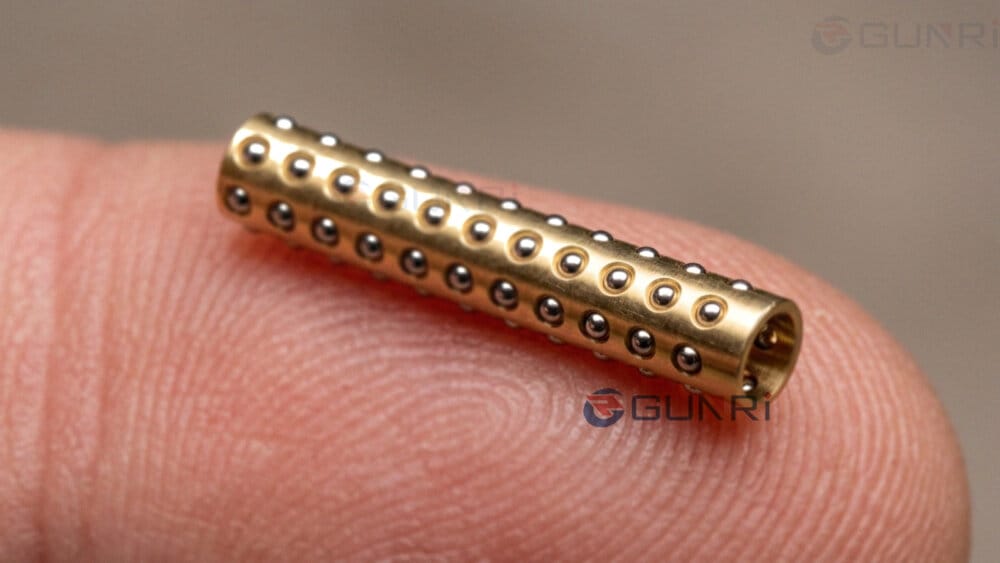
Metrology sub-stages are small. We hold a minimum inner diameter of 2.0 mm, a minimum ball diameter of 0.6 mm, and a minimum cage length of 8 mm. Larger inspection tools scale up to 400 mm OD. Every cage is CMM-inspected on the ball circle and the key diameters before it ships, so what you receive matches what you designed.
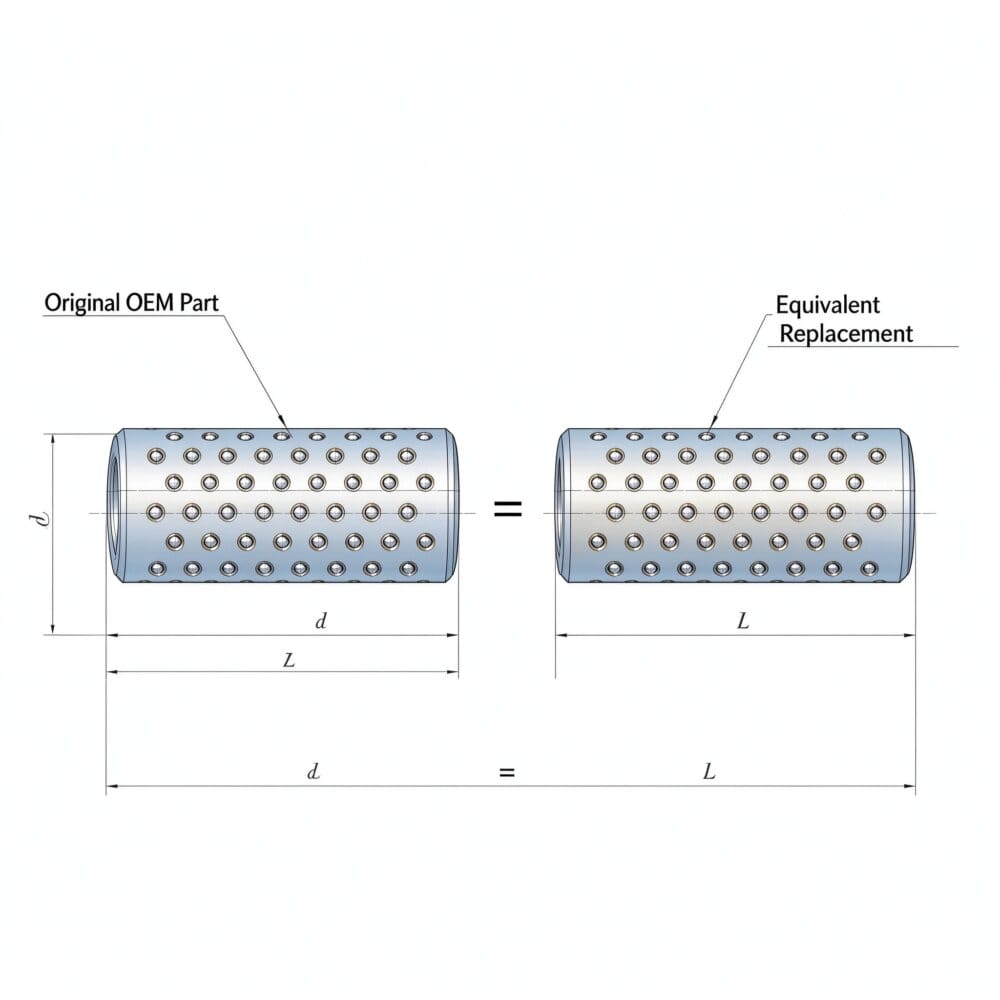
We accept STEP, IGES, and SLDPRT drawings. There is no MOQ, so you can try a cage in a prototype fine-adjust stage before committing to a production build. We also produce interchange equivalents for catalog ball cages, which matters when an existing stage uses an imported standard part and you need a drop-in replacement without redesigning the housing.
What to inspect when a stage drifts
If a stage that used to scan cleanly starts smearing at the edge of the field, check the ball row before you re-tune the servo. Remove the carriage and look for a bright band on the shaft or a flat spot on a ball. A ball that has dropped out of its pocket leaves the carriage supported on one side only. Staked balls held in by mechanical caulking are less likely to walk out than loose balls, which is why we stake rather than rely on a slip-fit.
If the bright band on the shaft is off-center, the ball row was not centered in the bore. If the band is grooved, the cage has been running dry and the ball has been digging into the race. Either symptom points to a cage replacement, not a re-alignment.
Have a non-standard dimension or an obsolete part to replace? Send us the drawing, sample, or just the shaft and bore sizes, and we will quote within one to two working days. No minimum order.