No-MOQ Ball Cage Prototyping: From Prototype to Batch
A metrology startup has a displacement probe on the bench. The cage geometry is still changing — last week the bore moved from 3.0 mm to 2.8 mm, and the ball size dropped from 1.0 mm to 0.8 mm. They need two cages this week to test the new envelope, and maybe twenty next month once the geometry freezes. A supplier with a 500-piece minimum is useless. They cannot commit to a production run on a part that changes every iteration.
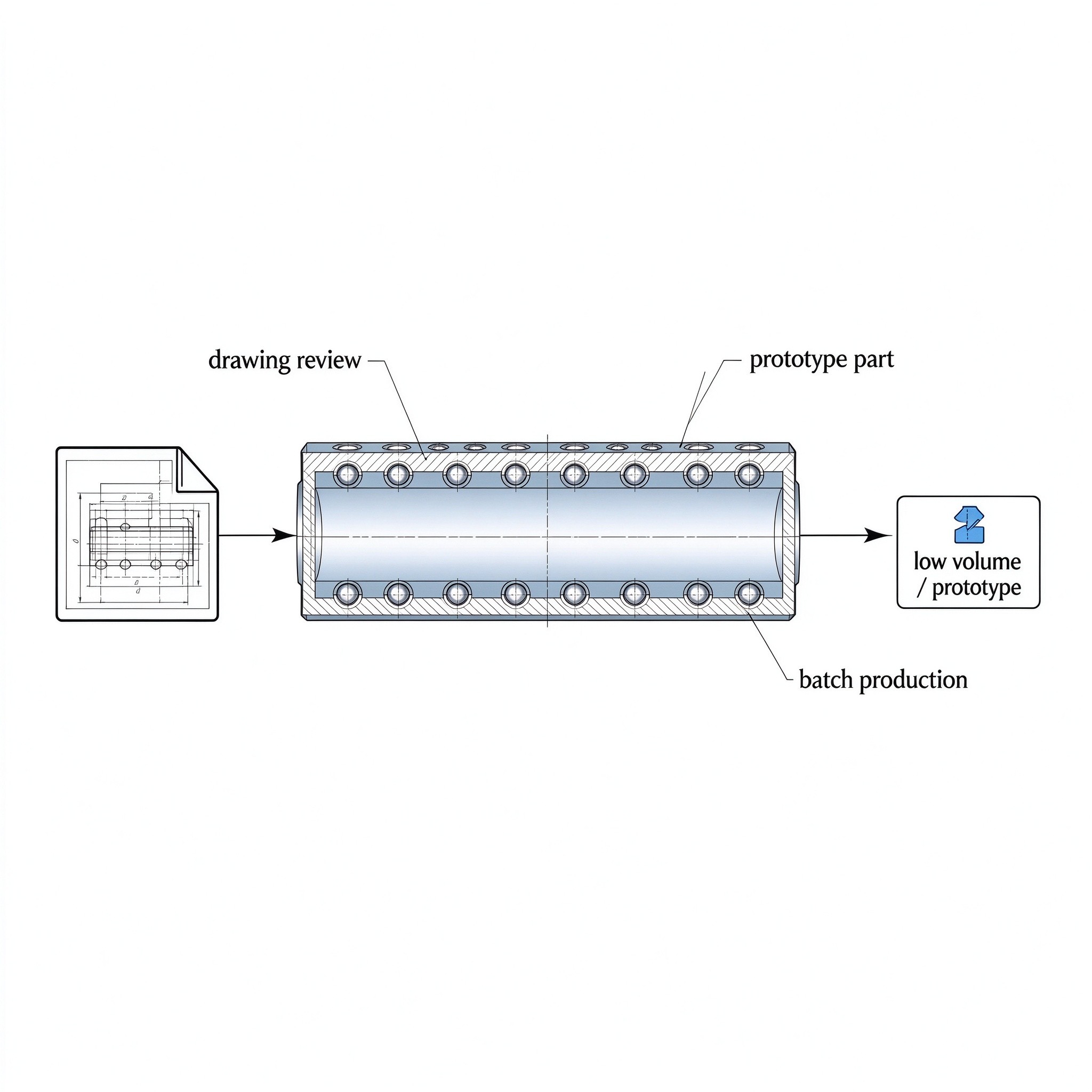
We do not impose a minimum order quantity on custom ball cages. A single prototype piece runs through the same CMM inspection as a 500-piece batch. This is the path we offer OEM customers in NPI: start with one, iterate the geometry, and move into batch production when the drawing freezes.
Why no MOQ matters for OEM development
Ball cages are not catalog parts. They are machined to a drawing that evolves through the development cycle. A minimum order forces the engineer to commit to a geometry before it is proven — and to pay for hundreds of parts that will be obsolete by the next revision. That is the wrong incentive for NPI.
No MOQ changes the math. The engineer can order one cage to test a new bore, one cage to test a new ball size, one cage to test a new row arrangement, without writing off the tooling cost on a batch. Each iteration is a small spend. The production commitment waits until the mechanism is designed and the drawing is stable.
This is the working relationship OEM customers in metrology, medical, semiconductor, and optical equipment actually want. They are building the mechanism. The cage is one component on the BOM, and it changes while the rest of the system settles.
The NPI path: prototype to batch
Step 1 — the first prototype
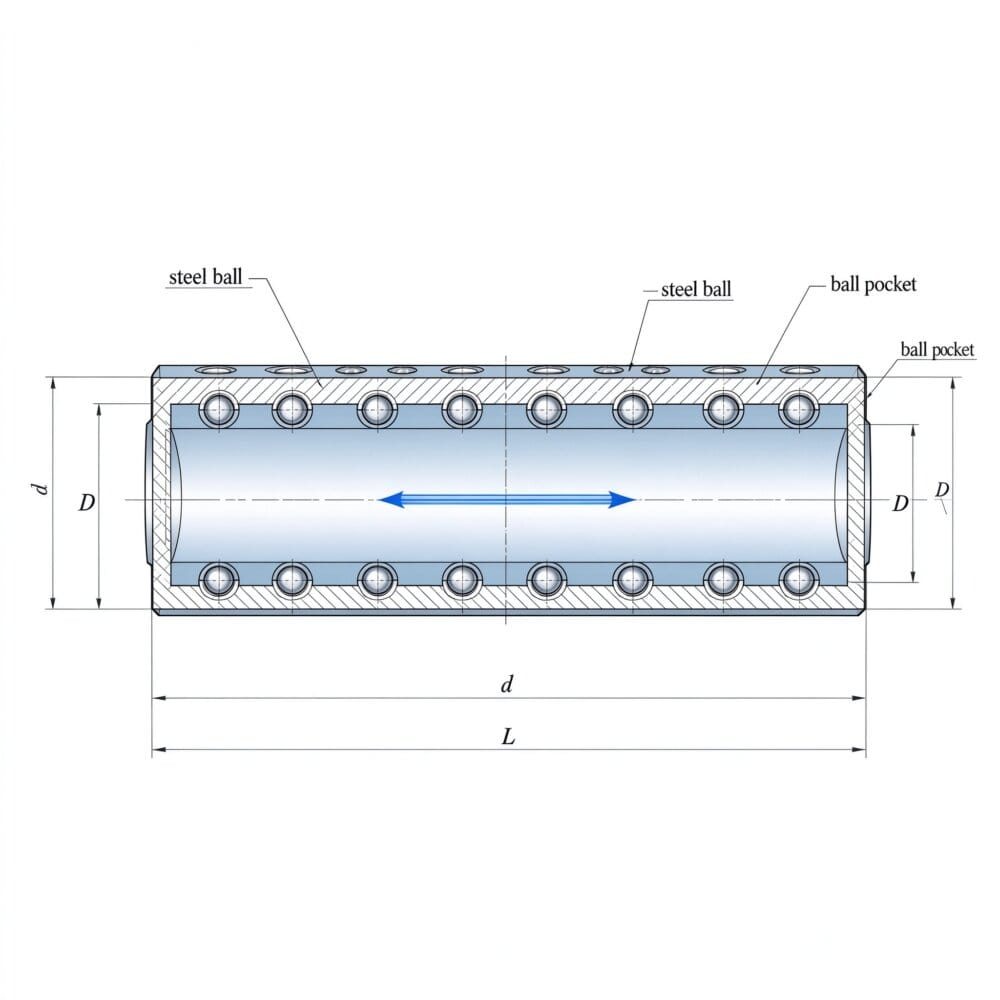
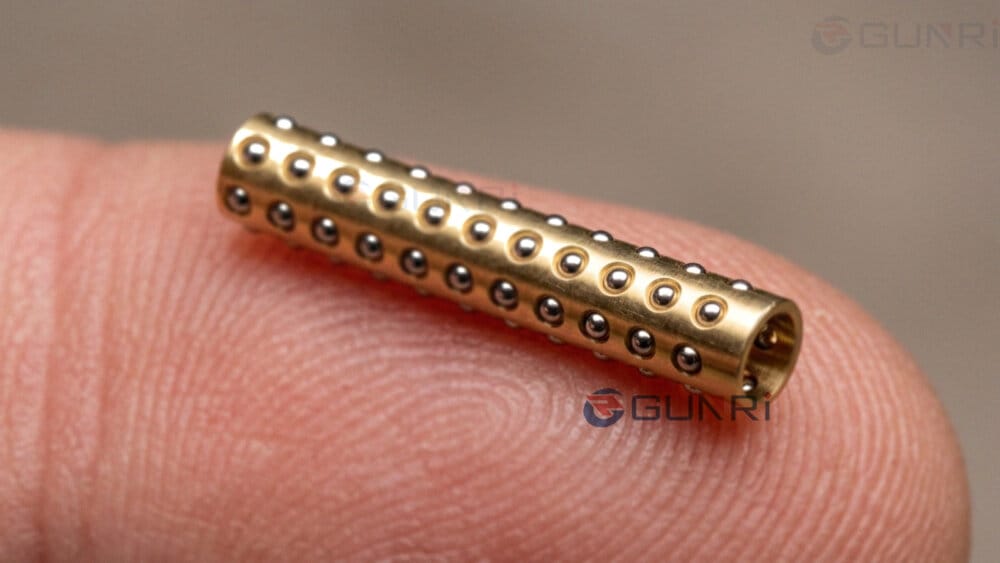
The first order is a single cage, or a small handful, machined to the current drawing. We run it through the same machining, staking, and CMM inspection as a production part. The CMM report ships with the prototype so the engineer can confirm the bore, the OD, and the pocket location against the design intent. The prototype is not a soft mock-up — it is a functional cage that goes into the probe and runs on the bench.
Step 2 — iterate the geometry
On the bench, the engineer finds the pocket pitch is slightly off, the bore needs to drop 0.2 mm, or the ball size has to change for the friction target. The drawing comes back revised. We cut the next prototype against the new print. There is no mold to modify, no hard tooling to scrap — the part is machined, so the revision is a new program on the same machine. Each iteration is a single piece, not a batch.
Step 3 — freeze the drawing and move to batch
When the mechanism works on the bench and the drawing stops changing, the order moves into batch. The same machining and staking process scales from one piece to fifty, five hundred, or more. The CMM inspection level can step down at this point — first article plus sample check instead of every part — because the process is now proven on the prototype iterations. The unit price drops as the batch grows, because the setup cost is spread across more pieces.
The full custom-cage process, from drawing to shipment, is in custom ball cages made to your drawing. What we need on the drawing to start the quote is in what we need to quote your custom ball cage.
What stays the same across prototype and batch
Two things do not change when the order moves from one piece to a batch.
The CMM inspection
Every cage, whether it is a prototype or a production piece, is inspected against the drawing. The inspection level may step down on repeat batches once the process is proven, but the first article in every batch carries the full CMM report. The pocket location and runout are the dimensions that govern the guide, and they are measured on every prototype so the engineer is not surprised by a dimensional drift between iterations.
The staking process
The balls are retained by staking on a prototype exactly as they are on a production cage. We do not ship a prototype where the balls are loose or taped in place — the part has to work in the mechanism on the first run. The stake force is set per ball size, and the ball free-rotation condition is checked on each cage. See how ball cages are staked for the process.
The envelope on a prototype
The no-MOQ path covers the same envelope as production: from the miniature 2.0 mm ID with 0.6 mm balls, up to 400 mm OD. A prototype miniature probe cage and a prototype die-set cage are both treated as single-piece orders. The miniature envelope is detailed in miniature ball cages at 2.0 mm ID.
The material choice on a prototype
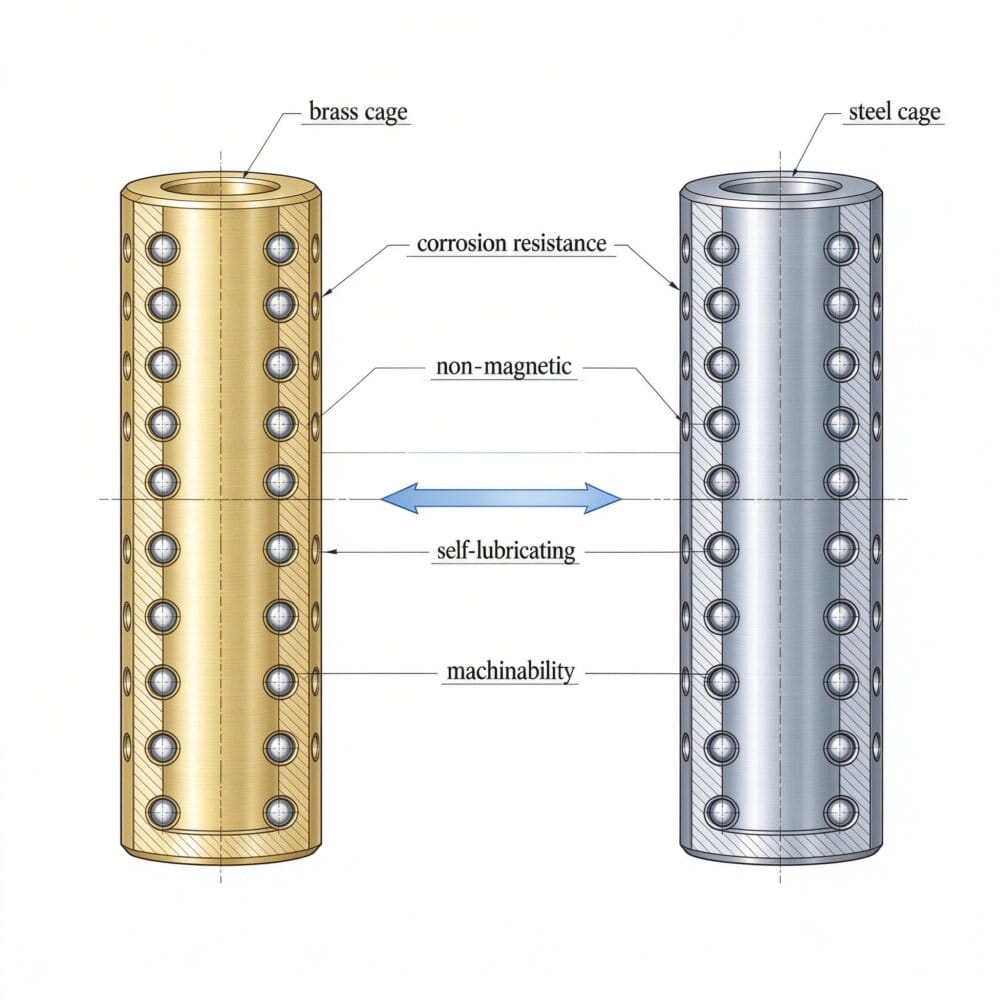
Because there is no tooling cost to amortize, the engineer can experiment with material on a prototype. Run the first cage in brass, then test a POM version for the low-oil case, then test an aluminum version for the low-inertia carriage. Each material is a single piece. The material trade-offs are in ball cage materials: brass, bronze, aluminum, POM.
Starting the NPI conversation
Send the current drawing, even if it is marked preliminary. We will quote the first prototype, note the open dimensions on the drawing that will need to freeze before batch pricing, and come back with a lead time. When the drawing is ready for batch, the production price follows. There is no commitment to volume on the first order.
Not sure whether a cage or a bushing is right for your application? Send us the stroke, load, and available envelope, and we will tell you honestly which one makes more sense — even if it is not us.