Ball Cages for Mini Slide and Pneumatic Actuators
A pneumatic mini-slide on a pick-and-place machine cycles between two positions three or four times a minute. It carries a vacuum gripper that picks a plastic part from a feeder and sets it on a tray. After six months, the slide starts drifting: the gripper no longer drops the part in the same spot, and the operator has to nudge the stop screws every shift. The air cylinder is fine. The guide inside the slide is not.
Most mini-slides use a plain bearing or a sintered bushing on a pair of guide rods. That works when the load is light and the duty is low. But as the bushing wears, clearance opens up, the carriage yaws, and repeatability goes. The fix is not a bigger cylinder. It is a better guide on the rods.
Where a Ball Cage Sits on a Mini-Slide
A mini-slide is a carriage that rides on two parallel guide rods, driven by an air cylinder. The rods are fixed to the end blocks; the carriage slides on the rods. In a stock slide, the carriage has plain bushings — sintered bronze or plastic — pressed into its bores.
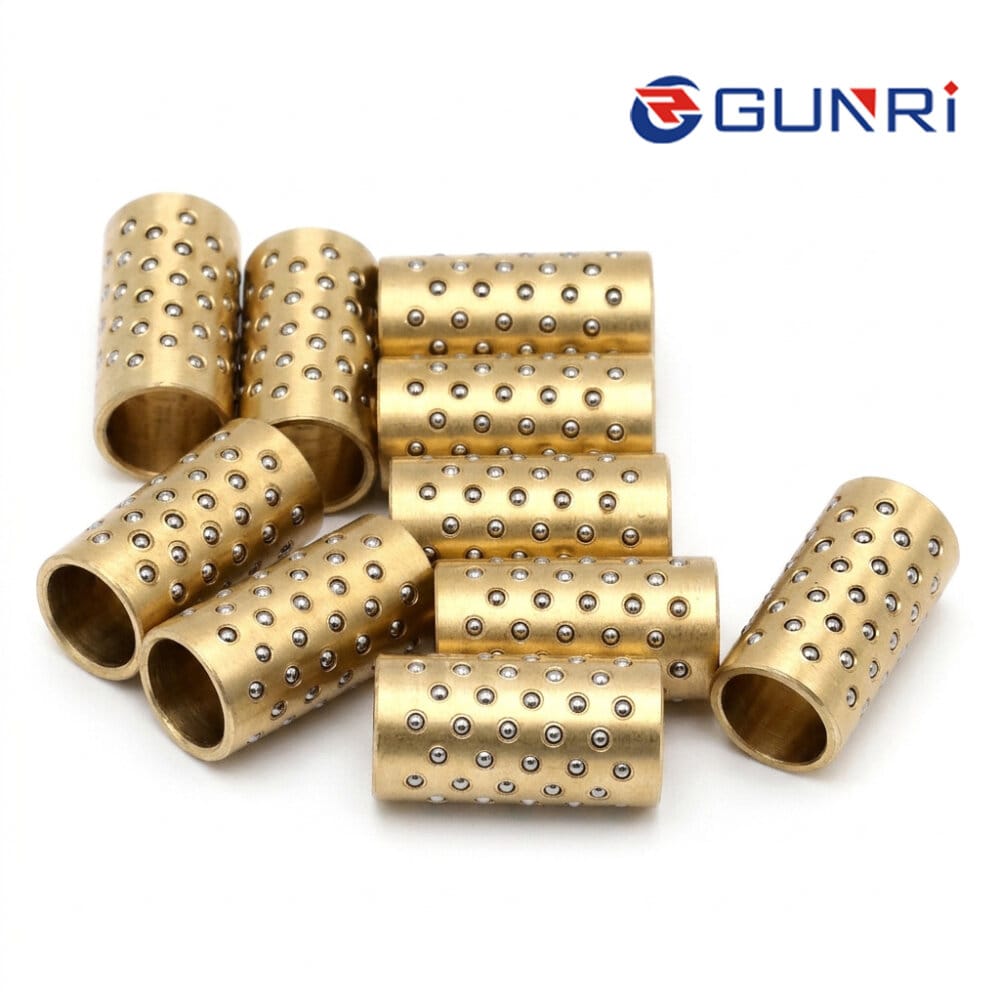
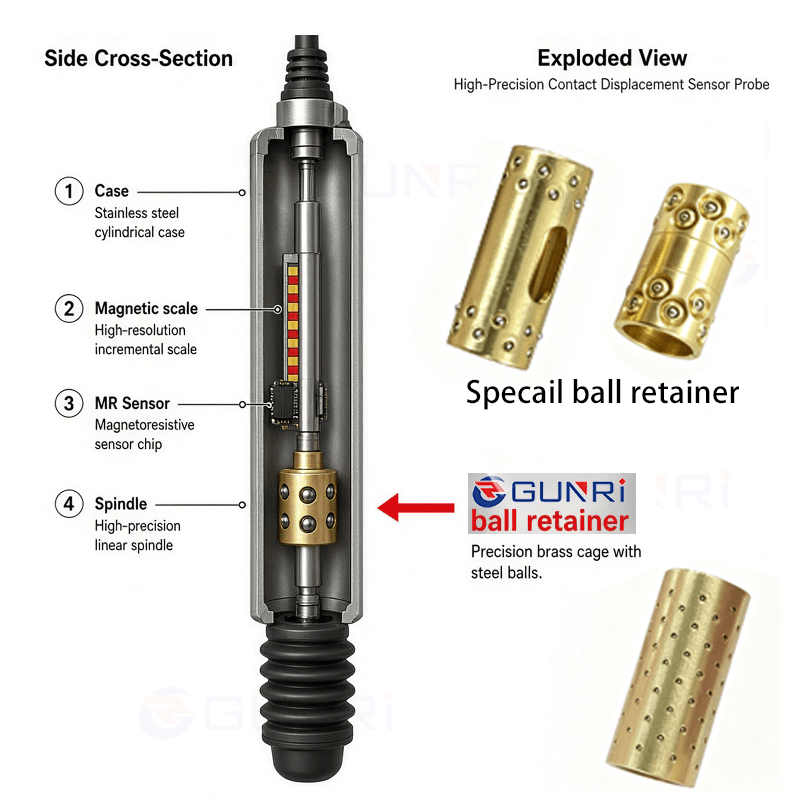
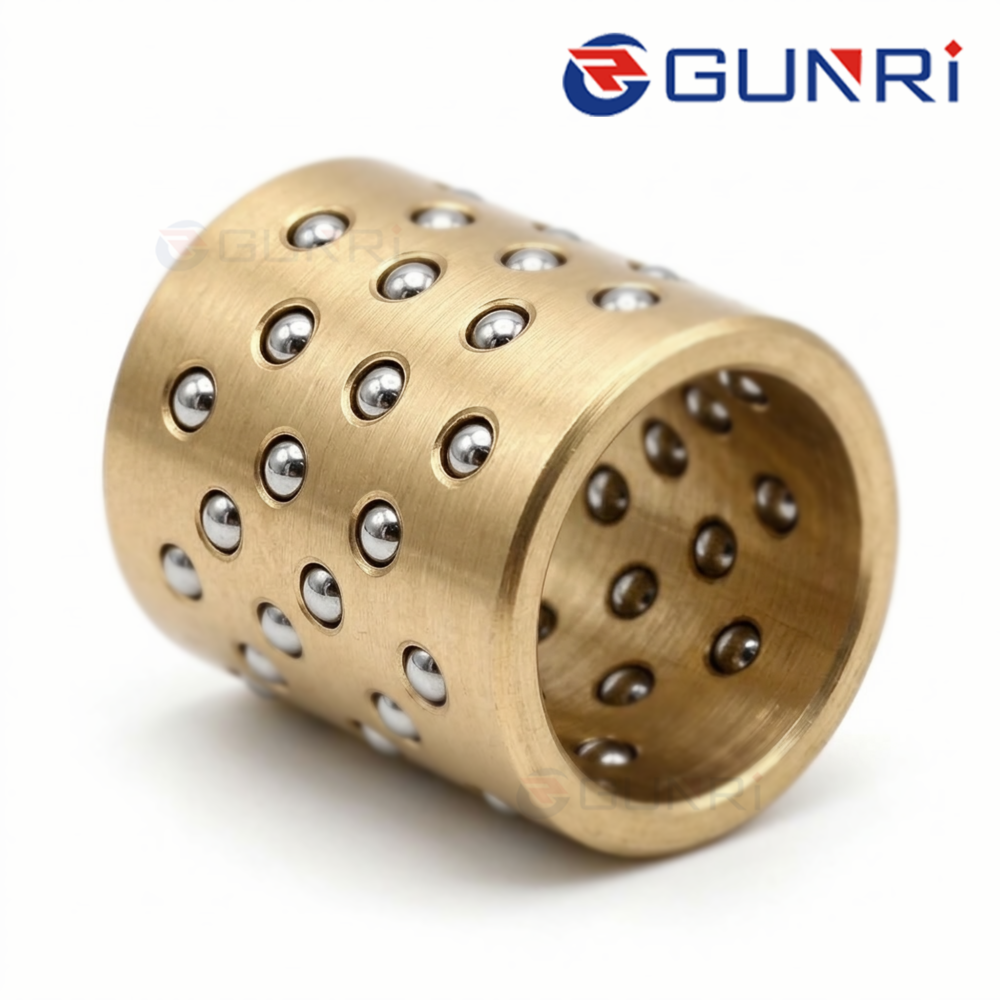
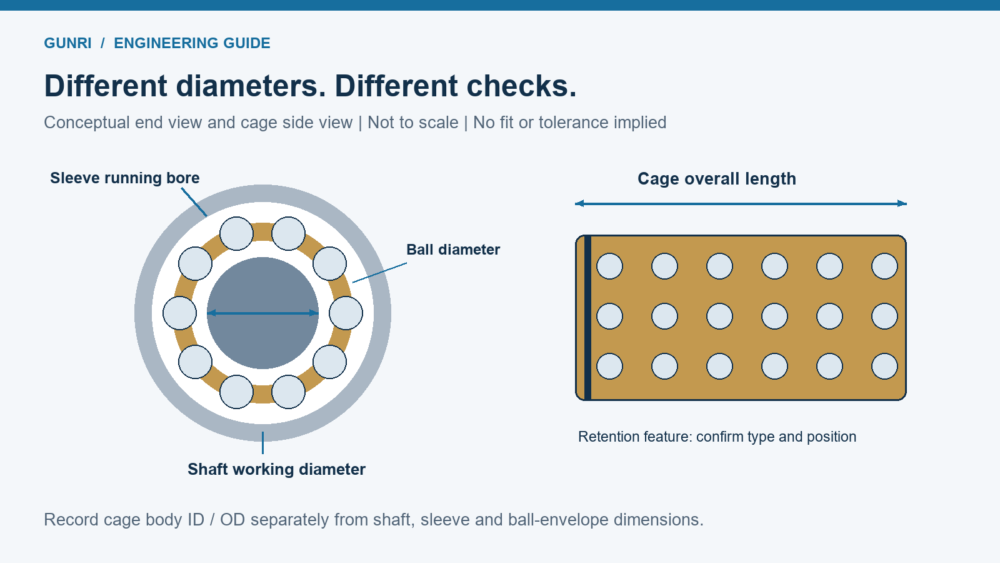
Replacing those plain bushings with ball cages changes the carriage from sliding contact to rolling contact. Each guide rod gets a cage pressed into the carriage bore. Rows of balls run on the ground rod, carrying the carriage and any side load from the gripper. Because the slide stroke is finite (typically 10 to 100 mm), the balls shuttle in slotted windows rather than recirculate. The cylinder and end blocks stay the same; only the carriage bushings change.
Why This Is Cheaper Than a Linear Rail Upgrade
The obvious upgrade path is a recirculating linear rail on the same carriage footprint. That works, but it demands precision-machined raceways, new end blocks, and often a bigger carriage. When you have an existing mini-slide in the field and the bushing has worn, swapping the bushing for a staked ball cage is a smaller change.
The cage drops into the existing carriage bore. The rod diameter is the same. The carriage length is the same. The stroke and the drive cylinder do not change. You get rolling-contact guidance without redesigning the slide. For new designs, the same logic applies: if the carriage bore already exists and you just need a better bushing, a custom cage is lighter and shorter than a linear ball bearing cartridge.
Low Inertia for Fast Pick-and-Place
On a pick-and-place axis, the carriage accelerates and decelerates every cycle. Heavy carriage mass eats into cycle time and shakes the end stops. An aluminum cage body cuts moving mass compared with a steel bushing or a cast bronze liner. The balls are still steel, but the cage shell — which is most of the carriage bushing volume — is aluminum.
We build aluminum cages for this exact reason. The aluminum body is hard-coated or anodized as specified, and the steel balls carry the load. The result is a rolling guide with lower moving mass than a bronze bushing.
Lubrication on a Shop-Floor Slide
A mini-slide on a packaging or assembly machine sees weeks of continuous duty between lubrication stops. The guide needs to hold grease or run dry without seizing.
- Brass or bronze cage with oil grooves. The grooves hold a grease film that feeds the ball tracks over long intervals between relubrication.
- Bronze with graphite solid-lubricant plugs. For slides that are sealed or inaccessible, the graphite transfers a dry film and the slide runs without oil.
- POM resin cage. For low-cost, low-duty slides where the carriage is replaced rather than relubricated. Self-lubricating and quiet.
Multi-row ball arrangements are used when the gripper applies a moment load — for example, when the gripper arm extends out from the carriage and carries a part weight at the end. Two rows of balls spread the moment and resist carriage yaw.
When a Cage Is the Right Call
A ball cage is a finite-stroke rolling guide. It is not a recirculating linear bearing. It is the right choice when:
- The slide stroke is short (under 100 mm) and the carriage rides on two fixed rods.
- You are retrofitting an existing carriage bore and cannot redesign the end blocks.
- The duty is continuous enough that a plain bushing wears and opens clearance.
- You need lower moving mass than a bronze bushing, but not the cost of a linear rail.
The same rod-guide logic appears on SMT nozzle Z-axes, where a guided pneumatic or spring-return shaft carries a vacuum nozzle up and down. If you are choosing between a cage and a cartridge, the ball cage vs linear bearing note walks through when recirculation is worth the envelope. And for low-inertia carriage designs, the aluminum cage guide page covers the material tradeoff.
Specifying the Cage
We work from your drawing or from the existing carriage bore and rod diameter. Tolerances, ball grade, and preload are specified to your drawing and application requirements. We accept STEP, IGES, and SLDPRT files. First articles are CMM-inspected. There is no minimum order quantity, so a one-off retrofit for a single machine runs the same workflow as a 10,000-slide production order.
We build custom cages from prototype through production. Start on the contact page with your drawing or sample, and we will work out the ball arrangement, material, and staking style with you.